
Before Memmo my notes were scattered across PDFs. Now a workspace pulls everything into one place — I see exactly what's still left to study.
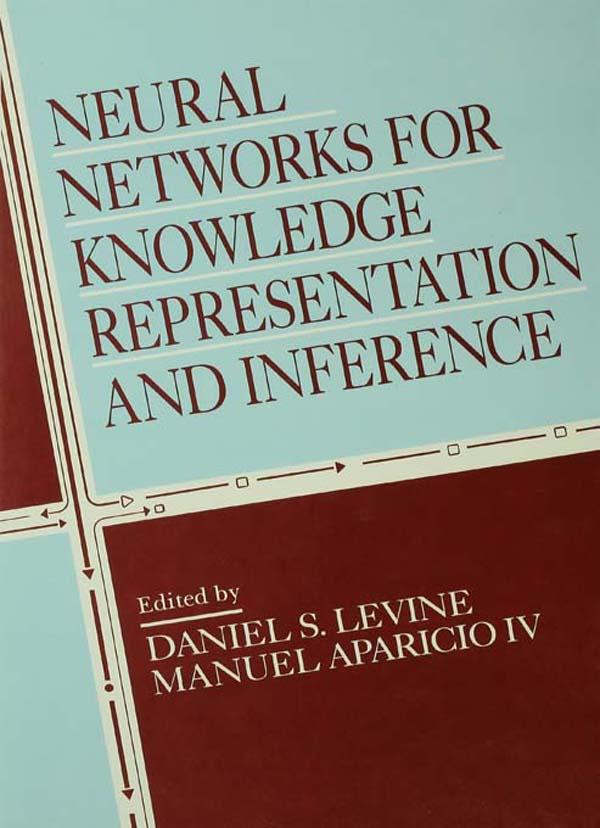
The second published collection based on a conference sponsored by the Metroplex Institute for Neural Dynamics -- the first is Motivation, Emotion, and Goal Direction in Neural Networks (LEA, 1992) -- this book addresses the controversy between symbolicist artificial intelligence and neural network theory. A particular issue is how well neural networks -- well established for statistical pattern matching -- can perform the higher cognitive functions that are more often associated with symbolic approaches. This controversy has a long history, but recently erupted with arguments against the abilities of renewed neural network developments. More broadly than other attempts, the diverse contributions presented here not only address the theory and implementation of artificial neural networks for higher cognitive functions, but also critique the history of assumed epistemologies -- both neural networks and AI -- and include several neurobiological studies of human cognition as a real system to guide the further development of artificial ones.
Organized into four major sections, this volume:
* outlines the history of the AI/neural network controversy, the strengths and weaknesses of both approaches, and shows the various capabilities such as generalization and discreetness as being along a broad but common continuum;
* introduces several explicit, theoretical structures demonstrating the functional equivalences of neurocomputing with the staple objects of computer science and AI, such as sets and graphs;
* shows variants on these types of networks that are applied in a variety of spheres, including reasoning from a geographic database, legal decision making, story comprehension, and performing arithmetic operations;
* discusses knowledge representation process in living organisms, including evidence from experimental psychology, behavioral neurobiology, and electroencephalographic responses to sensory stimuli.
Before Memmo my notes were scattered across PDFs. Now a workspace pulls everything into one place — I see exactly what's still left to study.
Memmo's summaries are gold before exams. I don't have to re-read 800 pages two weeks before — just the important parts.
The AI chat has saved me the night before an exam more than once. I just keep asking until I get it — no waiting on a study group to reply.
The quizzes hit exactly what I need to know. Memmo tracks what I get stuck on — so I only practice what's worth it.
Flashcards with spaced repetition are magic. Memmo knows when I'm about to forget something and brings it back.
The AI podcasts are my favorite. I listen on my way to school and get a recap without sitting at a computer.

Handbok i kvalitativa metoder
281 kr

Hållbar utveckling: en introduktion för ingenjörer och andra problemlösare
334 kr

Brymans Samhällsvetenskapliga metoder
390 kr

Projektledning
491 kr

Den orättvisa hälsan: om socioekonomiska skillnader i hälsa och livslängd
326 kr

Vetenskapsteori för nybörjare
196 kr

Organizational Leadership
429 kr

På väg mot läraryrket
172 kr

Det sociala livet i skolan: Socialpsykologiska perspektiv
253 kr

Betygsättningens didaktik
151 kr

Personality
402 kr

Studying Leadership
404 kr

Managing Innovation
477 kr

Introduktion till samhällsvetenskaplig metod
347 kr

The Psychology of Sex and Gender
698 kr

Evidens och kunskap för socialt arbete
207 kr

Introduction to Leadership
605 kr