
Before Memmo my notes were scattered across PDFs. Now a workspace pulls everything into one place — I see exactly what's still left to study.
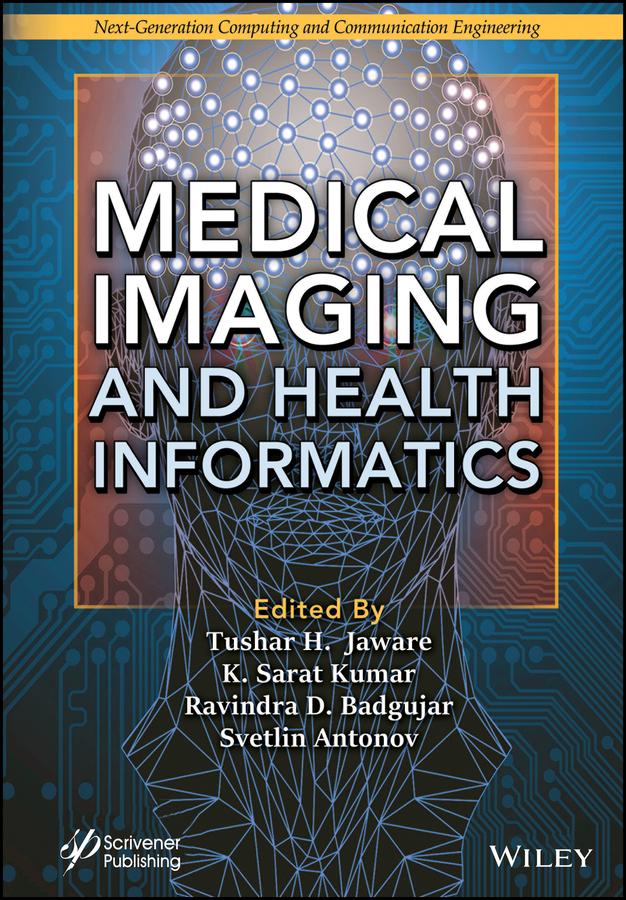
MEDICAL IMAGING AND HEALTH INFORMATICS
Provides a comprehensive review of artificial intelligence (AI) in medical imaging as well as practical recommendations for the usage of machine learning (ML) and deep learning (DL) techniques for clinical applications.
Medical imaging and health informatics is a subfield of science and engineering which applies informatics to medicine and includes the study of design, development, and application of computational innovations to improve healthcare. The health domain has a wide range of challenges that can be addressed using computational approaches; therefore, the use of AI and associated technologies is becoming more common in society and healthcare. Currently, deep learning algorithms are a promising option for automated disease detection with high accuracy. Clinical data analysis employing these deep learning algorithms allows physicians to detect diseases earlier and treat patients more efficiently. Since these technologies have the potential to transform many aspects of patient care, disease detection, disease progression and pharmaceutical organization, approaches such as deep learning algorithms, convolutional neural networks, and image processing techniques are explored in this book.
This book also delves into a wide range of image segmentation, classification, registration, computer-aided analysis applications, methodologies, algorithms, platforms, and tools; and gives a holistic approach to the application of AI in healthcare through case studies and innovative applications. It also shows how image processing, machine learning and deep learning techniques can be applied for medical diagnostics in several specific health scenarios such as COVID-19, lung cancer, cardiovascular diseases, breast cancer, liver tumor, bone fractures, etc. Also highlighted are the significant issues and concerns regarding the use of AI in healthcare together with other allied areas, such as the Internet of Things (IoT) and medical informatics, to construct a global multidisciplinary forum.
Audience
The core audience comprises researchers and industry engineers, scientists, radiologists, healthcare professionals, data scientists who work in health informatics, computer vision and medical image analysis.
Before Memmo my notes were scattered across PDFs. Now a workspace pulls everything into one place — I see exactly what's still left to study.
Memmo's summaries are gold before exams. I don't have to re-read 800 pages two weeks before — just the important parts.
The AI chat has saved me the night before an exam more than once. I just keep asking until I get it — no waiting on a study group to reply.
The quizzes hit exactly what I need to know. Memmo tracks what I get stuck on — so I only practice what's worth it.
Flashcards with spaced repetition are magic. Memmo knows when I'm about to forget something and brings it back.
The AI podcasts are my favorite. I listen on my way to school and get a recap without sitting at a computer.

Handbok i kvalitativa metoder
281 kr

Hållbar utveckling: en introduktion för ingenjörer och andra problemlösare
334 kr

Brymans Samhällsvetenskapliga metoder
390 kr

Projektledning
491 kr

Den orättvisa hälsan: om socioekonomiska skillnader i hälsa och livslängd
326 kr

Vetenskapsteori för nybörjare
196 kr

Organizational Leadership
429 kr

På väg mot läraryrket
172 kr

Det sociala livet i skolan: Socialpsykologiska perspektiv
253 kr

Betygsättningens didaktik
151 kr

Personality
402 kr

Studying Leadership
404 kr

Managing Innovation
477 kr

Introduktion till samhällsvetenskaplig metod
347 kr

The Psychology of Sex and Gender
698 kr

Evidens och kunskap för socialt arbete
207 kr

Introduction to Leadership
605 kr