
Before Memmo my notes were scattered across PDFs. Now a workspace pulls everything into one place — I see exactly what's still left to study.
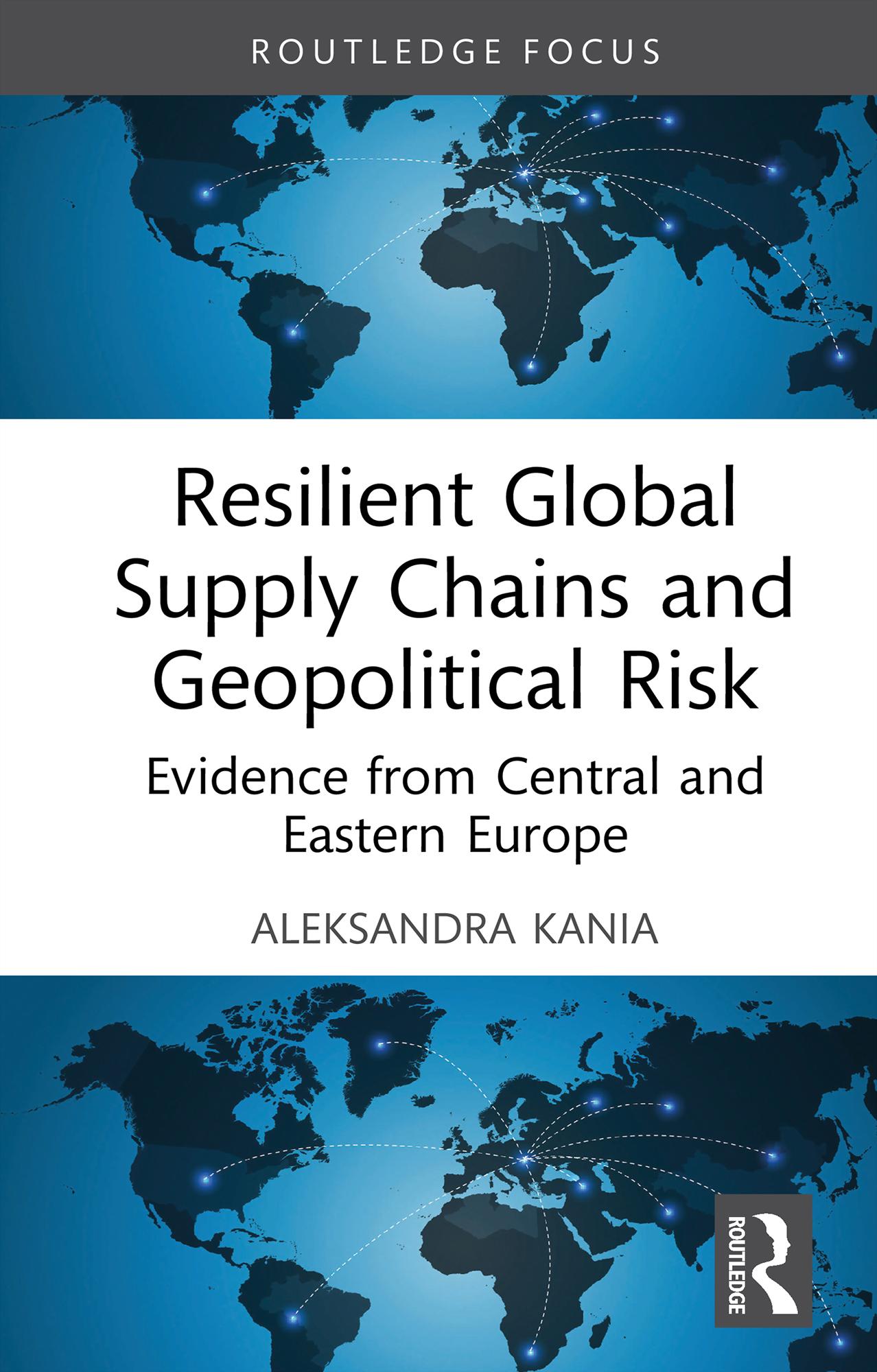
Global supply chains, long seen as engines of efficiency and economic integration, have been increasingly disrupted by recent crises, including the COVID-19 pandemic, armed conflicts, and shifts in trade and industrial policy. These developments have raised costs, increased uncertainty, and reduced the predictability of cross-border production and exchange. Firms operating in Central and Eastern Europe (CEE) face particularly strong pressures as overlapping geopolitical forces reshape production networks, market access, and strategic choices.
This book examines how firms build and sustain supply chain resilience (SCRES) under persistent geopolitical uncertainty. It maps how research on SCRES has evolved and provides detailed empirical evidence on how firms in the CEE region respond to geopolitical risk. Focusing on practical adjustment mechanisms such as supplier diversification, nearshoring, inventory buffering, and route reconfiguration, this book analyses how firms adapt supply chains in environments shaped by sanctions, trade disputes, and regulatory fragmentation.
Using qualitative case studies and causal modelling, the analysis shows that resilience does not result from isolated decisions or single best practices. Instead, it emerges from the interaction of multiple strategic choices made over time. By combining insights from dynamic capabilities, institutional economics, and systems thinking, this book conceptualises SCRES as an economic outcome shaped by firms’ responses to changing costs, governance constraints, and information conditions under geopolitical pressure.
The book is intended for researchers and graduate students in supply chain management, economics, international business, and related fields, as well as for policymakers and practitioners concerned with geopolitical risk, industrial adjustment, and resilience in global production networks.
Before Memmo my notes were scattered across PDFs. Now a workspace pulls everything into one place — I see exactly what's still left to study.
Memmo's summaries are gold before exams. I don't have to re-read 800 pages two weeks before — just the important parts.
The AI chat has saved me the night before an exam more than once. I just keep asking until I get it — no waiting on a study group to reply.
The quizzes hit exactly what I need to know. Memmo tracks what I get stuck on — so I only practice what's worth it.
Flashcards with spaced repetition are magic. Memmo knows when I'm about to forget something and brings it back.
The AI podcasts are my favorite. I listen on my way to school and get a recap without sitting at a computer.

Handbok i kvalitativa metoder
281 kr

Hållbar utveckling: en introduktion för ingenjörer och andra problemlösare
334 kr

Brymans Samhällsvetenskapliga metoder
390 kr

Projektledning
491 kr

Den orättvisa hälsan: om socioekonomiska skillnader i hälsa och livslängd
326 kr

Organizational Leadership
429 kr

Vetenskapsteori för nybörjare
196 kr

På väg mot läraryrket
172 kr

Det sociala livet i skolan: Socialpsykologiska perspektiv
253 kr

Betygsättningens didaktik
151 kr

Personality
402 kr

Studying Leadership
404 kr

Managing Innovation
477 kr

Introduktion till samhällsvetenskaplig metod
347 kr

The Psychology of Sex and Gender
698 kr

Evidens och kunskap för socialt arbete
207 kr

Introduction to Leadership
605 kr