
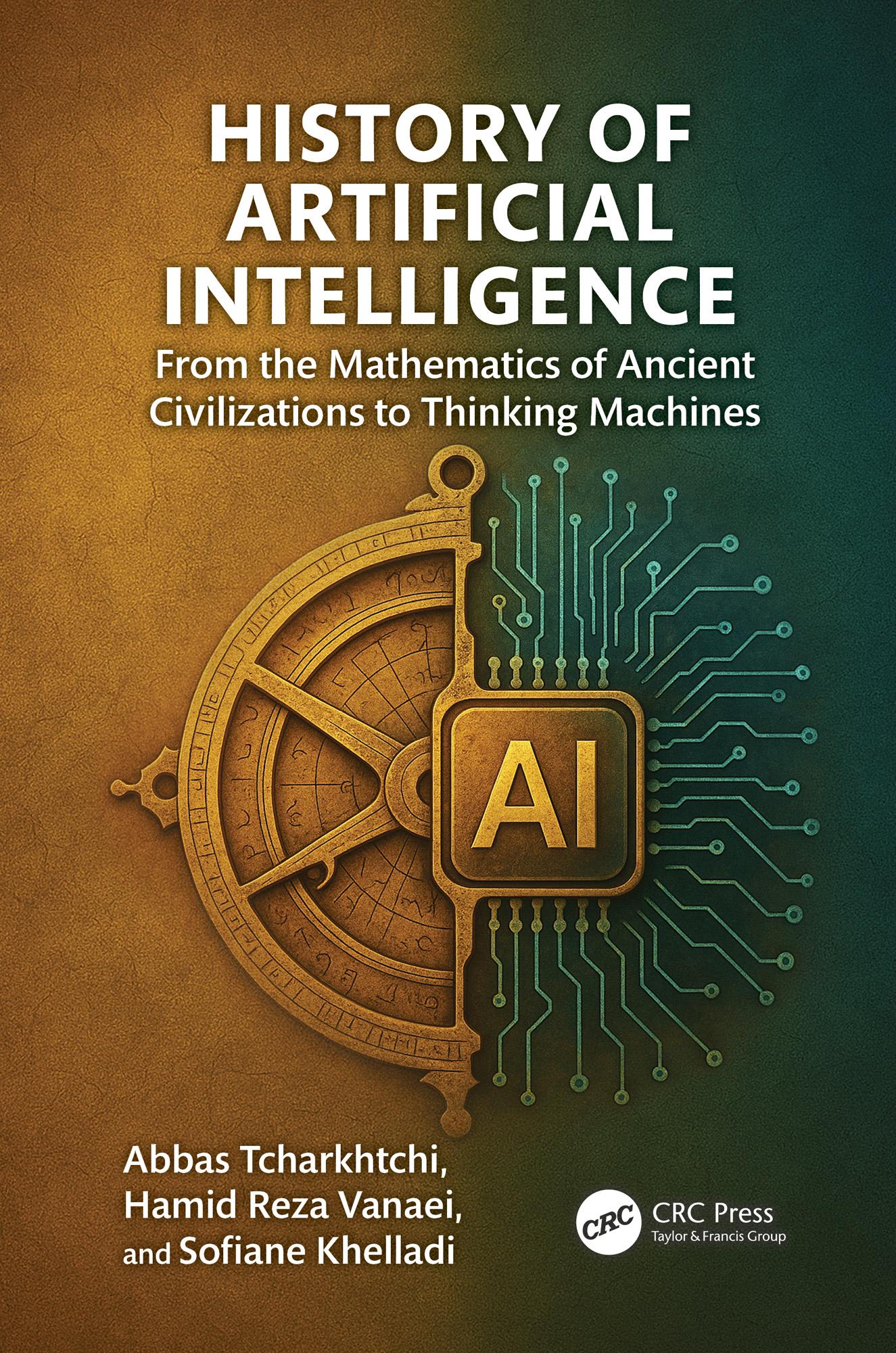
This book provides an overview of AI’s historical development while understanding the cultural and scientific foundations that make today’s AI possible. Through easy-to-understand explanations of complex ideas and a focus on both technological advances and ethical considerations, it provides an understanding of AI’s past, present, and future.
History of Artificial Intelligence: From the Mathematics of Ancient Civilizations to Thinking Machines takes readers on a fascinating journey through the history of AI, showing how its origins can be traced back to ancient civilizations and their early advancements in mathematics, logic, and computation. It reveals the unexpected links between ancient calculation methods and the technologies that define modern life. By following AI's development, from the mathematical innovations of Mesopotamia, Egypt, and Iran to the revolutionary ideas of the European Renaissance and Enlightenment, readers will discover how human ingenuity over the centuries paved the way for the creation of intelligent machines. Each chapter takes readers step by step through major milestones, from the first mechanical calculators to the rise of modern computers and the development of TM. By exploring these key events and the contributions of diverse civilizations, the book offers fresh insights into AI’s global history and its complex relationship with human thought. In the final chapters, the book also addresses the ethical and societal challenges AI presents today, giving readers a well-rounded understanding of how AI is shaping our future and what that means for all of us.
This book is written for a broad audience, including both general readers and academic audiences who are interested in the history, development, and ethical implications of AI. It is particularly suited for students, researchers, and professionals in fields such as computer science, AI, mathematics, history of science and technology, and digital ethics.
Pay easily by card, Klarna, Apple Pay or Google Pay. Not happy? You always have a 14-day money-back guarantee. Read more in our terms. If you have any questions, email us at hello@memmo.org.
Memmo makes studying easier – wherever you are in the world. We bring your course books and smart study tools together in one place: summaries, quizzes, podcasts and flashcards. Plus Ted, your study buddy who answers anything you wonder. Over 50,000 students already study here – built to help you learn faster and stress less.