
Before Memmo my notes were scattered across PDFs. Now a workspace pulls everything into one place — I see exactly what's still left to study.
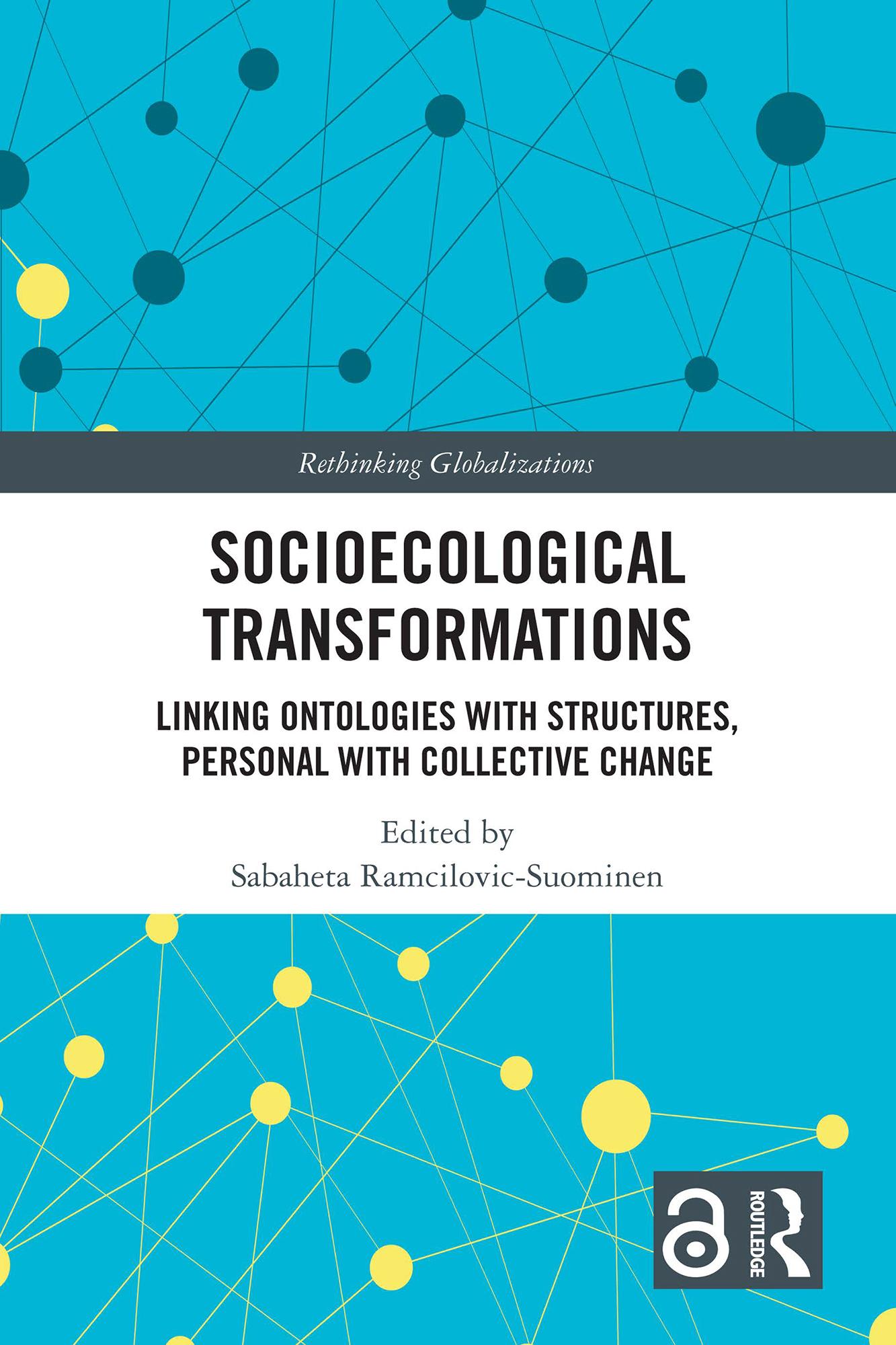
Socioecological Transformations confronts dominant framings of transformation that either remain apolitical and ahistorical, or overemphasizes the structural causes, while bypassing the ontological roots of the present-day socioecological violence and destruction. It challenges the technocratic and structuralist tendencies that either reduce transformation to policy tweaks, or to social movements and activism.
This volume reclaims socioecological transformations as a radical, justice-centred theory-praxis. By connecting the structural and the ontological roots of the colonial-racial-capitalist system of oppression, the book exposes how materialist-dualist ontology and associated worldviews uphold hierarchies of worth, which in turn serve and uphold the colonial-racial-capitalist system of oppression. In doing so, it widens the spectrum of viable responses to include in addition to social movements and activism, those that unsettle the ontological bases of our socioecological calamities—the human exceptionalism and the illusion of separation. The fifteen chapters span diverse geographies, struggles, and approaches, weaving together onto-epistemic inquiry with grounded transformative practices, movements and action. The contributions share the common focus on justice as both motivation and a guiding principle for transformations. The book calls for transformation where being, knowing, and doing are reimagined in relational, life-affirming terms.
A vital resource for students, academics, activists inspired by political ecology, feminist studies, decolonial and relational approaches, social movements, and transformations, but also practitioners and policy actors seeking to engage transformation beyond surface-level solutions. Socioecological Transformations invites readers to embrace complexity, plurality, along the paradoxes that transformations entail, while building solidarities across polarized strategies, ontologies and worldviews.
The Open Access version of this book, available at http://www.taylorfrancis.com, has been made available under a Creative Commons Attribution-Non Commercial-No Derivatives (CC BY-NC-ND) 4.0 license.
Before Memmo my notes were scattered across PDFs. Now a workspace pulls everything into one place — I see exactly what's still left to study.
Memmo's summaries are gold before exams. I don't have to re-read 800 pages two weeks before — just the important parts.
The AI chat has saved me the night before an exam more than once. I just keep asking until I get it — no waiting on a study group to reply.
The quizzes hit exactly what I need to know. Memmo tracks what I get stuck on — so I only practice what's worth it.
Flashcards with spaced repetition are magic. Memmo knows when I'm about to forget something and brings it back.
The AI podcasts are my favorite. I listen on my way to school and get a recap without sitting at a computer.

Handbok i kvalitativa metoder
281 kr

Hållbar utveckling: en introduktion för ingenjörer och andra problemlösare
334 kr

Brymans Samhällsvetenskapliga metoder
390 kr

Projektledning
491 kr

Den orättvisa hälsan: om socioekonomiska skillnader i hälsa och livslängd
326 kr

Organizational Leadership
429 kr

Vetenskapsteori för nybörjare
196 kr

På väg mot läraryrket
172 kr

Det sociala livet i skolan: Socialpsykologiska perspektiv
253 kr

Betygsättningens didaktik
151 kr

Personality
402 kr

Studying Leadership
404 kr

Managing Innovation
477 kr

Introduktion till samhällsvetenskaplig metod
347 kr

The Psychology of Sex and Gender
698 kr

Evidens och kunskap för socialt arbete
207 kr

Introduction to Leadership
605 kr