
Before Memmo my notes were scattered across PDFs. Now a workspace pulls everything into one place — I see exactly what's still left to study.
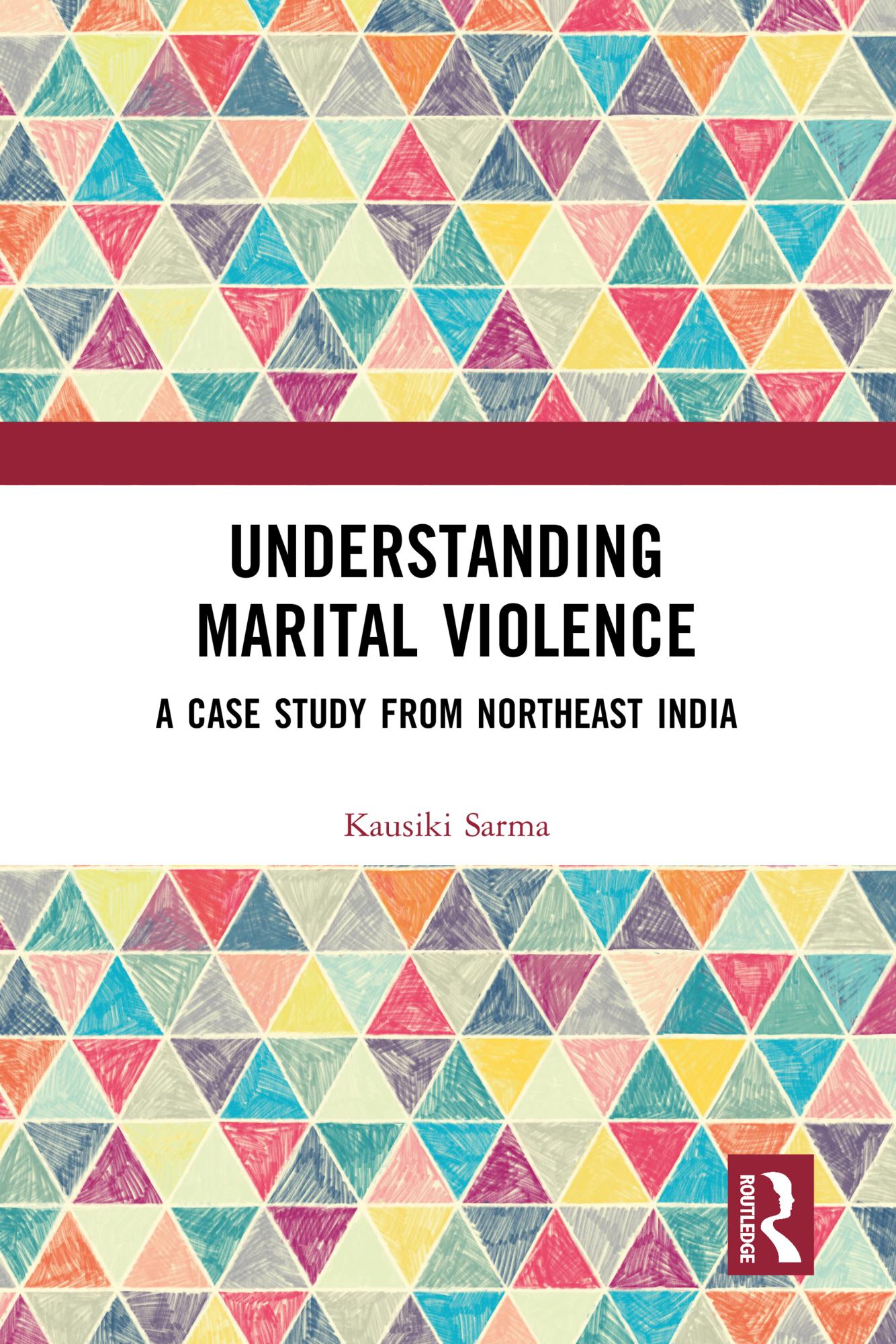
This book examines the roles and interconnections between structural factors and individual agency in marital violence, focusing on women in heterosexual marital relationships. With the overall aim of improving recognition and strengthening responses to marital violence, it underlines what occurs as marital violence and why it is possibly occurring in the manner it does, while simultaneously demonstrating how it is dealt with and resisted.
Based upon in-depth qualitative data focussing upon the experiences of women facing marital violence and key informants from Assam in Northeast India, this book sheds light upon four key areas. To begin with, what is named or recognised (and not recognised) as marital violence is assessed and a typology (and associated denials) informed by the capabilities approach is developed. Further, the re-victimisation that happens through and within both civil and criminal justice is explored. In addition to this, the existing structural context highlighting changes that occur at a broader economic, political, and social level, contextualising a society that is in transition, has been emphasised. To conclude, conditioned by distinct material-cultural constraints-enablers and acknowledging the role played by emotions, a temporal agential trajectory in response to marital violence is mapped, specifically through the concepts of Habitus and Reflexivity. In short, this book attempts to decolonise certain aspects of academic knowledge around marital violence by asserting the need to consider distinct natures and forms of violence and violations that occur within marriages and the acknowledgement of a spectrum of actions in the agential trajectory so that victims-survivors are not solely assessed by their decisions to stay or to leave an abusive marriage.
It will be of interest to scholars, students, professionals, and policymakers working within social work, social policy, gender studies, and violence prevention.
Before Memmo my notes were scattered across PDFs. Now a workspace pulls everything into one place — I see exactly what's still left to study.
Memmo's summaries are gold before exams. I don't have to re-read 800 pages two weeks before — just the important parts.
The AI chat has saved me the night before an exam more than once. I just keep asking until I get it — no waiting on a study group to reply.
The quizzes hit exactly what I need to know. Memmo tracks what I get stuck on — so I only practice what's worth it.
Flashcards with spaced repetition are magic. Memmo knows when I'm about to forget something and brings it back.
The AI podcasts are my favorite. I listen on my way to school and get a recap without sitting at a computer.

Handbok i kvalitativa metoder
281 kr

Hållbar utveckling: en introduktion för ingenjörer och andra problemlösare
334 kr

Brymans Samhällsvetenskapliga metoder
390 kr

Projektledning
491 kr

Den orättvisa hälsan: om socioekonomiska skillnader i hälsa och livslängd
326 kr

Vetenskapsteori för nybörjare
196 kr

Organizational Leadership
429 kr

På väg mot läraryrket
172 kr

Det sociala livet i skolan: Socialpsykologiska perspektiv
253 kr

Betygsättningens didaktik
151 kr

Personality
402 kr

Studying Leadership
404 kr

Managing Innovation
477 kr

Introduktion till samhällsvetenskaplig metod
347 kr

The Psychology of Sex and Gender
698 kr

Evidens och kunskap för socialt arbete
207 kr

Introduction to Leadership
605 kr