
Before Memmo my notes were scattered across PDFs. Now a workspace pulls everything into one place — I see exactly what's still left to study.
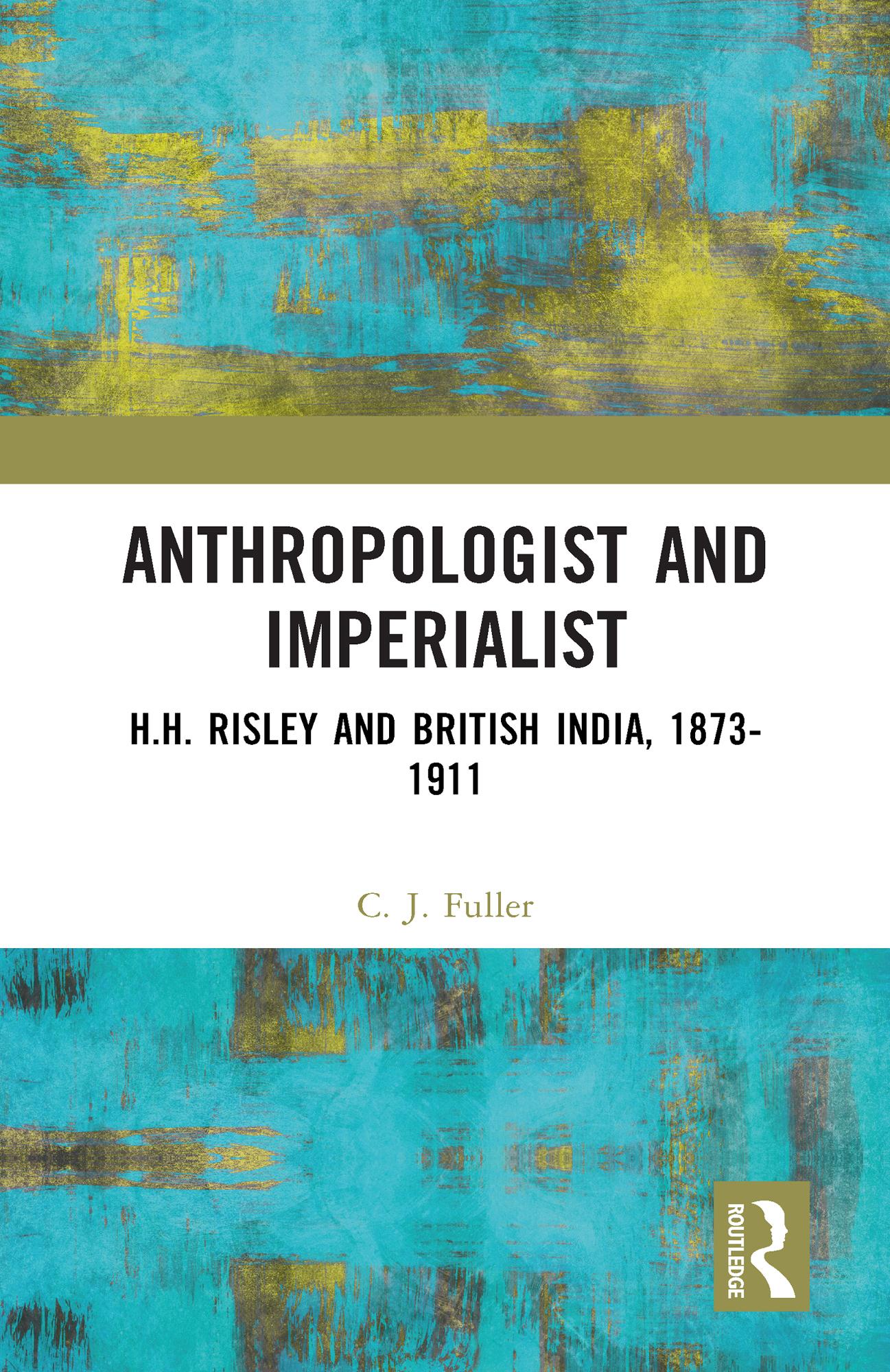
Sir Herbert Hope Risley (1851 - 1911) - 'H. H. Risley', as he always signed himself - was a member of the Indian Civil Service (ICS) from 1873 to 1910 who served in Bengal and became a senior administrator and policymaker in the colonial government, as well as the pre-eminent anthropologist in British India. He was also an imperialist, who was convinced of the rightness of 'civilising' British rule and its benefits for both India and Britain, and one of this book's objectives is to render his simultaneous commitment to anthropology and imperialism intelligible to present-day readers. More specifically, Anthropologist and Imperialist: H. H. Risley and British India, 1873–1911 documents the two sides of Risley’s career, which is used as a case-study to investigate, first, the production and circulation of colonial knowledge, specifically anthropological knowledge, and secondly, its often loose and inconsistent connection with administration and policymaking, and with the government and state overall.
Risley, like other officials engaged in anthropology in India, as well as the government itself, insisted that ethnography and anthropology had both ‘administrative’ and ‘scientific’ value; unlike previous works on Indian colonial anthropology, this book carefully examines its ‘scientific’ contributions in relation to contemporary metropolitan anthropology. It does not attempt to reinvent ‘greatman’ political or intellectual history, but does demonstrate the importance of studying the powerful officials who ruled British India, as well as the minor provincial politicians and subaltern subjects – or the abstract forces, such as colonialism and resistance – that have dominated recent historical scholarship. This book shows, too, that a detailed inquiry into Risley’s career, and his ideas and actions, can open new perspectives on a variety of continuing debates, including those over the colonial construction of caste and race in ‘traditional’ India, orientalism and forms of colonial knowledge, Victorian anthropology’s close relationship with the British empire, and the modern discipline’s uneasy links with its colonial past.
Print edition not for sale in South Asia (India, Sri Lanka, Nepal, Bangladesh, Pakistan and Bhutan)
Before Memmo my notes were scattered across PDFs. Now a workspace pulls everything into one place — I see exactly what's still left to study.
Memmo's summaries are gold before exams. I don't have to re-read 800 pages two weeks before — just the important parts.
The AI chat has saved me the night before an exam more than once. I just keep asking until I get it — no waiting on a study group to reply.
The quizzes hit exactly what I need to know. Memmo tracks what I get stuck on — so I only practice what's worth it.
Flashcards with spaced repetition are magic. Memmo knows when I'm about to forget something and brings it back.
The AI podcasts are my favorite. I listen on my way to school and get a recap without sitting at a computer.

Handbok i kvalitativa metoder
281 kr

Hållbar utveckling: en introduktion för ingenjörer och andra problemlösare
334 kr

Brymans Samhällsvetenskapliga metoder
390 kr

Projektledning
491 kr

Den orättvisa hälsan: om socioekonomiska skillnader i hälsa och livslängd
326 kr

Organizational Leadership
429 kr

Vetenskapsteori för nybörjare
196 kr

På väg mot läraryrket
172 kr

Det sociala livet i skolan: Socialpsykologiska perspektiv
253 kr

Betygsättningens didaktik
151 kr

Personality
402 kr

Studying Leadership
404 kr

Managing Innovation
477 kr

Introduktion till samhällsvetenskaplig metod
347 kr

The Psychology of Sex and Gender
698 kr

Evidens och kunskap för socialt arbete
207 kr

Introduction to Leadership
605 kr