
Before Memmo my notes were scattered across PDFs. Now a workspace pulls everything into one place — I see exactly what's still left to study.
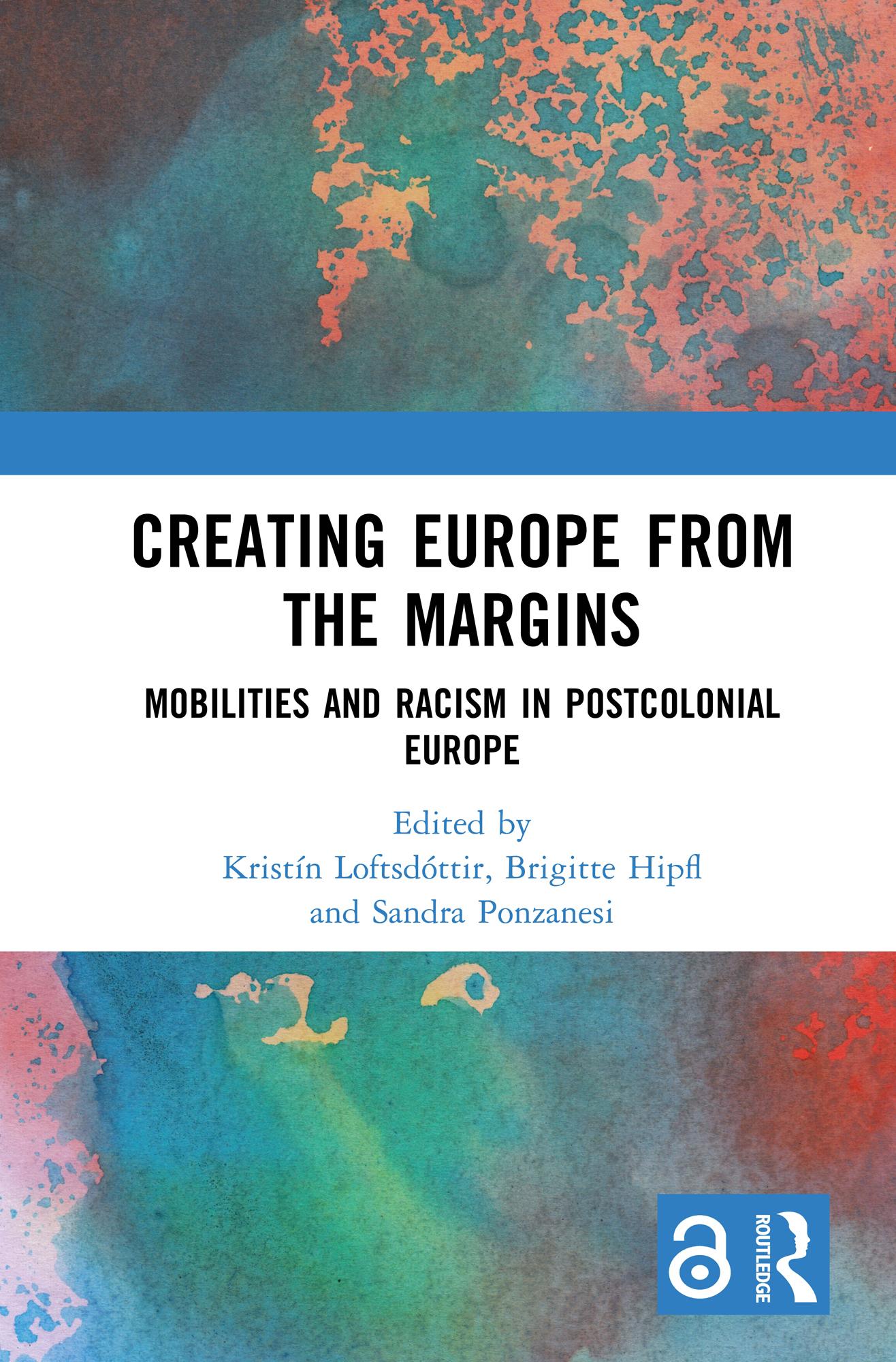
This edited volume explores the idea of Europe through a focus on its margins. The chapters in the volume inquire critically into the relations and tensions inherent in divisions between the Global North and the Global South as well as internal regional differentiation within Europe itself. In doing so, the volume stresses the need to consider Europe from critical interdisciplinary perspectives, highlighting historical and contemporary issues of racism and colonialism.
While recent discussions of migration into ‘Fortress Europe’ seem to assume that Europe has clearly demarcated geographic, political and cultural boundaries, this book argues that the reality is more complex. The book explores margins conceptually and positions margins and centres as open to negotiation and contestation and characterized by ambiguity. As such, margins can be contextualized in relation to hierarchies within Europe, with different processes involved in creating boundaries and borders between different kinds of Europes and Europeans. Deploying case studies from different places, such as Iceland, Italy, Poland, Spain, Turkey, the UK, Romania, Cyprus, Greece, Sicily, European colonies in the Caribbean and the former Yugoslavia, the contributors analyse how different geopolitical hierarchies intersect with racialized subject positions of diverse people living in Europe, while also exploring issues of gender, class, sexuality, religion and nationality. Some chapters draw attention to the fortification of Europe’s ‘borderland,’ while others focus on internal hierarchies within Europe, critiquing the meaning of spatial boundaries in an increasingly digitalized Europe. In doing so, the chapters interrogate the hierarchies at play in the processes of being and becoming ‘European’ and the ongoing impacts of race and colonialism.
This timely and thought-provoking collection will be of considerable significance to those in the humanities and social sciences with an interest in Europe.
Chapters 1, 11 and 12 of this book are freely available as downloadable Open Access PDFs at http://www.taylorfrancis.com under a Creative Commons [Attribution-Non Commercial-No Derivatives (CC-BY-NC-ND)] 4.0 license.
Before Memmo my notes were scattered across PDFs. Now a workspace pulls everything into one place — I see exactly what's still left to study.
Memmo's summaries are gold before exams. I don't have to re-read 800 pages two weeks before — just the important parts.
The AI chat has saved me the night before an exam more than once. I just keep asking until I get it — no waiting on a study group to reply.
The quizzes hit exactly what I need to know. Memmo tracks what I get stuck on — so I only practice what's worth it.
Flashcards with spaced repetition are magic. Memmo knows when I'm about to forget something and brings it back.
The AI podcasts are my favorite. I listen on my way to school and get a recap without sitting at a computer.

Handbok i kvalitativa metoder
281 kr

Hållbar utveckling: en introduktion för ingenjörer och andra problemlösare
334 kr

Brymans Samhällsvetenskapliga metoder
390 kr

Projektledning
491 kr

Den orättvisa hälsan: om socioekonomiska skillnader i hälsa och livslängd
326 kr

Vetenskapsteori för nybörjare
196 kr

Organizational Leadership
429 kr

På väg mot läraryrket
172 kr

Det sociala livet i skolan: Socialpsykologiska perspektiv
253 kr

Betygsättningens didaktik
151 kr

Personality
402 kr

Studying Leadership
404 kr

Managing Innovation
477 kr

Introduktion till samhällsvetenskaplig metod
347 kr

The Psychology of Sex and Gender
698 kr

Evidens och kunskap för socialt arbete
207 kr

Introduction to Leadership
605 kr