
Before Memmo my notes were scattered across PDFs. Now a workspace pulls everything into one place — I see exactly what's still left to study.
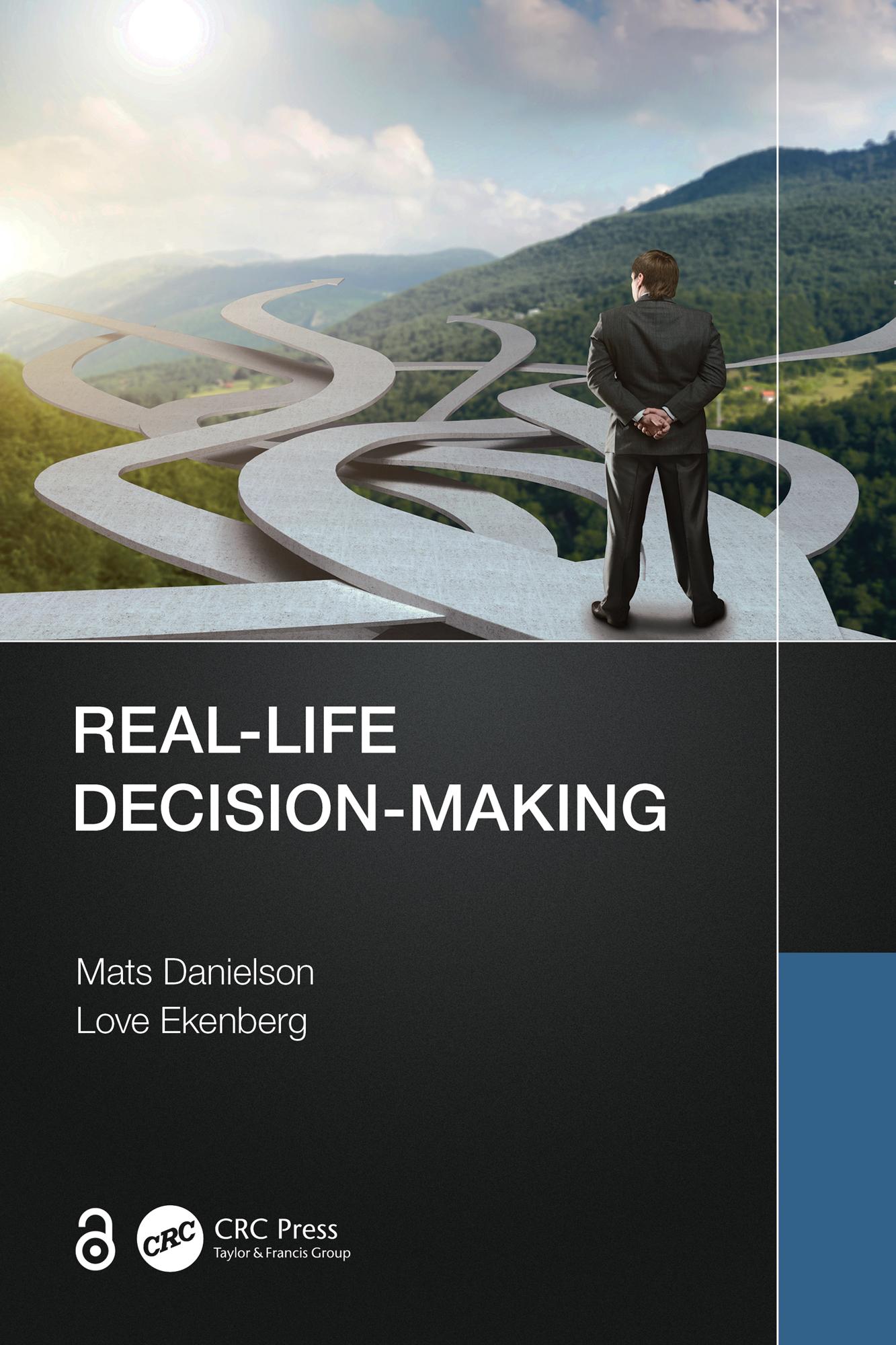
Have you ever experienced a decision situation that was hard to come to grips with? Did you ever feel a need to improve your decision-making skills? Is this something where you feel that you have not learned enough practical and useful methods? In that case, you are not alone! Even though decision-making is both considered and actually is a very important skill in modern work-life as well as in private life, these skills are not to any reasonable extent taught in schools at any level. No wonder many people do indeed feel the need to improve but have a hard time finding out how. This book is an attempt to remedy this shortcoming of our educational systems and possibly also of our common, partly intuition-based, decision culture. Intuition is not at all bad, quite the contrary, but it has to co-exist with rationality. We will show you how.
Methods for decision-making should be of prime concern to any individual or organisation, even if the decision processes are not always explicitly or even consciously formulated. All kinds of organisations, as well as individuals, must continuously make decisions of the most varied nature in order to prosper and attain their objectives. A large part of the time spent in any organisation, not least at management levels, is spent gathering, processing, and compiling information for the purpose of making decisions supported by that information. The same interest has hitherto not been shown for individual decision-making, even though large gains would also be obtained at a personal level if important personal decisions were better deliberated. This book aims at changing that and thus attends to both categories of decision-makers.
This book will take you through a journey starting with some history of decision-making and analysis and then go through easy-to-learn ways of structuring decision information and methods for analysing the decision situations, beginning with simple decision situations and then moving on to progressively harder ones, but never losing sight of the overarching goal that the reader should be able to follow the progression and being able to carry out similar decision analyses in real-life situations.
The Open Access version of this book, available at www.taylorfrancis.com, has been made available under a Creative Commons Attribution-Non Commercial-No Derivatives 4.0 license.
Before Memmo my notes were scattered across PDFs. Now a workspace pulls everything into one place — I see exactly what's still left to study.
Memmo's summaries are gold before exams. I don't have to re-read 800 pages two weeks before — just the important parts.
The AI chat has saved me the night before an exam more than once. I just keep asking until I get it — no waiting on a study group to reply.
The quizzes hit exactly what I need to know. Memmo tracks what I get stuck on — so I only practice what's worth it.
Flashcards with spaced repetition are magic. Memmo knows when I'm about to forget something and brings it back.
The AI podcasts are my favorite. I listen on my way to school and get a recap without sitting at a computer.

Handbok i kvalitativa metoder
281 kr

Hållbar utveckling: en introduktion för ingenjörer och andra problemlösare
334 kr

Brymans Samhällsvetenskapliga metoder
390 kr

Projektledning
491 kr

Den orättvisa hälsan: om socioekonomiska skillnader i hälsa och livslängd
326 kr

Organizational Leadership
429 kr

Vetenskapsteori för nybörjare
196 kr

På väg mot läraryrket
172 kr

Det sociala livet i skolan: Socialpsykologiska perspektiv
253 kr

Betygsättningens didaktik
151 kr

Personality
402 kr

Studying Leadership
404 kr

Managing Innovation
477 kr

Introduktion till samhällsvetenskaplig metod
347 kr

The Psychology of Sex and Gender
698 kr

Evidens och kunskap för socialt arbete
207 kr

Introduction to Leadership
605 kr