
Before Memmo my notes were scattered across PDFs. Now a workspace pulls everything into one place — I see exactly what's still left to study.
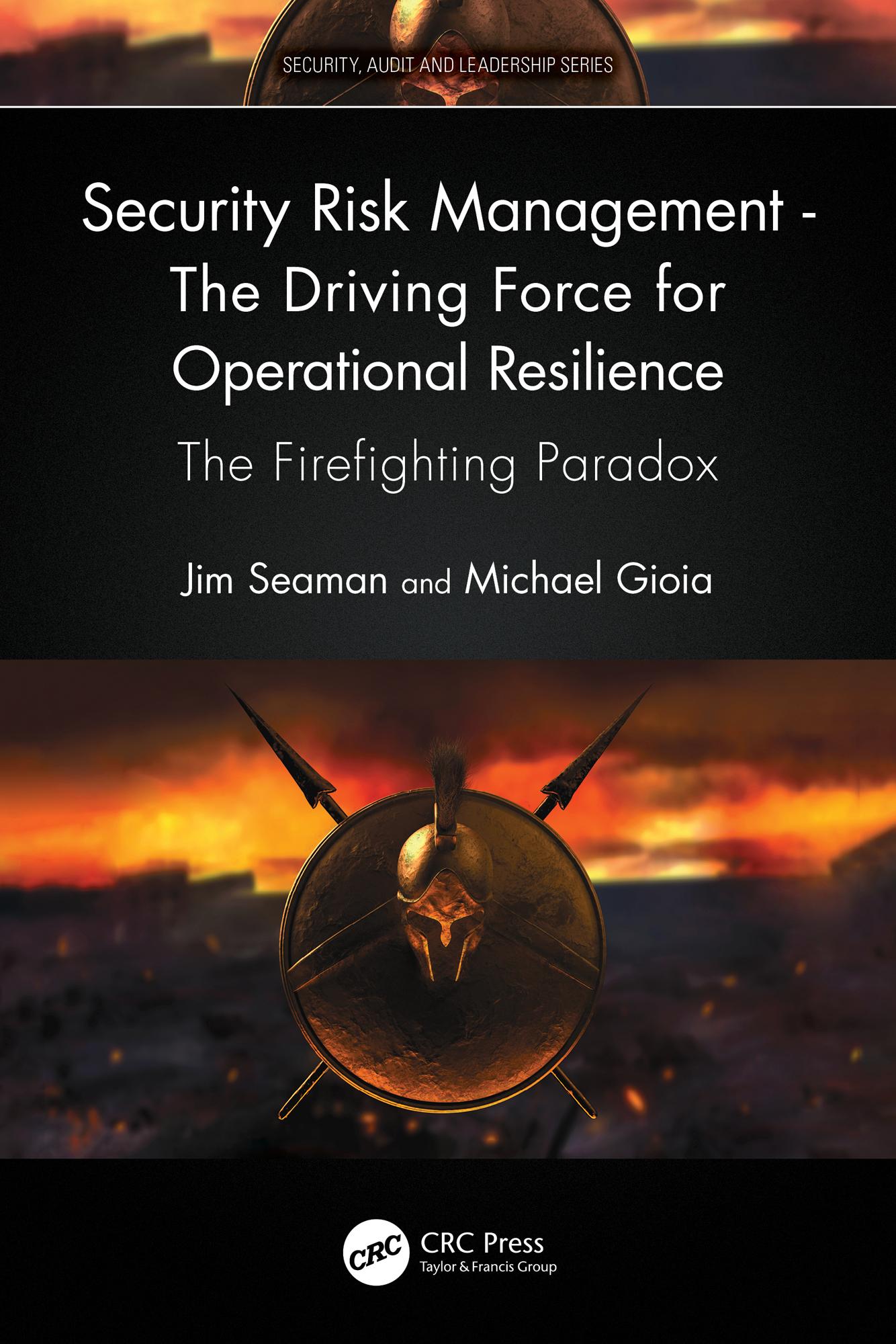
The importance of businesses being ‘operationally resilient’ is becoming increasingly important, and a driving force behind whether an organization can ensure that its valuable business operations can ‘bounce back’ from or manage to evade impactful occurrences is its security risk management capabilities.
In this book, we change the perspective on an organization’s operational resilience capabilities so that it shifts from being a reactive (tick box) approach to being proactive. The perspectives of every chapter in this book focus on risk profiles and how your business can reduce these profiles using effective mitigation measures.
The book is divided into two sections:
1. Security Risk Management (SRM).
All the components of security risk management contribute to your organization’s operational resilience capabilities, to help reduce your risks.
• Reduce the probability/ likelihood.
2. Survive to Operate.
If your SRM capabilities fail your organization, these are the components that are needed to allow you to quickly ‘bounce back.’
• Reduce the severity/ impact.
Rather than looking at this from an operational resilience compliance capabilities aspect, we have written these to be agnostic of any specific operational resilience framework (e.g., CERT RMM, ISO 22316, SP 800- 160 Vol. 2 Rev. 1, etc.), with the idea of looking at operational resilience through a risk management lens instead.
This book is not intended to replace these numerous operational resilience standards/ frameworks but, rather, has been designed to complement them by getting you to appreciate their value in helping to identify and mitigate your operational resilience risks.
Unlike the cybersecurity or information security domains, operational resilience looks at risks from a business-oriented view, so that anything that might disrupt your essential business operations are risk-assessed and appropriate countermeasures identified and applied. Consequently, this book is not limited to cyberattacks or the loss of sensitive data but, instead, looks at things from a holistic business-based perspective.
Before Memmo my notes were scattered across PDFs. Now a workspace pulls everything into one place — I see exactly what's still left to study.
Memmo's summaries are gold before exams. I don't have to re-read 800 pages two weeks before — just the important parts.
The AI chat has saved me the night before an exam more than once. I just keep asking until I get it — no waiting on a study group to reply.
The quizzes hit exactly what I need to know. Memmo tracks what I get stuck on — so I only practice what's worth it.
Flashcards with spaced repetition are magic. Memmo knows when I'm about to forget something and brings it back.
The AI podcasts are my favorite. I listen on my way to school and get a recap without sitting at a computer.

Handbok i kvalitativa metoder
281 kr

Hållbar utveckling: en introduktion för ingenjörer och andra problemlösare
334 kr

Brymans Samhällsvetenskapliga metoder
390 kr

Projektledning
491 kr

Den orättvisa hälsan: om socioekonomiska skillnader i hälsa och livslängd
326 kr

Vetenskapsteori för nybörjare
196 kr

Organizational Leadership
429 kr

På väg mot läraryrket
172 kr

Det sociala livet i skolan: Socialpsykologiska perspektiv
253 kr

Betygsättningens didaktik
151 kr

Personality
402 kr

Studying Leadership
404 kr

Managing Innovation
477 kr

Introduktion till samhällsvetenskaplig metod
347 kr

The Psychology of Sex and Gender
698 kr

Evidens och kunskap för socialt arbete
207 kr

Introduction to Leadership
605 kr