
Before Memmo my notes were scattered across PDFs. Now a workspace pulls everything into one place — I see exactly what's still left to study.
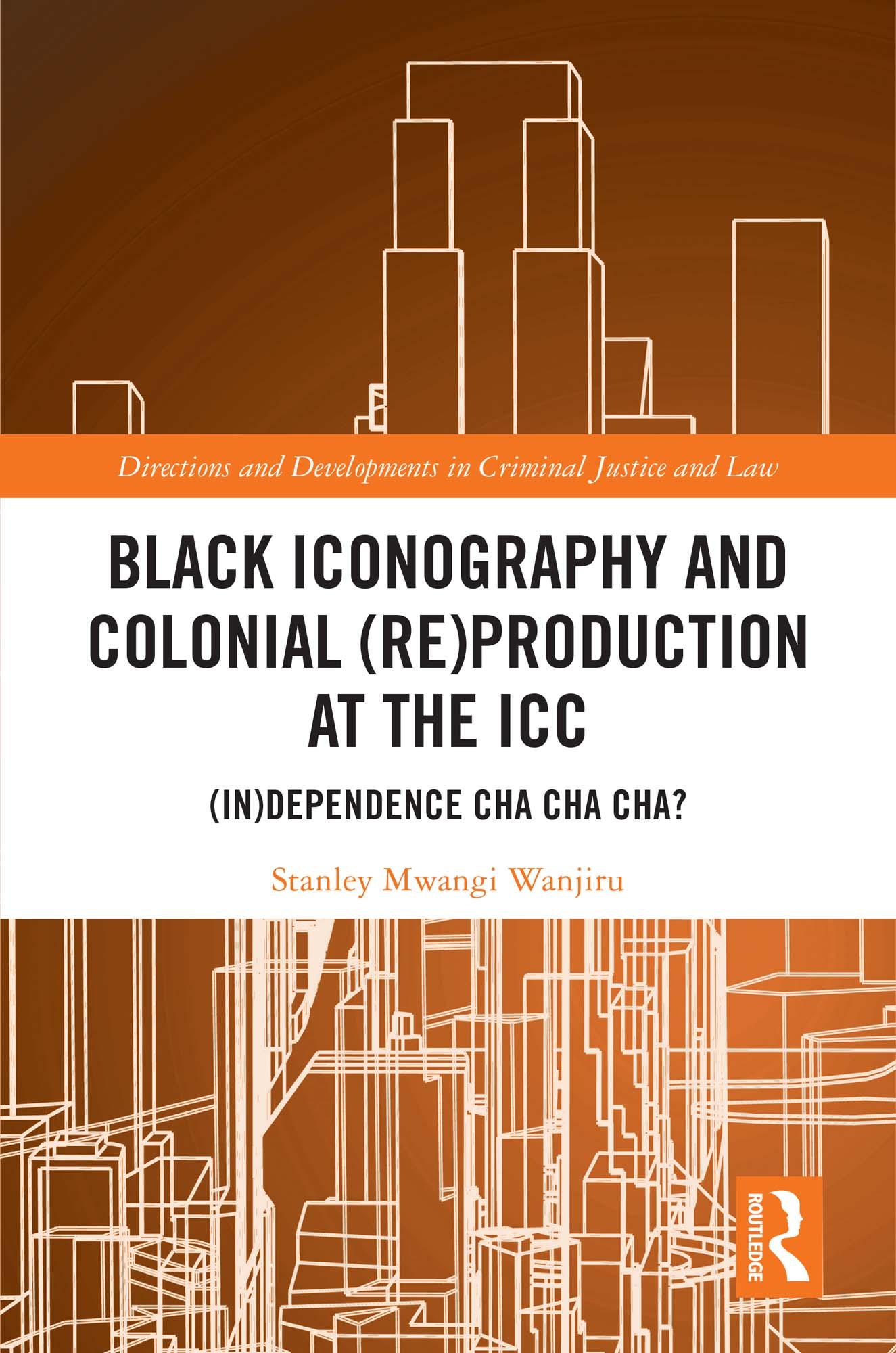
This book explores the reproduction of colonialism at the International Criminal Court (ICC) and examines international criminal law (ICL) vs the black body through an immersive format of art, music, poetry, and architecture and post-colonial/critical race theory lens.
Taking a multi-disciplinary approach, the book interrogates the operationalisation of the Rome Statute to detail a Eurocentric hegemony at the core of ICL. It explores how colonialism and slavery have come to shape ICL, exposing the perpetuation of the colonial, and warns that it has ominous contemporary and future implications for Africa. As currently envisaged and acted out at the ICC, this law is founded on deceptive and colonial ideas of ‘what is wrong’ in/with the world. The book finds that the contemporary ICL regime is founded on white supremacy that corrupts the law’s interaction with the African. The African is but a unit utilised by the global elite to exploit and extract resources. From time to time, these alliances disintegrate with ICL becoming a retaliatory tool of choice. What is at stake is power, not justice. This power has been hierarchical with Eurocentrism at the top throughout modern history. Colonialism is seen not to have ended but to have regerminated through the foundation of the ‘independent’ African state. The ICC reproduces the colonial by use of European law and, ultimately, the over-representation of the black accused. To conclude, the book provides a liberated African forum that can address conflicts in the content, with a call for the end of the ICC’s involvement in Africa. The demand is made for an African court that utilises non-colonising African norms which are uniquely suited to address local conflicts.
Multidisciplinary in nature, this book will be of great interest to students and scholars of international criminal law, criminal justice, human rights law, African studies, global social justice, sociology, anthropology, postcolonial studies, and philosophy.
Before Memmo my notes were scattered across PDFs. Now a workspace pulls everything into one place — I see exactly what's still left to study.
Memmo's summaries are gold before exams. I don't have to re-read 800 pages two weeks before — just the important parts.
The AI chat has saved me the night before an exam more than once. I just keep asking until I get it — no waiting on a study group to reply.
The quizzes hit exactly what I need to know. Memmo tracks what I get stuck on — so I only practice what's worth it.
Flashcards with spaced repetition are magic. Memmo knows when I'm about to forget something and brings it back.
The AI podcasts are my favorite. I listen on my way to school and get a recap without sitting at a computer.

Handbok i kvalitativa metoder
281 kr

Hållbar utveckling: en introduktion för ingenjörer och andra problemlösare
334 kr

Brymans Samhällsvetenskapliga metoder
390 kr

Projektledning
491 kr

Den orättvisa hälsan: om socioekonomiska skillnader i hälsa och livslängd
326 kr

Vetenskapsteori för nybörjare
196 kr

Organizational Leadership
429 kr

På väg mot läraryrket
172 kr

Det sociala livet i skolan: Socialpsykologiska perspektiv
253 kr

Betygsättningens didaktik
151 kr

Personality
402 kr

Studying Leadership
404 kr

Managing Innovation
477 kr

Introduktion till samhällsvetenskaplig metod
347 kr

The Psychology of Sex and Gender
698 kr

Evidens och kunskap för socialt arbete
207 kr

Introduction to Leadership
605 kr