
Before Memmo my notes were scattered across PDFs. Now a workspace pulls everything into one place — I see exactly what's still left to study.
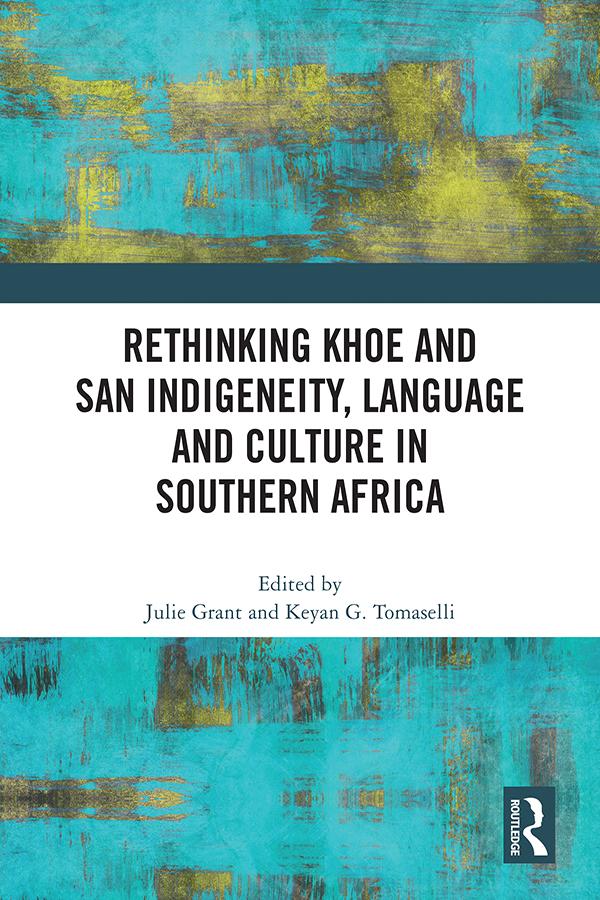
The San (hunter- gatherers) and Khoe (herders) of southern Africa were dispossessed of their land before, during and after the European colonial period, which started in 1652. They were often enslaved and forbidden from practicing their culture and speaking their languages. In South Africa, under apartheid, after 1948, they were reclassified as “Coloured” which further undermined Khoe and San culture, forcing them to reconfigure and realign their identities and loyalties. Southern Africa is no longer under colonial or apartheid rule; the San and Khoe, however, continue in the struggle to maintain the remnants of their languages and cultures, and are marginalised by the dominant peoples of the region. The San in particular, continue to command very extensive research attention from a variety of disciplines, from anthropology and linguistics to genetics. They are, however, usually studied as static historical objects but they are not merely peoples of the past, as is often assumed; they are very much alive in contemporary society with cultural and language needs.
This book brings together studies from a range of disciplines to examine what it means to be Indigenous Khoe and San in contemporary southern Africa. It considers the current constraints on Khoe and San identity, language and culture, constantly negotiating an indeterminate social positioning where they are treated as the inconvenient indigenous. Usually studied as original anthropos, but out of their time, this book shifts attention from the past to the present, and how the San have negotiated language, literacy and identity for coping in the period of modernity. It reveals that Afrikaans is indeed an African language, incubated not only by Cape Malay slaves working in the kitchens of the early Dutch settlers, but also by the Khoe and San who interacted with sailors from passing ships plying the West coast of southern Africa from the 14th century. The book re- examines the idea of literacy, its relationship to language, and how these shape identity.
The chapters in this book were originally published in the journal Critical Arts: South-North Cultural and Media Studies.
Before Memmo my notes were scattered across PDFs. Now a workspace pulls everything into one place — I see exactly what's still left to study.
Memmo's summaries are gold before exams. I don't have to re-read 800 pages two weeks before — just the important parts.
The AI chat has saved me the night before an exam more than once. I just keep asking until I get it — no waiting on a study group to reply.
The quizzes hit exactly what I need to know. Memmo tracks what I get stuck on — so I only practice what's worth it.
Flashcards with spaced repetition are magic. Memmo knows when I'm about to forget something and brings it back.
The AI podcasts are my favorite. I listen on my way to school and get a recap without sitting at a computer.

Handbok i kvalitativa metoder
281 kr

Hållbar utveckling: en introduktion för ingenjörer och andra problemlösare
334 kr

Brymans Samhällsvetenskapliga metoder
390 kr

Projektledning
491 kr

Den orättvisa hälsan: om socioekonomiska skillnader i hälsa och livslängd
326 kr

Vetenskapsteori för nybörjare
196 kr

Organizational Leadership
429 kr

På väg mot läraryrket
172 kr

Det sociala livet i skolan: Socialpsykologiska perspektiv
253 kr

Betygsättningens didaktik
151 kr

Personality
402 kr

Studying Leadership
404 kr

Managing Innovation
477 kr

Introduktion till samhällsvetenskaplig metod
347 kr

The Psychology of Sex and Gender
698 kr

Evidens och kunskap för socialt arbete
207 kr

Introduction to Leadership
605 kr