
Before Memmo my notes were scattered across PDFs. Now a workspace pulls everything into one place — I see exactly what's still left to study.
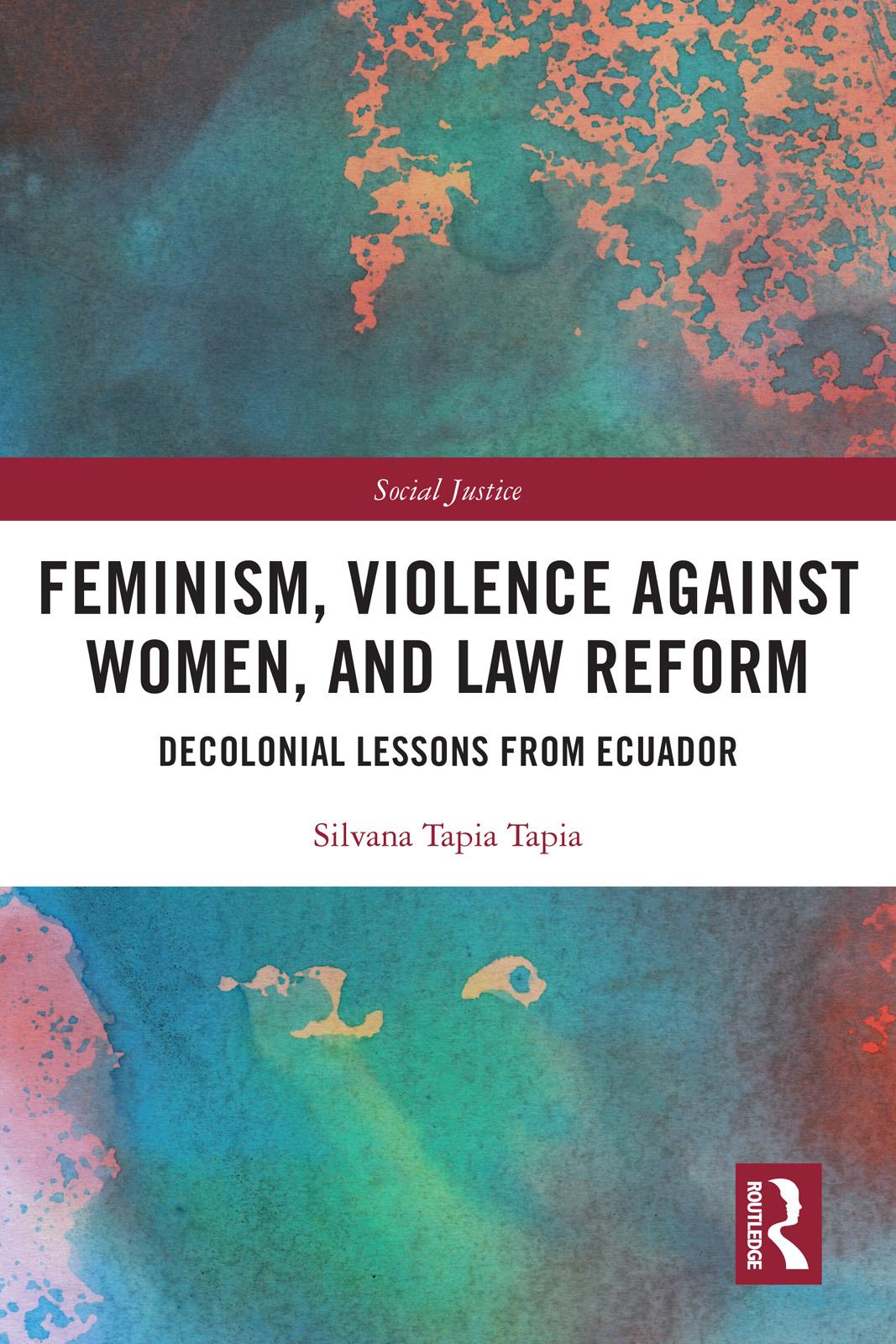
Offering an important addition to existing critiques of governance feminism and carceral expansion based mainly on experiences from the Global North, this book critically addresses feminist law reform on violence against women, from a decolonial perspective.
Challenging the consensus that penal expansion is mainly associated with the co-option of feminist campaigns to counteract violence against women in the context of neoliberal globalisation, this book shows that long-standing colonial narratives underlie many of today’s dominant legal discourses justifying criminalisation, even in countries whose governments have called themselves "leftist" and "post-neoliberal". Mapping the history of law reform on violence against women in Ecuador, the book reveals how the conciliation between feminist campaigns and criminalisation strategies takes place through liberal legality, the language of human rights, and the discourse of constitutional guarantees, across the political spectrum. Whilst human rights make violence against women intelligible in mainstream legal terms, the book shows that the emergence of a "rights-based penality" produces a benign, formally innocuous criminal law, which can be presented as progressive, but in practice reproduces colonial and postcolonial paradigms that limit and reshape feminist demands. The book raises new questions on the complex social and political factors that impact on feminist law reform projects, as it demonstrates how colonial assumptions about gender, race, class, and the family remain embedded in liberal criminal law.
This theoretically and empirically informed analysis makes an innovative contribution to feminist legal theory, post-colonial studies, and criminal law; and will be of interest to activists, scholars and policymakers working at the intersections between gender equality, law, and violence in Latin America and beyond.
Before Memmo my notes were scattered across PDFs. Now a workspace pulls everything into one place — I see exactly what's still left to study.
Memmo's summaries are gold before exams. I don't have to re-read 800 pages two weeks before — just the important parts.
The AI chat has saved me the night before an exam more than once. I just keep asking until I get it — no waiting on a study group to reply.
The quizzes hit exactly what I need to know. Memmo tracks what I get stuck on — so I only practice what's worth it.
Flashcards with spaced repetition are magic. Memmo knows when I'm about to forget something and brings it back.
The AI podcasts are my favorite. I listen on my way to school and get a recap without sitting at a computer.

Handbok i kvalitativa metoder
281 kr

Hållbar utveckling: en introduktion för ingenjörer och andra problemlösare
334 kr

Brymans Samhällsvetenskapliga metoder
390 kr

Projektledning
491 kr

Den orättvisa hälsan: om socioekonomiska skillnader i hälsa och livslängd
326 kr

Vetenskapsteori för nybörjare
196 kr

Organizational Leadership
429 kr

På väg mot läraryrket
172 kr

Det sociala livet i skolan: Socialpsykologiska perspektiv
253 kr

Betygsättningens didaktik
151 kr

Personality
402 kr

Studying Leadership
404 kr

Managing Innovation
477 kr

Introduktion till samhällsvetenskaplig metod
347 kr

The Psychology of Sex and Gender
698 kr

Evidens och kunskap för socialt arbete
207 kr

Introduction to Leadership
605 kr