
Before Memmo my notes were scattered across PDFs. Now a workspace pulls everything into one place — I see exactly what's still left to study.
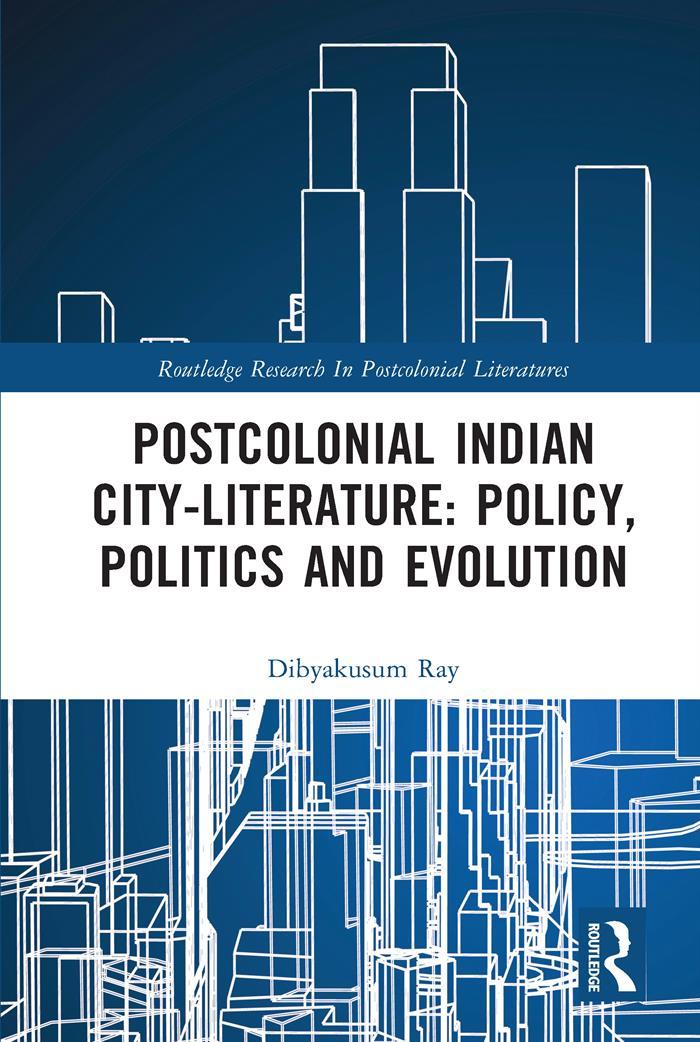
How is the city represented through literature from the post-colonies? This book searches for an answer to this question, by keeping its focus on India—from after Independence to the millennia. How does the urban space and the literature depicting it form a dialogue within? How have Indian cities grown in the past six decades, as well as the literature focused on it? How does the city-lit depart from organic realism to dissonant themes of “reclamation”? Most importantly—who does the city (and its narratives) belong to?
Through the juxtaposition of critical theories, sociological data, urban studies and variant literary works by a wide range of Indian authors, this book is divided into four temporal phases: the nation-building of the 50–60s, the dictatorial 70s, the neoliberalization of the 80–90s and the early 2000s. Each section covers the dominant socio-political thematics of the time and its effect on urbanism along with historical data from various resources, followed by an analysis of contemporaneously significant literary works—novel, short stories, plays, poetry and graphic novel. Each chapter comments on how literature, perceived as a historical phenomenon, frames real and imagined constructs and experiences of cities. To give the reader a more expansive idea of the complex nature of city-lit, the literary examples abound not only “Indian Writings in English,” but vernacular, cult-works as well with suitable translations.
With its focus on philosophy, urban studies and a unique canon of literature, this book offers elements of critical discussion to researchers, emergent university disciplines and curious readers alike.
Before Memmo my notes were scattered across PDFs. Now a workspace pulls everything into one place — I see exactly what's still left to study.
Memmo's summaries are gold before exams. I don't have to re-read 800 pages two weeks before — just the important parts.
The AI chat has saved me the night before an exam more than once. I just keep asking until I get it — no waiting on a study group to reply.
The quizzes hit exactly what I need to know. Memmo tracks what I get stuck on — so I only practice what's worth it.
Flashcards with spaced repetition are magic. Memmo knows when I'm about to forget something and brings it back.
The AI podcasts are my favorite. I listen on my way to school and get a recap without sitting at a computer.

Handbok i kvalitativa metoder
281 kr

Hållbar utveckling: en introduktion för ingenjörer och andra problemlösare
334 kr

Brymans Samhällsvetenskapliga metoder
390 kr

Projektledning
491 kr

Den orättvisa hälsan: om socioekonomiska skillnader i hälsa och livslängd
326 kr

Vetenskapsteori för nybörjare
196 kr

Organizational Leadership
429 kr

På väg mot läraryrket
172 kr

Det sociala livet i skolan: Socialpsykologiska perspektiv
253 kr

Betygsättningens didaktik
151 kr

Personality
402 kr

Studying Leadership
404 kr

Managing Innovation
477 kr

Introduktion till samhällsvetenskaplig metod
347 kr

The Psychology of Sex and Gender
698 kr

Evidens och kunskap för socialt arbete
207 kr

Introduction to Leadership
605 kr