
Before Memmo my notes were scattered across PDFs. Now a workspace pulls everything into one place — I see exactly what's still left to study.
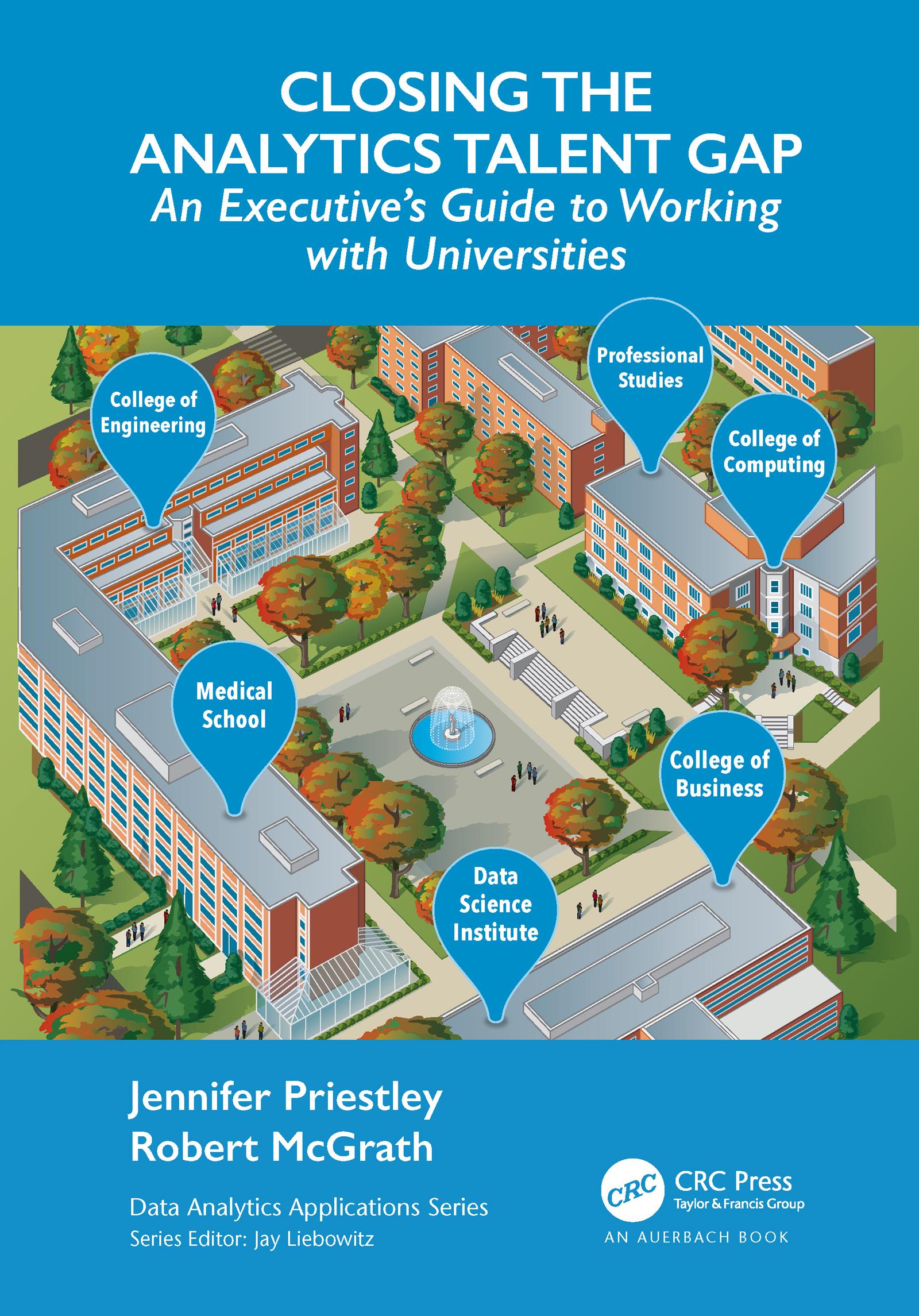
How can we recruit out of your program? We have a project – how do we reach out to your students? If we do research together who owns it? We have employees who need to "upskill" in analytics – can you help me with that? How much does all of this cost? Managers and executives are increasingly asking university professors such questions as they deal with a critical shortage of skilled data analysts. At the same time, academics are asking such questions as: How can I bring a "real" analytical project in the classroom? How can I get "real" data to help my students develop the skills necessary to be a "data scientist? Is what I am teaching in the classroom aligned with the demands of the market for analytical talent?
After spending several years answering almost daily e-mails and telephone calls from business managers asking for staffing help and aiding fellow academics with their analytics teaching needs, Dr. Jennifer Priestley of Kennesaw State University and Dr. Robert McGrath of the University of New Hampshire wrote Closing the Analytics Talent Gap: An Executive’s Guide to Working with Universities. The book builds a bridge between university analytics programs and business organizations. It promotes a dialog that enables executives to learn how universities can help them find strategically important personnel and universities to learn how they can develop and educate this personnel.
Organizations are facing previously unforeseen challenges related to the translation of massive amounts of data – structured and unstructured, static and in-motion, voice, text, and image – into information to solve current challenges and anticipate new ones. The advent of analytics and data science also presents universities with unforeseen challenges of providing learning through application. This book helps both organizations with finding "data natives" and universities with educating students to develop the facility to work in a multi-faceted and complex data environment.
.
Before Memmo my notes were scattered across PDFs. Now a workspace pulls everything into one place — I see exactly what's still left to study.
Memmo's summaries are gold before exams. I don't have to re-read 800 pages two weeks before — just the important parts.
The AI chat has saved me the night before an exam more than once. I just keep asking until I get it — no waiting on a study group to reply.
The quizzes hit exactly what I need to know. Memmo tracks what I get stuck on — so I only practice what's worth it.
Flashcards with spaced repetition are magic. Memmo knows when I'm about to forget something and brings it back.
The AI podcasts are my favorite. I listen on my way to school and get a recap without sitting at a computer.

Handbok i kvalitativa metoder
281 kr

Hållbar utveckling: en introduktion för ingenjörer och andra problemlösare
334 kr

Brymans Samhällsvetenskapliga metoder
390 kr

Projektledning
491 kr

Den orättvisa hälsan: om socioekonomiska skillnader i hälsa och livslängd
326 kr

Vetenskapsteori för nybörjare
196 kr

Organizational Leadership
429 kr

På väg mot läraryrket
172 kr

Det sociala livet i skolan: Socialpsykologiska perspektiv
253 kr

Betygsättningens didaktik
151 kr

Personality
402 kr

Studying Leadership
404 kr

Managing Innovation
477 kr

Introduktion till samhällsvetenskaplig metod
347 kr

The Psychology of Sex and Gender
698 kr

Evidens och kunskap för socialt arbete
207 kr

Introduction to Leadership
605 kr