
Before Memmo my notes were scattered across PDFs. Now a workspace pulls everything into one place — I see exactly what's still left to study.
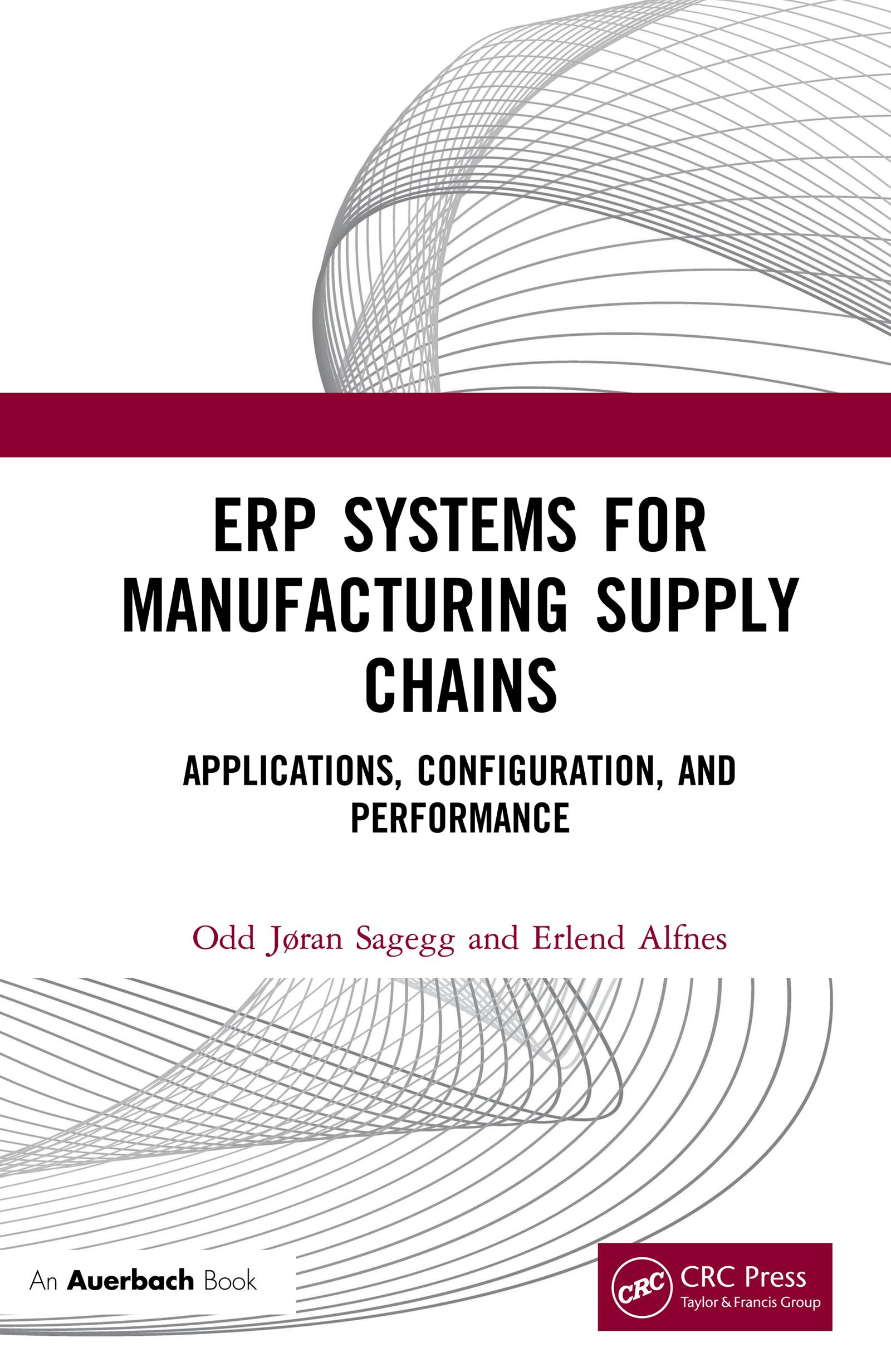
ERP Systems for Manufacturing Supply Chains: Applications, Configuration, and Performance provides insight into the core architecture, modules, and process support of ERP systems used in a manufacturing supply chain. This book explains the building blocks of an ERP system and how they can be used to increase performance of manufacturing supply chains.
Starting with an overview of basic concepts of supply chain and ERP systems, the book delves into the core ERP modules that support manufacturing facilities and organizations. It examines each module’s structure and functionality as well as the process support the module provides. Cases illustrate how the modules can be applied in manufacturing environments. Also covered is how the ERP modules can be configured to support manufacturing supply chains. Setting up an ERP system to support the supply chain within single manufacturing facility provides insight into how an ERP system is used in the smallest of manufacturing enterprises, as well as lays the foundation for ERP systems in manufacturing organizations. The book then supplies strategies for larger manufacturing enterprises and discusses how ERP systems can be used to support a complete manufacturing supply chain across different facilities and companies.
The ERP systems on the market today tend to use common terminology and naming for describing specific functions and data units in the software. However, there are differences among packages. The book discusses various data and functionalities found in different ERP-software packages and uses generic and descriptive terms as often as possible to make these valid for as many ERP systems as possible.
Filled with insight into ERP system’s core modules and functions, this book shows how ERP systems can be applied to support a supply chain in the smallest of manufacturing organizations that only consist of a single manufacturing facility, as well as large enterprises where the manufacturing supply chain crosses multiple facilities and companies.
Before Memmo my notes were scattered across PDFs. Now a workspace pulls everything into one place — I see exactly what's still left to study.
Memmo's summaries are gold before exams. I don't have to re-read 800 pages two weeks before — just the important parts.
The AI chat has saved me the night before an exam more than once. I just keep asking until I get it — no waiting on a study group to reply.
The quizzes hit exactly what I need to know. Memmo tracks what I get stuck on — so I only practice what's worth it.
Flashcards with spaced repetition are magic. Memmo knows when I'm about to forget something and brings it back.
The AI podcasts are my favorite. I listen on my way to school and get a recap without sitting at a computer.

Handbok i kvalitativa metoder
281 kr

Hållbar utveckling: en introduktion för ingenjörer och andra problemlösare
334 kr

Brymans Samhällsvetenskapliga metoder
390 kr

Projektledning
491 kr

Den orättvisa hälsan: om socioekonomiska skillnader i hälsa och livslängd
326 kr

Vetenskapsteori för nybörjare
196 kr

Organizational Leadership
429 kr

På väg mot läraryrket
172 kr

Det sociala livet i skolan: Socialpsykologiska perspektiv
253 kr

Betygsättningens didaktik
151 kr

Personality
402 kr

Studying Leadership
404 kr

Managing Innovation
477 kr

Introduktion till samhällsvetenskaplig metod
347 kr

The Psychology of Sex and Gender
698 kr

Evidens och kunskap för socialt arbete
207 kr

Introduction to Leadership
605 kr