
Before Memmo my notes were scattered across PDFs. Now a workspace pulls everything into one place — I see exactly what's still left to study.
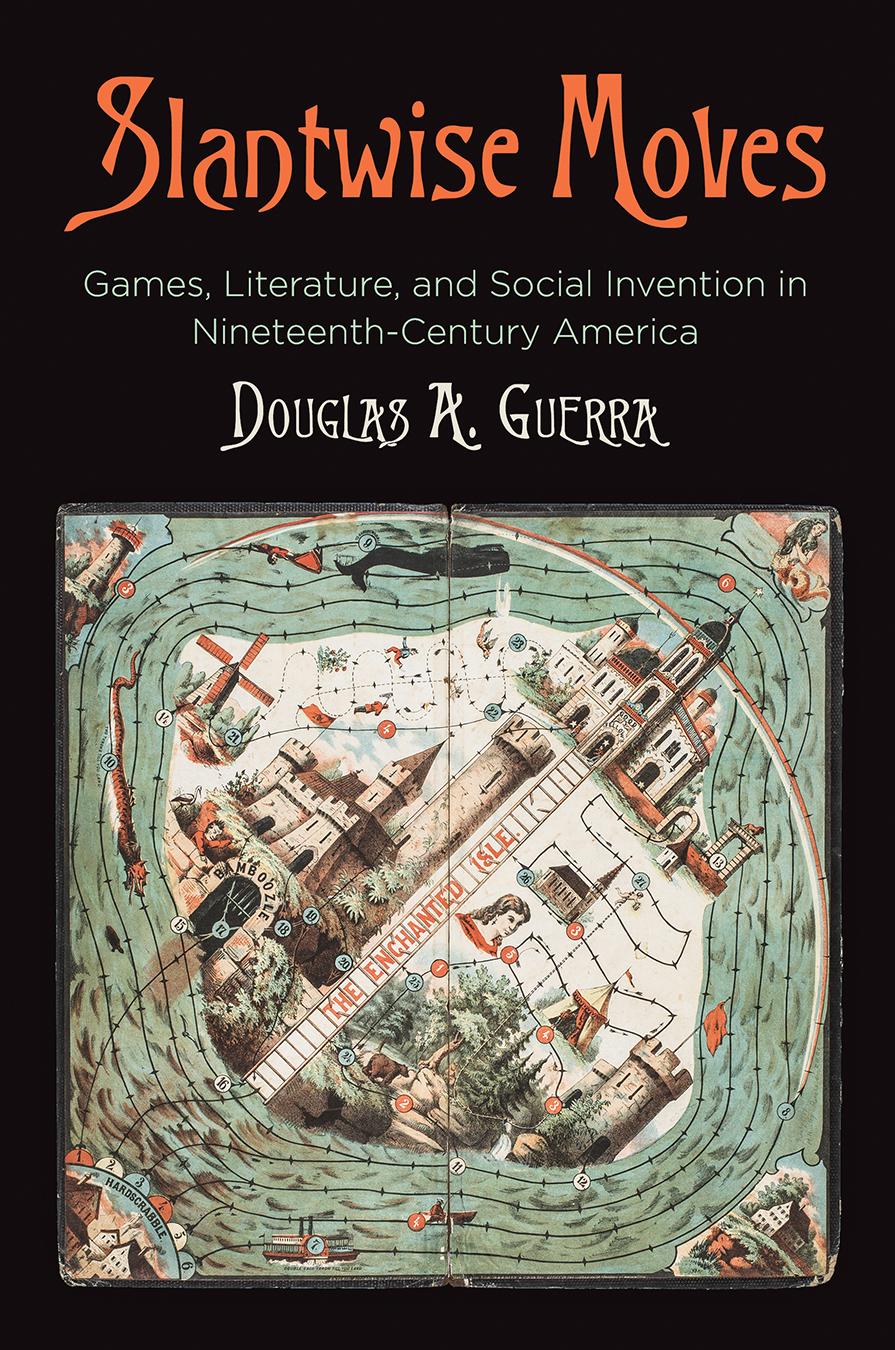
In 1860, Milton Bradley invented The Checkered Game of Life. Having journeyed from Springfield, Massachusetts, to New York City to determine interest in this combination of bright red ink, brass dials, and character-driven decision-making, Bradley exhausted his entire supply of merchandise just two days after his arrival in the city; within a few months, he had sold forty thousand copies. That same year, Walt Whitman left Brooklyn to oversee the printing of the third edition of his Leaves of Grass in Massachusetts. In Slantwise Moves, Douglas A. Guerra sees more than mere coincidence in the contemporary popularity of these superficially different cultural productions. Instead, he argues, both the book and the game were materially resonant sites of social experimentation—places where modes of collectivity and selfhood could be enacted and performed.
Then as now, Guerra observes, "game" was a malleable category, mediating play in various and inventive ways: through the material forms of pasteboard, paper, and india rubber; via settings like the parlor, lawn, or public hall; and by mutually agreed-upon measurements of success, ranging from point accumulation to the creation of humorous narratives. Recovering the lives of important game designers, anthologists, and codifiers—including Anne Abbot, William Simonds, Michael Phelan, and the aforementioned Bradley—Guerra brings his study of commercially produced games into dialogue with a reconsideration of iconic literary works. Through contrapuntal close readings of texts and gameplay, he finds multiple possibilities for self-fashioning reflected in Bradley's Life and Whitman's "Song of Myself," as well as utopian social spaces on billiard tables and the pages of Nathaniel Hawthorne's The Blithedale Romance alike.
Highlighting meaningful overlap in the production and reception of books and games, Slantwise Moves identifies what the two have in common as material texts and as critical models of the mundane pleasures and intimacies that defined agency and social belonging in nineteenth-century America.
Before Memmo my notes were scattered across PDFs. Now a workspace pulls everything into one place — I see exactly what's still left to study.
Memmo's summaries are gold before exams. I don't have to re-read 800 pages two weeks before — just the important parts.
The AI chat has saved me the night before an exam more than once. I just keep asking until I get it — no waiting on a study group to reply.
The quizzes hit exactly what I need to know. Memmo tracks what I get stuck on — so I only practice what's worth it.
Flashcards with spaced repetition are magic. Memmo knows when I'm about to forget something and brings it back.
The AI podcasts are my favorite. I listen on my way to school and get a recap without sitting at a computer.

Handbok i kvalitativa metoder
281 kr

Hållbar utveckling: en introduktion för ingenjörer och andra problemlösare
334 kr

Brymans Samhällsvetenskapliga metoder
390 kr

Projektledning
491 kr

Den orättvisa hälsan: om socioekonomiska skillnader i hälsa och livslängd
326 kr

Vetenskapsteori för nybörjare
196 kr

Organizational Leadership
429 kr

På väg mot läraryrket
172 kr

Det sociala livet i skolan: Socialpsykologiska perspektiv
253 kr

Betygsättningens didaktik
151 kr

Personality
402 kr

Studying Leadership
404 kr

Managing Innovation
477 kr

Introduktion till samhällsvetenskaplig metod
347 kr

The Psychology of Sex and Gender
698 kr

Evidens och kunskap för socialt arbete
207 kr

Introduction to Leadership
605 kr