
Before Memmo my notes were scattered across PDFs. Now a workspace pulls everything into one place — I see exactly what's still left to study.
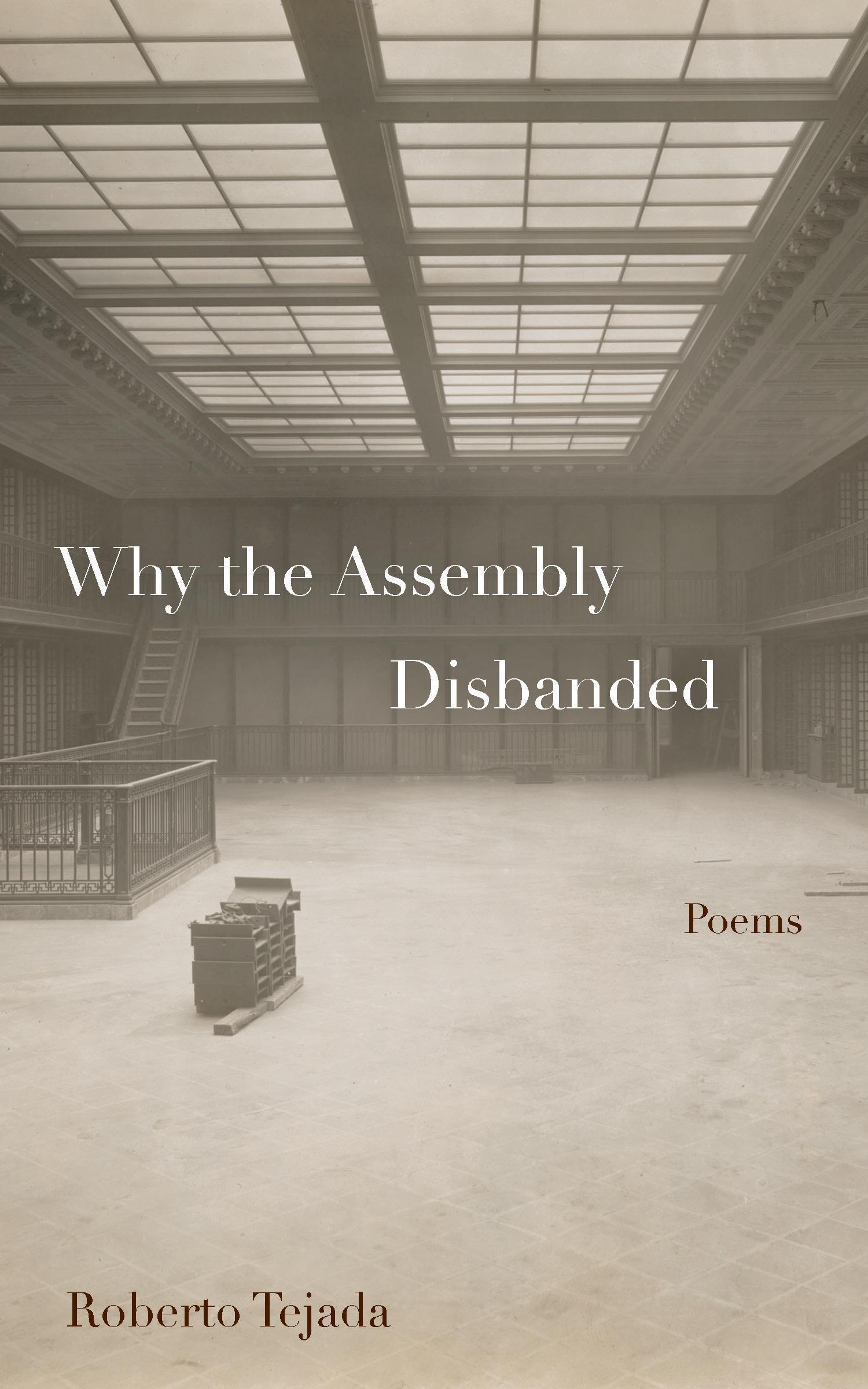
Pushing the boundaries of Latinx literature and what constitutes a borderlands poetics.
Throughout Roberto Tejada’s body of work, the renowned poet and celebrated critic has explored themes of Latinx culture, politics, history, language, and ecologies. In his latest collection, Why the Assembly Disbanded, he presents a unique contribution to Latinx letters that reflects on the relations between the United States and Latin America, especially their real and symbolic borderlands.
Immersive, postmodern, and philosophical, Why the Assembly Disbanded provides an associative, critical Latinx aesthetic connecting the Mexico–United States borderlands to Latin America’s neo-baroque heritage. Migrants, settlers, tourists, and exiles moving across various hemispheric landscapes are featured in these exuberant, capacious, and self-reflexive poems. Tejada relates the ravages of white supremacy in our culture that, together with immigrant precarity, turn home into a place of foreboding and impending eviction, even as a dream-weather makes room at last for scenes of possibility and attainment in the account of human history.
The sweeping futuristic vistas open on to narratives of colonial extraction, human displacement, abuses of capitalism, mass media spectacle, the antagonism of language and technical images in the sensorium of urban and digital life-worlds, and the relations of desire encouraged by pictures and words in the economy of attention. Los Angeles and Mexico City figure prominently in poems committed to voicing modes of formation and community in an intersectional reckoning of personhoods prompted in work by artists Betye Saar, Amiri Baraka, Connie Samaras, and Rubén Ortiz Torres.
With language given to pageantry, tonal precision, and a hopeful lyric radiance that can accommodate ecstasy and justice, Roberto Tejada’s carnivalesque, borderland imagery pushes the boundaries of Latinx literature. World-building by way of reverie, speculation, and retro-futurist tableaux, and with vivid, sometimes violent particularity, his poems enact hallucinatory realities of the hemisphere: an imagination that triangulates history, lyricism, and art as social practice.
Before Memmo my notes were scattered across PDFs. Now a workspace pulls everything into one place — I see exactly what's still left to study.
Memmo's summaries are gold before exams. I don't have to re-read 800 pages two weeks before — just the important parts.
The AI chat has saved me the night before an exam more than once. I just keep asking until I get it — no waiting on a study group to reply.
The quizzes hit exactly what I need to know. Memmo tracks what I get stuck on — so I only practice what's worth it.
Flashcards with spaced repetition are magic. Memmo knows when I'm about to forget something and brings it back.
The AI podcasts are my favorite. I listen on my way to school and get a recap without sitting at a computer.

Handbok i kvalitativa metoder
281 kr

Hållbar utveckling: en introduktion för ingenjörer och andra problemlösare
334 kr

Brymans Samhällsvetenskapliga metoder
390 kr

Projektledning
491 kr

Den orättvisa hälsan: om socioekonomiska skillnader i hälsa och livslängd
326 kr

Vetenskapsteori för nybörjare
196 kr

Organizational Leadership
429 kr

På väg mot läraryrket
172 kr

Det sociala livet i skolan: Socialpsykologiska perspektiv
253 kr

Betygsättningens didaktik
151 kr

Personality
402 kr

Studying Leadership
404 kr

Managing Innovation
477 kr

Introduktion till samhällsvetenskaplig metod
347 kr

The Psychology of Sex and Gender
698 kr

Evidens och kunskap för socialt arbete
207 kr

Introduction to Leadership
605 kr