
Before Memmo my notes were scattered across PDFs. Now a workspace pulls everything into one place — I see exactly what's still left to study.
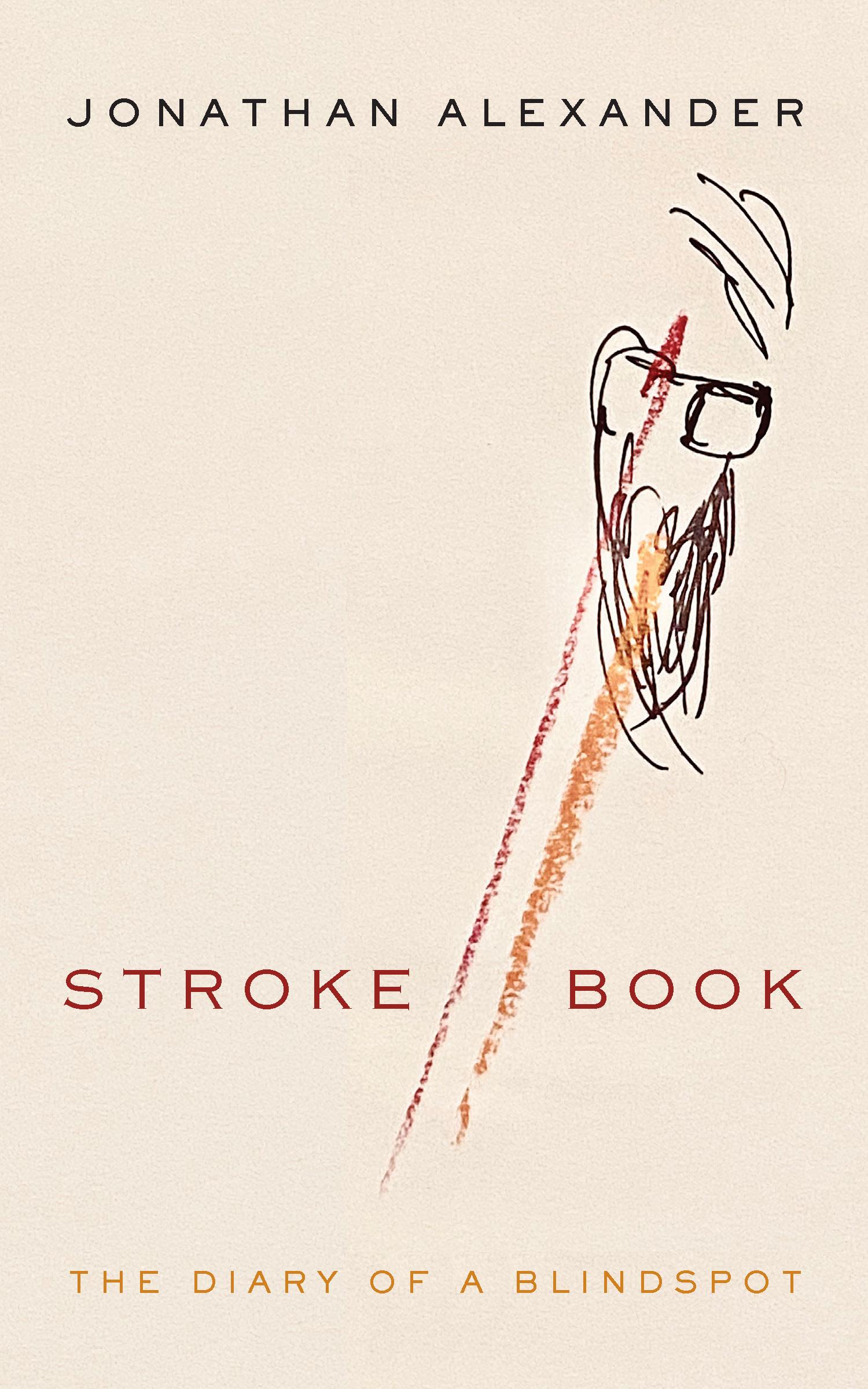
An archive of personal trauma that addresses how a culture still toxic to queer people can reshape a body
In the summer of 2019, Jonathan Alexander had a minor stroke, what his doctors called an “eye stroke.” A small bit of cholesterol came loose from a vein in his neck and instead of shooting into his brain and causing damage, it lodged itself in a branch artery of his retina, resulting in a permanent blindspot in his right eye. In Stroke Book, Alexander recounts both the immediate aftermath of his health crisis, which marked deeper health concerns, as well as his experiences as a queer person subject to medical intervention.
A pressure that the queer ill contend with is feeling at fault for their condition, of having somehow chosen illness as punishment for their queerness, however subconsciously. Queer people often experience psychic and somatic pressures that not only decrease their overall quality of life but can also lead to shorter lifespans. Emerging out of a medical emergency and a need to think and feel that crisis through the author’s sexuality, changing sense of dis/ability, and experience of time, Stroke Book invites readers on a personal journey of facing a health crisis while trying to understand how one’s sexual identity affects and is affected by that crisis. Pieceing and stitching together his experience in a queered diary form, Alexander’s lyrical prose documents his ongoing, unfolding experience in the aftermath of the stroke. Through the fracturing of his text, which almost mirrors his fractured sight post-stroke, the author grapples with his shifted experience of time, weaving in and out, while he tracks the aftermath of what he comes to call his “incident” and meditates on how a history of homophobic encounters can manifest in embodied forms.
The book situates itself within a larger queer tradition of writing—first, about the body, then about the body unbecoming, and then, yet further, about the body ongoing, even in the shadow of death. Stroke Book also documents the complexities of critique and imagination while holding open a space for dreaming, pleasure, intimacy, and the unexpected.
Before Memmo my notes were scattered across PDFs. Now a workspace pulls everything into one place — I see exactly what's still left to study.
Memmo's summaries are gold before exams. I don't have to re-read 800 pages two weeks before — just the important parts.
The AI chat has saved me the night before an exam more than once. I just keep asking until I get it — no waiting on a study group to reply.
The quizzes hit exactly what I need to know. Memmo tracks what I get stuck on — so I only practice what's worth it.
Flashcards with spaced repetition are magic. Memmo knows when I'm about to forget something and brings it back.
The AI podcasts are my favorite. I listen on my way to school and get a recap without sitting at a computer.

Handbok i kvalitativa metoder
281 kr

Hållbar utveckling: en introduktion för ingenjörer och andra problemlösare
334 kr

Brymans Samhällsvetenskapliga metoder
390 kr

Projektledning
491 kr

Den orättvisa hälsan: om socioekonomiska skillnader i hälsa och livslängd
326 kr

Organizational Leadership
429 kr

Vetenskapsteori för nybörjare
196 kr

På väg mot läraryrket
172 kr

Det sociala livet i skolan: Socialpsykologiska perspektiv
253 kr

Betygsättningens didaktik
151 kr

Personality
402 kr

Studying Leadership
404 kr

Managing Innovation
477 kr

Introduktion till samhällsvetenskaplig metod
347 kr

The Psychology of Sex and Gender
698 kr

Evidens och kunskap för socialt arbete
207 kr

Introduction to Leadership
605 kr