
Before Memmo my notes were scattered across PDFs. Now a workspace pulls everything into one place — I see exactly what's still left to study.
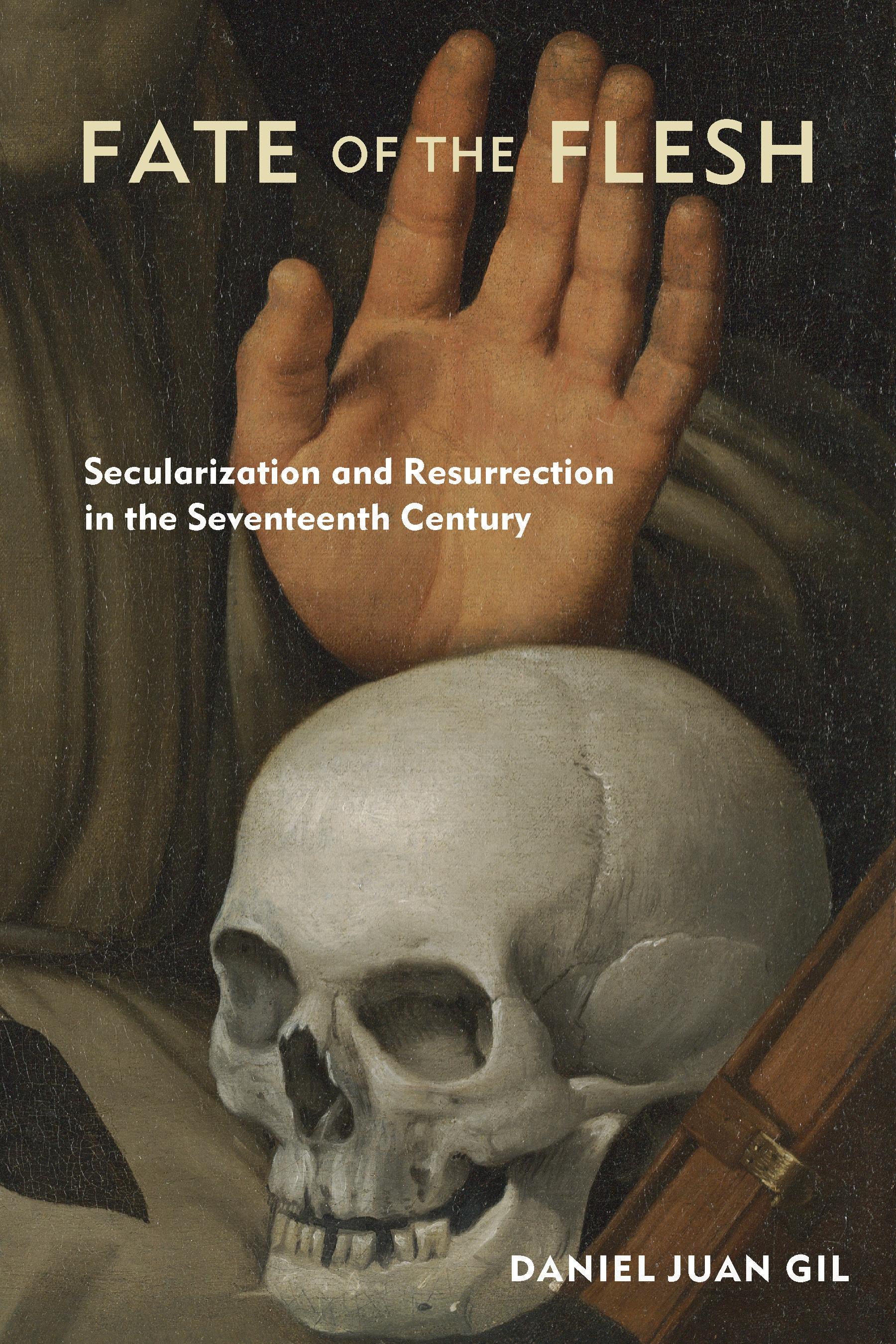
In the seventeenth century the ancient hope for the physical resurrection of the body and its flesh began an unexpected second life as critical theory, challenging the notion of an autonomous self and driving early modern avant-garde poetry. As an emerging empirical scientific world view and a rising Cartesian dualist ontology transformed the ancient hope for the resurrection of the flesh into the fantasy of a soul or mind living on separately from any body, literature complicated the terms of the debate. Such poets as Donne, Herbert, Vaughan, and Jonson picked up the discarded idea of the resurrection of the flesh and bent it from an apocalyptic future into the here and now to imagine the self already infused with the strange, vibrant materiality of the resurrection body.
Fate of the Flesh explores what happens when seventeenth-century poets posit a resurrection body within the historical person. These poets see the resurrection body as the precondition for the social person’s identities and forms of agency and yet as deeply other to all such identities and agencies, an alien within the self that both enables and undercuts life as a social person. This perspective leads seventeenth-century poets to a compelling awareness of the unsettling materiality within the heart of the self and allows them to re-imagine agency, selfhood, and the natural world in its light. By developing a poetics that seeks a deranging materiality within the self, these poets anticipate twentieth-century “avant-garde” poetics. They frame their poems neither as simple representation nor as beautiful objects but as a form of social praxis that creates new communities of readers and writers assembled around a new experience of self-as-body mediated by poetry.
Before Memmo my notes were scattered across PDFs. Now a workspace pulls everything into one place — I see exactly what's still left to study.
Memmo's summaries are gold before exams. I don't have to re-read 800 pages two weeks before — just the important parts.
The AI chat has saved me the night before an exam more than once. I just keep asking until I get it — no waiting on a study group to reply.
The quizzes hit exactly what I need to know. Memmo tracks what I get stuck on — so I only practice what's worth it.
Flashcards with spaced repetition are magic. Memmo knows when I'm about to forget something and brings it back.
The AI podcasts are my favorite. I listen on my way to school and get a recap without sitting at a computer.

Handbok i kvalitativa metoder
281 kr

Hållbar utveckling: en introduktion för ingenjörer och andra problemlösare
334 kr

Brymans Samhällsvetenskapliga metoder
390 kr

Projektledning
491 kr

Den orättvisa hälsan: om socioekonomiska skillnader i hälsa och livslängd
326 kr

Vetenskapsteori för nybörjare
196 kr

Organizational Leadership
429 kr

På väg mot läraryrket
172 kr

Det sociala livet i skolan: Socialpsykologiska perspektiv
253 kr

Betygsättningens didaktik
151 kr

Personality
402 kr

Studying Leadership
404 kr

Managing Innovation
477 kr

Introduktion till samhällsvetenskaplig metod
347 kr

The Psychology of Sex and Gender
698 kr

Evidens och kunskap för socialt arbete
207 kr

Introduction to Leadership
605 kr