
Before Memmo my notes were scattered across PDFs. Now a workspace pulls everything into one place — I see exactly what's still left to study.
Shortlisted, 2021 Memory Studies Association First Book Award
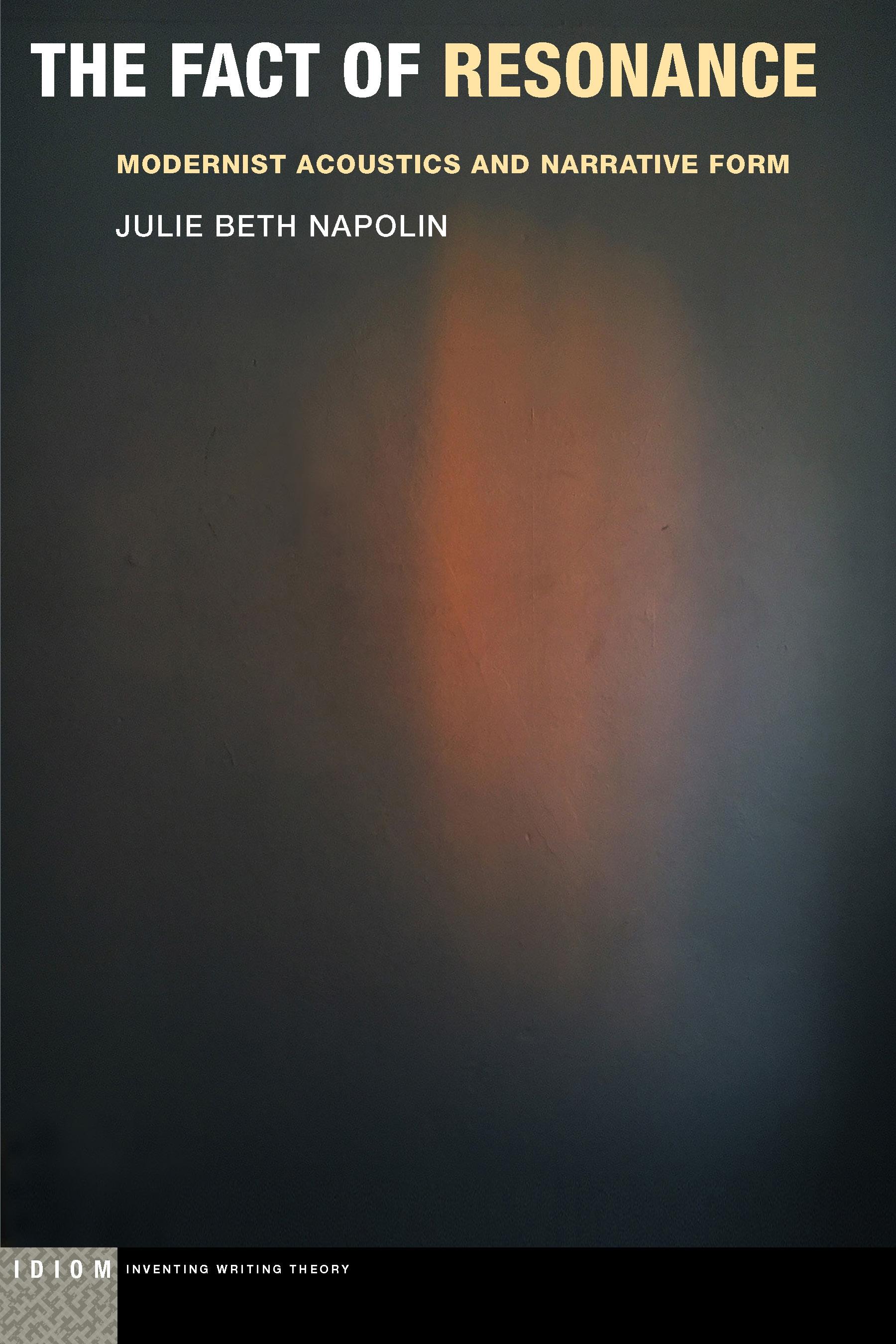
The Fact of Resonance returns to the colonial and technological contexts in which theories of the novel developed, seeking in sound an alternative premise for theorizing modernist narrative form. Arguing that narrative theory has been founded on an exclusion of sound, the book poses a missing counterpart to modernism’s question “who speaks?” in the hidden acoustical questions “who hears?” and “who listens?”
For Napolin, the experience of reading is undergirded by the sonic. The book captures and enhances literature’s ambient sounds, sounds that are clues to heterogeneous experiences secreted within the acoustical unconscious of texts. The book invents an oblique ear, a subtle and lyrical prose style attuned to picking up sounds no longer hearable. “Resonance” opens upon a new genealogy of modernism, tracking from Joseph Conrad to his interlocutors—Sigmund Freud, Frantz Fanon, W. E. B. Du Bois, William Faulkner, and Chantal Akerman—the racialized, gendered, and colonial implications of acoustical figures that “drift” through and are transformed by narrative worlds in writing, film, and music.
A major synthesis of resources gleaned from across the theoretical humanities, the book argues for “resonance” as the traversal of acoustical figures across the spaces of colonial and technological modernity, figures registering and transmitting transformations of “voice” and “sound” across languages, culture, and modalities of hearing. We have not yet sufficiently attended to relays between sound, narrative, and the unconscious that are crucial to the ideological entailments and figural strategies of transnational, transatlantic, and transpacific modernism. The breadth of the book’s engagements will make it of interest not only to students and scholars of modernist fiction and sound studies, but to anyone interested in contemporary critical theory.
Before Memmo my notes were scattered across PDFs. Now a workspace pulls everything into one place — I see exactly what's still left to study.
Memmo's summaries are gold before exams. I don't have to re-read 800 pages two weeks before — just the important parts.
The AI chat has saved me the night before an exam more than once. I just keep asking until I get it — no waiting on a study group to reply.
The quizzes hit exactly what I need to know. Memmo tracks what I get stuck on — so I only practice what's worth it.
Flashcards with spaced repetition are magic. Memmo knows when I'm about to forget something and brings it back.
The AI podcasts are my favorite. I listen on my way to school and get a recap without sitting at a computer.

Handbok i kvalitativa metoder
281 kr

Hållbar utveckling: en introduktion för ingenjörer och andra problemlösare
334 kr

Brymans Samhällsvetenskapliga metoder
390 kr

Projektledning
491 kr

Den orättvisa hälsan: om socioekonomiska skillnader i hälsa och livslängd
326 kr

Vetenskapsteori för nybörjare
196 kr

Organizational Leadership
429 kr

På väg mot läraryrket
172 kr

Det sociala livet i skolan: Socialpsykologiska perspektiv
253 kr

Betygsättningens didaktik
151 kr

Personality
402 kr

Studying Leadership
404 kr

Managing Innovation
477 kr

Introduktion till samhällsvetenskaplig metod
347 kr

The Psychology of Sex and Gender
698 kr

Evidens och kunskap för socialt arbete
207 kr

Introduction to Leadership
605 kr