
Before Memmo my notes were scattered across PDFs. Now a workspace pulls everything into one place — I see exactly what's still left to study.
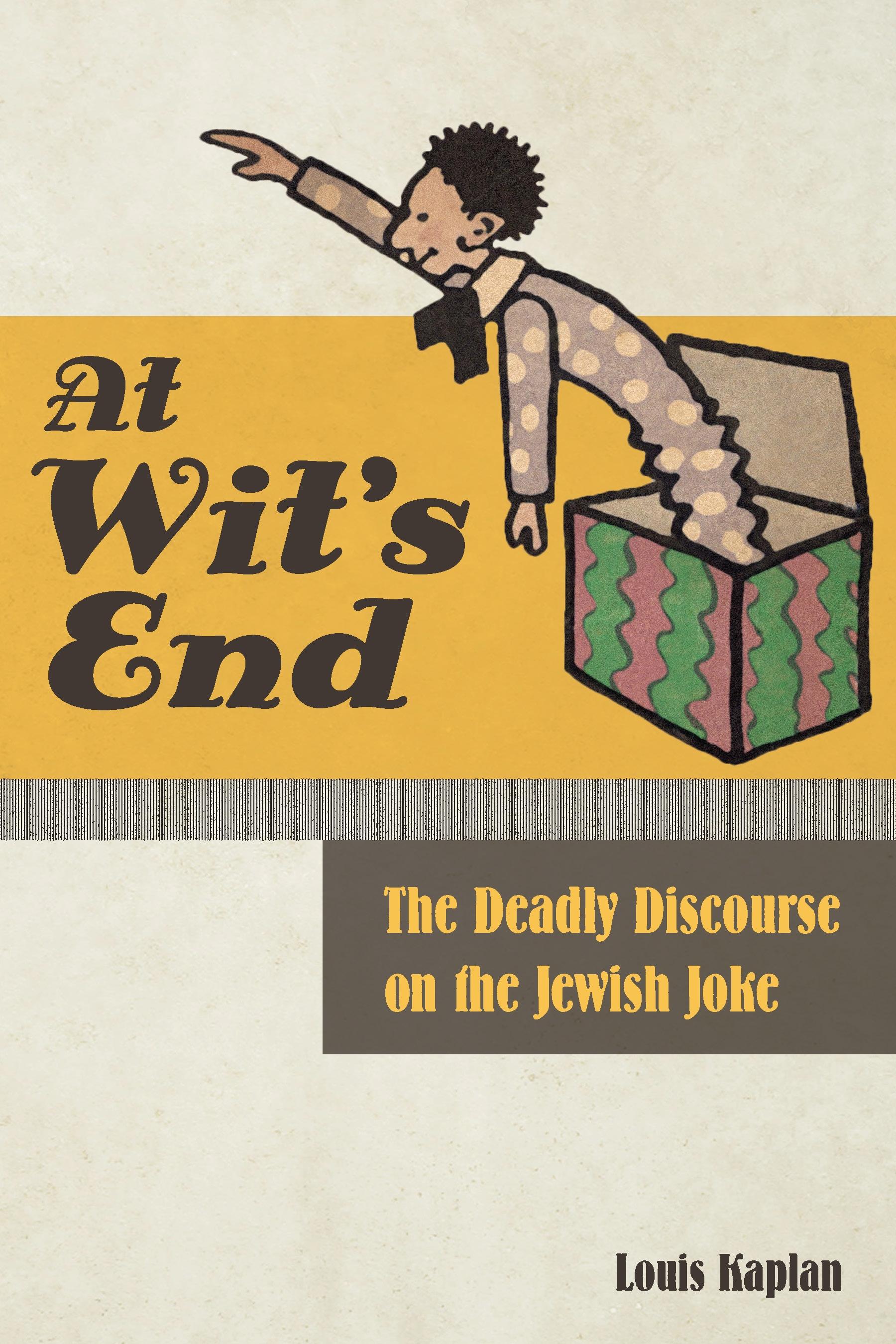
CHOICE: OUTSTANDING ACADEMIC TITLE
A scholarly and thought-provoking work that places Jewish humor at the center of a discourse about Jewish and German relations through most of the twentieth century.
At Wit’s End explores the fascinating discourse on Jewish wit in the twentieth century when the Jewish joke became the subject of serious humanistic inquiry and inserted itself into the cultural and political debates among Germans and Jews against the ideologically charged backdrop of anti-Semitism, the Jewish question, and the Holocaust.
The first in-depth study to explore the Jewish joke as a crucial rhetorical figure in larger cultural debates in Germany, author Louis Kaplan presents an engrossing and lucid work of scholarship that examines how “der jüdische Witz” (referring to both Jewish wit and jokes) was utilized differently in a number of texts, from the Weimar Republic to the rise of National Socialism, and how it was re-introduced into the public sphere after the Holocaust with the controversial publication of Salcia Landmann’s collection of Jewish jokes in the reparations era (Wiedergutmachung). Kaplan reviews the claims made about the Jewish joke and its provocative laughter by notable writers from a variety of ideological perspectives, demonstrating how their reflections on this complex cultural trope enable a better understanding of German–Jewish intercultural relations and their eventual breakdown in the Third Reich. He also illustrates how selfcritical and self-ironic Jewish Witz maintained a fraught and ambivalent relationship with anti-Semitism.
In reviewing this critical and traumatic moment in modern German–Jewish history through the deadly discourse on the Jewish joke, At Wit’s End includes chapters on the virulent Austrian anti-Semitic racial theorist Arthur Trebitsch, the Nazi racial propagandist Siegfried Kadner, the German Marxist cultural historian Eduard Fuchs, the Jewish diasporic historian Erich Kahler, and the Jewish cabaret impresario Kurt Robitschek, among others. Shedding new light on anti-Semitism and on the Jewish question leading up to the Holocaust, At Wit’s End provides readers with a unique perspective by which to gain important insights about this crucial historical period that reverberates into the present day, when potentially offensive humor coupled with a toxic political climate and xenophobia can have deadly consequences.
Before Memmo my notes were scattered across PDFs. Now a workspace pulls everything into one place — I see exactly what's still left to study.
Memmo's summaries are gold before exams. I don't have to re-read 800 pages two weeks before — just the important parts.
The AI chat has saved me the night before an exam more than once. I just keep asking until I get it — no waiting on a study group to reply.
The quizzes hit exactly what I need to know. Memmo tracks what I get stuck on — so I only practice what's worth it.
Flashcards with spaced repetition are magic. Memmo knows when I'm about to forget something and brings it back.
The AI podcasts are my favorite. I listen on my way to school and get a recap without sitting at a computer.

Handbok i kvalitativa metoder
281 kr

Hållbar utveckling: en introduktion för ingenjörer och andra problemlösare
334 kr

Brymans Samhällsvetenskapliga metoder
390 kr

Projektledning
491 kr

Den orättvisa hälsan: om socioekonomiska skillnader i hälsa och livslängd
326 kr

Organizational Leadership
429 kr

Vetenskapsteori för nybörjare
196 kr

På väg mot läraryrket
172 kr

Det sociala livet i skolan: Socialpsykologiska perspektiv
253 kr

Betygsättningens didaktik
151 kr

Personality
402 kr

Studying Leadership
404 kr

Managing Innovation
477 kr

Introduktion till samhällsvetenskaplig metod
347 kr

The Psychology of Sex and Gender
698 kr

Evidens och kunskap för socialt arbete
207 kr

Introduction to Leadership
605 kr