
Before Memmo my notes were scattered across PDFs. Now a workspace pulls everything into one place — I see exactly what's still left to study.
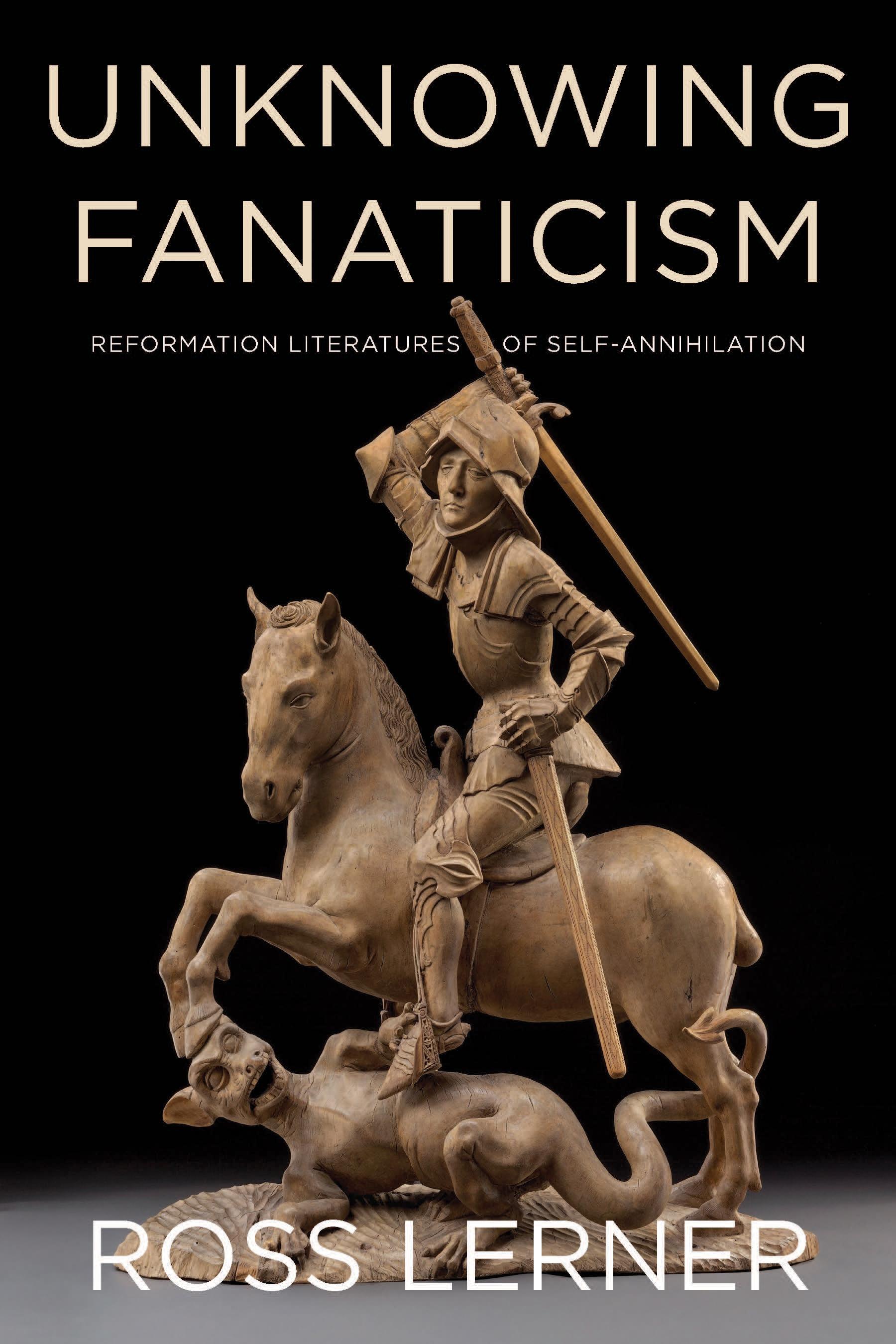
We may think we know what defines religious fanaticism: violent action undertaken with dogmatic certainty. But the term fanatic, from the European Reformation to today, has never been a stable one. Then and now it has been reductively defined to justify state violence and to delegitimize alternative sources of authority. Unknowing Fanaticism rejects the simplified binary of fanatical religion and rational politics, turning to Renaissance literature to demonstrate that fanaticism was integral to how both modern politics and poetics developed, from the German Peasants’ Revolt to the English Civil War.
The book traces two entangled approaches to fanaticism in this long Reformation moment: the targeting of it as an extreme political threat and the engagement with it as a deep epistemological and poetic problem. In the first, thinkers of modernity from Martin Luther to Thomas Hobbes and John Locke positioned themselves against fanaticism to pathologize rebellion and abet theological and political control. In the second, which arose alongside and often in response to the first, the poets of fanaticism investigated the link between fanatical self-annihilation—the process by which one could become a vessel for divine violence—and the practices of writing poetry. Edmund Spenser, John Donne, and John Milton recognized in the fanatic’s claim to be a passive instrument of God their own incapacity to know and depict the origins of fanaticism. Yet this crisis of unknowing was a productive one. It led these writers to experiment with poetic techniques that would allow them to address fanaticism’s tendency to unsettle the boundaries between human and divine agency and between individual and collective bodies. These poets demand a new critical method, which this book attempts to model: a historically-minded and politicized formalism that can attend to the complexity of the poetic encounter with fanaticism.
Before Memmo my notes were scattered across PDFs. Now a workspace pulls everything into one place — I see exactly what's still left to study.
Memmo's summaries are gold before exams. I don't have to re-read 800 pages two weeks before — just the important parts.
The AI chat has saved me the night before an exam more than once. I just keep asking until I get it — no waiting on a study group to reply.
The quizzes hit exactly what I need to know. Memmo tracks what I get stuck on — so I only practice what's worth it.
Flashcards with spaced repetition are magic. Memmo knows when I'm about to forget something and brings it back.
The AI podcasts are my favorite. I listen on my way to school and get a recap without sitting at a computer.

Handbok i kvalitativa metoder
281 kr

Hållbar utveckling: en introduktion för ingenjörer och andra problemlösare
334 kr

Brymans Samhällsvetenskapliga metoder
390 kr

Projektledning
491 kr

Den orättvisa hälsan: om socioekonomiska skillnader i hälsa och livslängd
326 kr

Organizational Leadership
429 kr

Vetenskapsteori för nybörjare
196 kr

På väg mot läraryrket
172 kr

Det sociala livet i skolan: Socialpsykologiska perspektiv
253 kr

Betygsättningens didaktik
151 kr

Personality
402 kr

Studying Leadership
404 kr

Managing Innovation
477 kr

Introduktion till samhällsvetenskaplig metod
347 kr

The Psychology of Sex and Gender
698 kr

Evidens och kunskap för socialt arbete
207 kr

Introduction to Leadership
605 kr