
Before Memmo my notes were scattered across PDFs. Now a workspace pulls everything into one place — I see exactly what's still left to study.
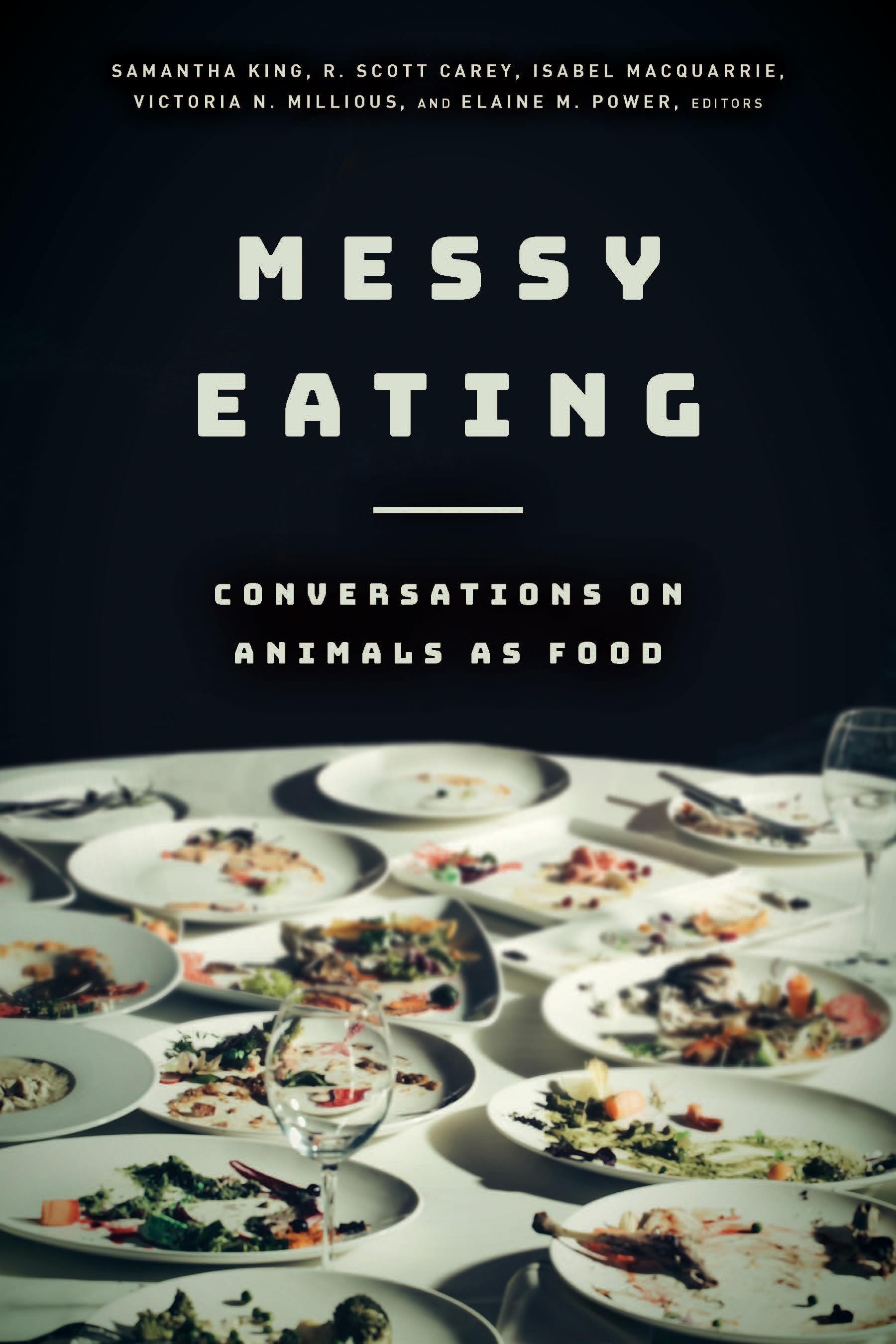
Literature on the ethics and politics of food and that on human–animal relationships have infrequently converged. Representing an initial step toward bridging this divide, Messy Eating features interviews with thirteen prominent and emerging scholars about the connections between their academic work and their approach to consuming animals as food. The collection explores how authors working across a range of perspectives—postcolonial, Indigenous, black, queer, trans, feminist, disability, poststructuralist, posthumanist, and multispecies—weave their theoretical and political orientations with daily, intimate, and visceral practices of food consumption, preparation, and ingestion.
Each chapter introduces a scholar for whom the tangled, contradictory character of human–animal relations raises difficult questions about what they eat. Representing a departure from canonical animal rights literature, most authors featured in the collection do not make their food politics or identities explicit in their published work. While some interviewees practice vegetarianism or veganism, and almost all decry the role of industrialized animal agriculture in the environmental crisis, the contributors tend to reject a priori ethical codes and politics grounded in purity, surety, or simplicity. Remarkably free of proscriptions, but attentive to the Eurocentric tendencies of posthumanist animal studies, Messy Eating reveals how dietary habits are unpredictable and dynamic, shaped but not determined by life histories, educational trajectories, disciplinary homes, activist experiences, and intimate relationships.
These accessible and engaging conversations offer rare and often surprising insights into pressing social issues through a focus on the mundane—and messy— interactions that constitute the professional, the political, and the personal.
Contributors: Neel Ahuja, Billy-Ray Belcourt, Matthew Calarco, Lauren Corman, Naisargi Dave, Maneesha Deckha, María Elena García, Sharon Holland, Kelly Struthers Montford, H. Peter Steeves, Kim TallBear, Sunaura Taylor, Harlan Weaver, Kari Weil, Cary Wolfe
Before Memmo my notes were scattered across PDFs. Now a workspace pulls everything into one place — I see exactly what's still left to study.
Memmo's summaries are gold before exams. I don't have to re-read 800 pages two weeks before — just the important parts.
The AI chat has saved me the night before an exam more than once. I just keep asking until I get it — no waiting on a study group to reply.
The quizzes hit exactly what I need to know. Memmo tracks what I get stuck on — so I only practice what's worth it.
Flashcards with spaced repetition are magic. Memmo knows when I'm about to forget something and brings it back.
The AI podcasts are my favorite. I listen on my way to school and get a recap without sitting at a computer.

Handbok i kvalitativa metoder
281 kr

Hållbar utveckling: en introduktion för ingenjörer och andra problemlösare
334 kr

Brymans Samhällsvetenskapliga metoder
390 kr

Projektledning
491 kr

Den orättvisa hälsan: om socioekonomiska skillnader i hälsa och livslängd
326 kr

Organizational Leadership
429 kr

Vetenskapsteori för nybörjare
196 kr

På väg mot läraryrket
172 kr

Det sociala livet i skolan: Socialpsykologiska perspektiv
253 kr

Betygsättningens didaktik
151 kr

Personality
402 kr

Studying Leadership
404 kr

Managing Innovation
477 kr

Introduktion till samhällsvetenskaplig metod
347 kr

The Psychology of Sex and Gender
698 kr

Evidens och kunskap för socialt arbete
207 kr

Introduction to Leadership
605 kr