
Before Memmo my notes were scattered across PDFs. Now a workspace pulls everything into one place — I see exactly what's still left to study.
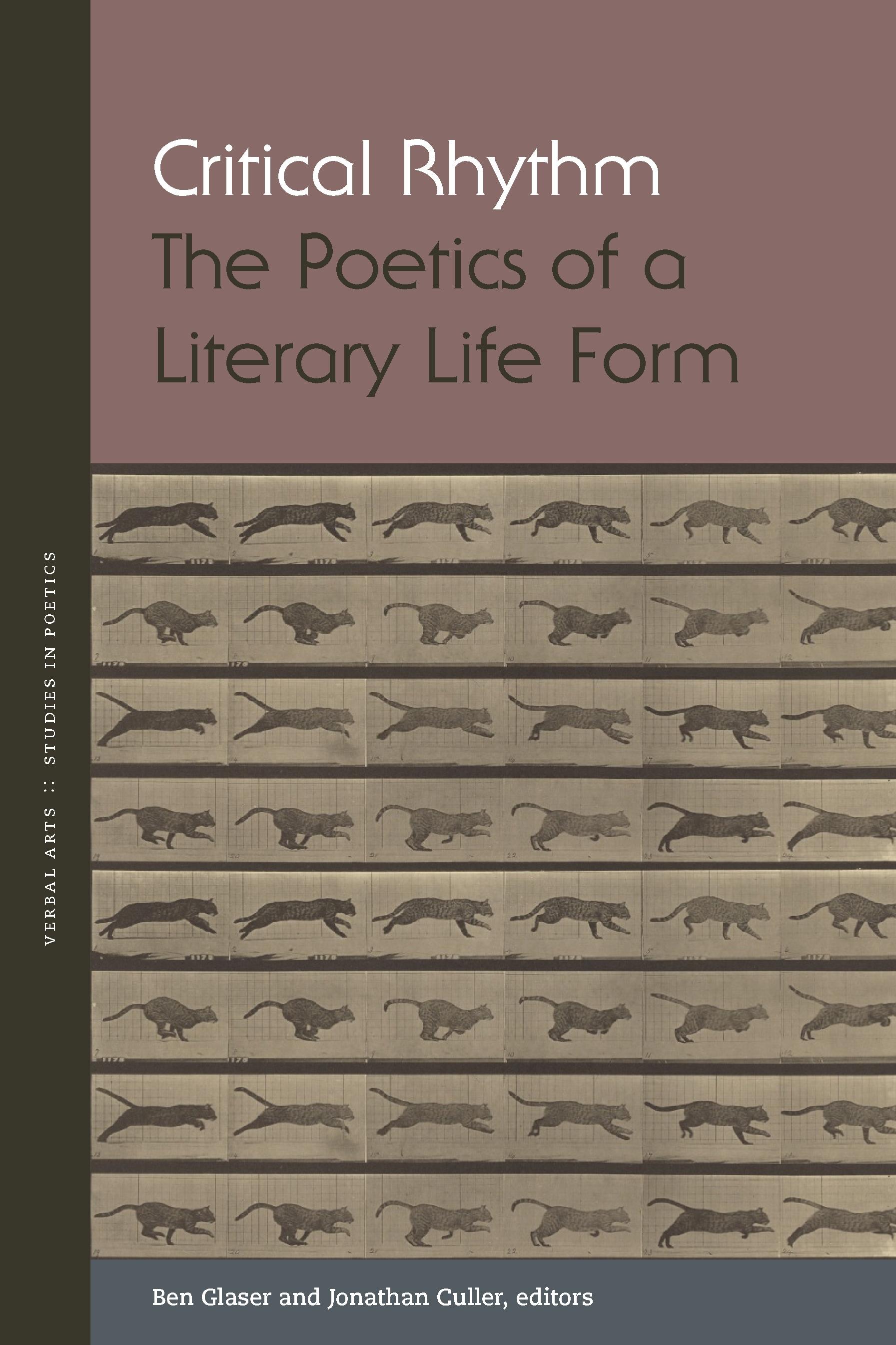
This book shows how rhythm constitutes an untapped resource for understanding poetry. Intervening in recent debates over formalism, historicism, and poetics, the authors show how rhythm is at once a defamiliarizing aesthetic force and an unstable concept. Distinct from the related terms to which it’s often assimilated—scansion, prosody, meter—rhythm makes legible a range of ways poetry affects us that cannot be parsed through the traditional resources of poetic theory.
Rhythm has rich but also problematic roots in still-lingering nineteenth-century notions of primitive, oral, communal, and sometimes racialized poetics. But there are reasons to understand and even embrace its seductions, including its resistance to lyrical voice and even identity. Through exploration of rhythm’s genealogies and present critical debates, the essays consistently warn against taking rhythm to be a given form offering ready-made resources for interpretation. Pressing beyond poetry handbooks’ isolated descriptions of technique or inductive declarations of what rhythm “is,” the essays ask what it means to think rhythm.
Rhythm, the contributors show, happens relative to the body, on the one hand, and to language, on the other—two categories that are distinct from the literary, the mode through which poetics has tended to be analyzed. Beyond articulating what rhythm does to poetry, the contributors undertake a genealogical and theoretical analysis of how rhythm as a human experience has come to be articulated through poetry and poetics. The resulting work helps us better understand poetry both on its own terms and in its continuities with other experiences and other arts.
Contributors: Derek Attridge, Tom Cable, Jonathan Culler, Natalie Gerber, Ben Glaser, Virginia Jackson, Simon Jarvis, Ewan Jones, Erin Kappeler, Meredith Martin, David Nowell Smith, Yopie Prins, Haun Saussy
Before Memmo my notes were scattered across PDFs. Now a workspace pulls everything into one place — I see exactly what's still left to study.
Memmo's summaries are gold before exams. I don't have to re-read 800 pages two weeks before — just the important parts.
The AI chat has saved me the night before an exam more than once. I just keep asking until I get it — no waiting on a study group to reply.
The quizzes hit exactly what I need to know. Memmo tracks what I get stuck on — so I only practice what's worth it.
Flashcards with spaced repetition are magic. Memmo knows when I'm about to forget something and brings it back.
The AI podcasts are my favorite. I listen on my way to school and get a recap without sitting at a computer.

Handbok i kvalitativa metoder
281 kr

Hållbar utveckling: en introduktion för ingenjörer och andra problemlösare
334 kr

Brymans Samhällsvetenskapliga metoder
390 kr

Projektledning
491 kr

Den orättvisa hälsan: om socioekonomiska skillnader i hälsa och livslängd
326 kr

Organizational Leadership
429 kr

Vetenskapsteori för nybörjare
196 kr

På väg mot läraryrket
172 kr

Det sociala livet i skolan: Socialpsykologiska perspektiv
253 kr

Betygsättningens didaktik
151 kr

Personality
402 kr

Studying Leadership
404 kr

Managing Innovation
477 kr

Introduktion till samhällsvetenskaplig metod
347 kr

The Psychology of Sex and Gender
698 kr

Evidens och kunskap för socialt arbete
207 kr

Introduction to Leadership
605 kr