
Before Memmo my notes were scattered across PDFs. Now a workspace pulls everything into one place — I see exactly what's still left to study.
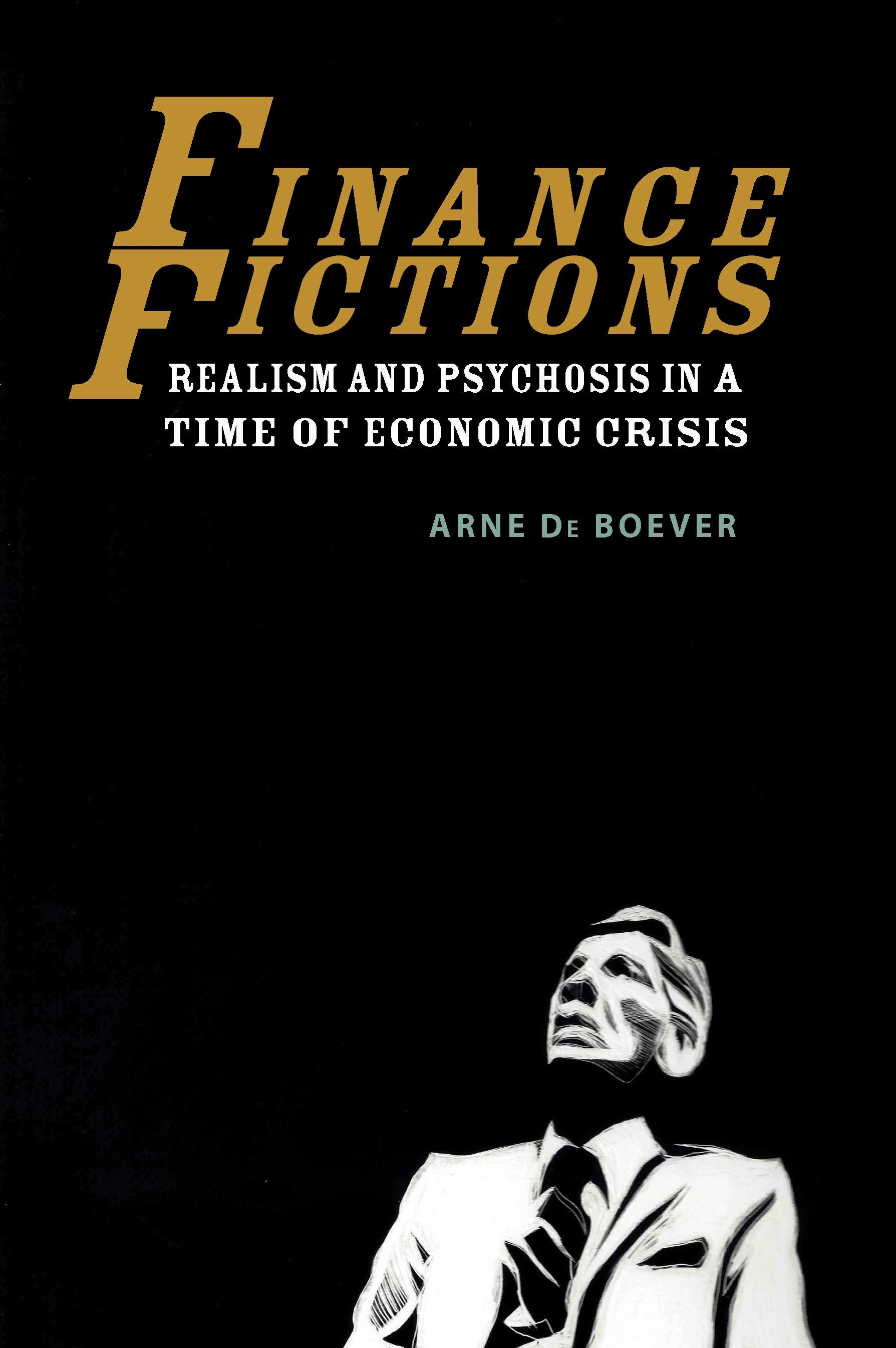
Finance Fictions takes the measure of what it means to live in a world ruled by high finance by examining the tension between psychosis and realism that plays out in the contemporary finance novel. When the things traded at the center of the economy cease to be things at all, but highly abstracted speculations, how do we come to see the real? What sorts of narrative can accurately approach the actual workings of a neoliberal economy marked by accelerating cycles of market crashes, economic and political crisis, and austerity?
Revisiting such twentieth-century classics of the genre as Tom Wolfe's Bonfire of the Vanities and Bret Easton Ellis’s American Psycho, De Boever argues that the twenty-first century is witnessing the birth of a new kind of realistic novel that can make sense of complex financial instruments like collateralized debt obligations, credit default swaps, and digital algorithms operating at speeds faster than what human beings or computers can record. If in 1989 Wolfe could still urge novelists to work harder to “tame the billion-footed beast of reality,” today’s economic reality confronts us with a difference that is qualitative rather than quantitative: a new financial ontology requiring new modes of thinking and writing.
Mobilizing the philosophical thought of Quentin Meillassoux in the close reading of finance novels by Robert Harris, Michel Houellebecq, Ben Lerner and less well-known works of conceptual writing such as Mathew Timmons’ Credit, Finance Fictions argues that realism is in for a speculative update if it wants to take on the contemporary economy—an “if” whose implications turn out to be deeply political. Part literary study and part philosophical inquiry, Finance Fictions seeks to contribute to a new mindset for creative and critical work on finance in the twenty-first century.
Before Memmo my notes were scattered across PDFs. Now a workspace pulls everything into one place — I see exactly what's still left to study.
Memmo's summaries are gold before exams. I don't have to re-read 800 pages two weeks before — just the important parts.
The AI chat has saved me the night before an exam more than once. I just keep asking until I get it — no waiting on a study group to reply.
The quizzes hit exactly what I need to know. Memmo tracks what I get stuck on — so I only practice what's worth it.
Flashcards with spaced repetition are magic. Memmo knows when I'm about to forget something and brings it back.
The AI podcasts are my favorite. I listen on my way to school and get a recap without sitting at a computer.

Handbok i kvalitativa metoder
281 kr

Hållbar utveckling: en introduktion för ingenjörer och andra problemlösare
334 kr

Brymans Samhällsvetenskapliga metoder
390 kr

Projektledning
491 kr

Den orättvisa hälsan: om socioekonomiska skillnader i hälsa och livslängd
326 kr

Vetenskapsteori för nybörjare
196 kr

Organizational Leadership
429 kr

På väg mot läraryrket
172 kr

Det sociala livet i skolan: Socialpsykologiska perspektiv
253 kr

Betygsättningens didaktik
151 kr

Personality
402 kr

Studying Leadership
404 kr

Managing Innovation
477 kr

Introduktion till samhällsvetenskaplig metod
347 kr

The Psychology of Sex and Gender
698 kr

Evidens och kunskap för socialt arbete
207 kr

Introduction to Leadership
605 kr