
Before Memmo my notes were scattered across PDFs. Now a workspace pulls everything into one place — I see exactly what's still left to study.
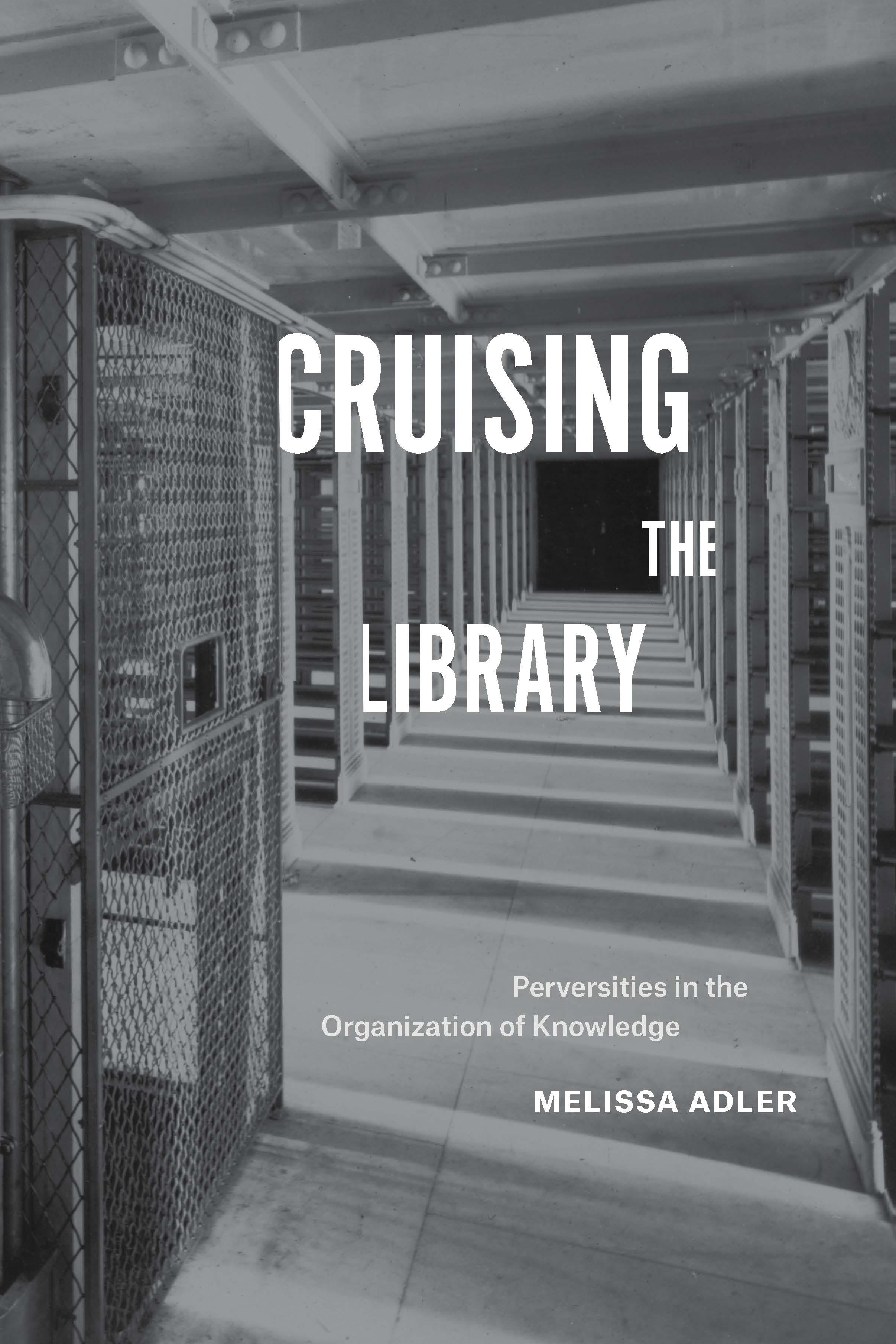
Cruising the Library offers a highly innovative analysis of the history of sexuality and categories of sexual perversion through a critical examination of the Library of Congress and its cataloging practices. Taking the publication of Eve Kosofsky Sedgwick’s Epistemologies of the Closet as emblematic of the Library’s inability to account for sexual difference, Melissa Adler embarks upon a detailed critique of how cataloging systems have delimited and proscribed expressions of gender, sexuality, ethnicity, and race in a manner that mirrors psychiatric and sociological attempts to pathologize non-normative sexual practices and civil subjects.
Taking up a parallel analysis, Adler utilizes Roderick A. Ferguson’s Aberrations in Black as another example of how the Library of Congress fails to account for, and thereby “buries,” difference. She examines the physical space of the Library as one that encourages forms of governmentality as theorized by Michel Foucault while also allowing for its utopian possibilities. Finally, she offers a brief but highly illuminating history of the Delta Collection. Likely established before the turn of the twentieth century and active until its gradual dissolution in the 1960s, the Delta Collection was a secret archive within the Library of Congress that housed materials confiscated by the United States Post Office and other federal agencies. These were materials deemed too obscene for public dissemination or general access. Adler reveals how the Delta Collection was used to regulate difference and squelch dissent in the McCarthy era while also linking it to evolving understandings of so-called perversion in the scientific study of sexual difference.
Sophisticated, engrossing, and highly readable, Cruising the Library provides us with a critical understanding of library science, an alternative view of discourses around the history of sexuality, and an analysis of the relationship between governmentality and the cataloging of research and information—as well as categories of difference—in American culture.
Before Memmo my notes were scattered across PDFs. Now a workspace pulls everything into one place — I see exactly what's still left to study.
Memmo's summaries are gold before exams. I don't have to re-read 800 pages two weeks before — just the important parts.
The AI chat has saved me the night before an exam more than once. I just keep asking until I get it — no waiting on a study group to reply.
The quizzes hit exactly what I need to know. Memmo tracks what I get stuck on — so I only practice what's worth it.
Flashcards with spaced repetition are magic. Memmo knows when I'm about to forget something and brings it back.
The AI podcasts are my favorite. I listen on my way to school and get a recap without sitting at a computer.

Handbok i kvalitativa metoder
281 kr

Hållbar utveckling: en introduktion för ingenjörer och andra problemlösare
334 kr

Brymans Samhällsvetenskapliga metoder
390 kr

Projektledning
491 kr

Den orättvisa hälsan: om socioekonomiska skillnader i hälsa och livslängd
326 kr

Vetenskapsteori för nybörjare
196 kr

Organizational Leadership
429 kr

På väg mot läraryrket
172 kr

Det sociala livet i skolan: Socialpsykologiska perspektiv
253 kr

Betygsättningens didaktik
151 kr

Personality
402 kr

Studying Leadership
404 kr

Managing Innovation
477 kr

Introduktion till samhällsvetenskaplig metod
347 kr

The Psychology of Sex and Gender
698 kr

Evidens och kunskap för socialt arbete
207 kr

Introduction to Leadership
605 kr