
Before Memmo my notes were scattered across PDFs. Now a workspace pulls everything into one place — I see exactly what's still left to study.
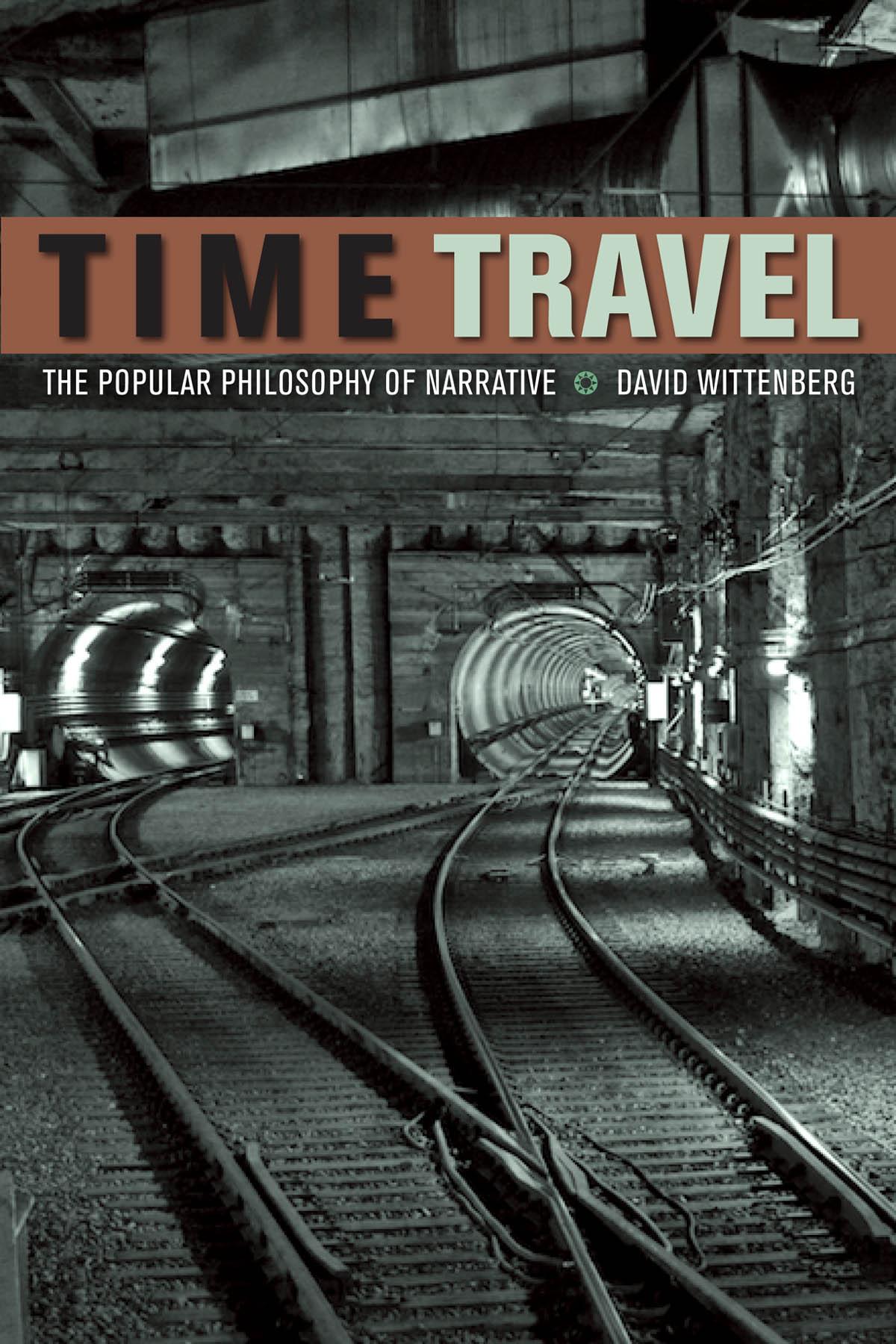
This book argues that time travel fiction is a narrative “laboratory,” a setting for thought experiments in which essential theoretical questions about storytelling—and, by extension, about the philosophy of temporality, history, and subjectivity—are represented in the form of literal devices and plots.
Drawing on physics, philosophy, narrative theory, psychoanalysis, and film theory, the book links innovations in time travel fiction to specific shifts in the popularization of science, from evolutionary biology in the late 1800s, through relativity and quantum physics in the mid–20th century, to more recent “multiverse” cosmologies. Wittenberg shows how increasing awareness of new scientific models leads to surprising innovations in the literary “time machine,” which evolves from a “vehicle” used chiefly for sociopolitical commentary into a psychological and narratological device capable of exploring with great sophistication the temporal structure and significance of subjects, viewpoints, and historical events.
The book covers work by well-known time travel writers such as H. G. Wells, Edward Bellamy, Robert Heinlein, Samuel Delany, and Harlan Ellison, as well as pulp fiction writers of the 1920s through the 1940s, popular and avant-garde postwar science fiction, television shows such as “The Twilight Zone” and “Star Trek,” and
current cinema. Literature, film, and TV are read alongside theoretical work ranging from Einstein, Schrödinger, and Stephen Hawking to Gérard Genette, David Lewis, and Gilles Deleuze. Wittenberg argues that even the most mainstream audiences of popular time travel fiction and cinema are vigorously engaged with many of the same questions about temporality, identity, and history that concern literary theorists, media and film scholars, and philosophers.
Before Memmo my notes were scattered across PDFs. Now a workspace pulls everything into one place — I see exactly what's still left to study.
Memmo's summaries are gold before exams. I don't have to re-read 800 pages two weeks before — just the important parts.
The AI chat has saved me the night before an exam more than once. I just keep asking until I get it — no waiting on a study group to reply.
The quizzes hit exactly what I need to know. Memmo tracks what I get stuck on — so I only practice what's worth it.
Flashcards with spaced repetition are magic. Memmo knows when I'm about to forget something and brings it back.
The AI podcasts are my favorite. I listen on my way to school and get a recap without sitting at a computer.

Handbok i kvalitativa metoder
281 kr

Hållbar utveckling: en introduktion för ingenjörer och andra problemlösare
334 kr

Brymans Samhällsvetenskapliga metoder
390 kr

Projektledning
491 kr

Den orättvisa hälsan: om socioekonomiska skillnader i hälsa och livslängd
326 kr

Organizational Leadership
429 kr

Vetenskapsteori för nybörjare
196 kr

På väg mot läraryrket
172 kr

Det sociala livet i skolan: Socialpsykologiska perspektiv
253 kr

Betygsättningens didaktik
151 kr

Personality
402 kr

Studying Leadership
404 kr

Managing Innovation
477 kr

Introduktion till samhällsvetenskaplig metod
347 kr

The Psychology of Sex and Gender
698 kr

Evidens och kunskap för socialt arbete
207 kr

Introduction to Leadership
605 kr