
Before Memmo my notes were scattered across PDFs. Now a workspace pulls everything into one place — I see exactly what's still left to study.
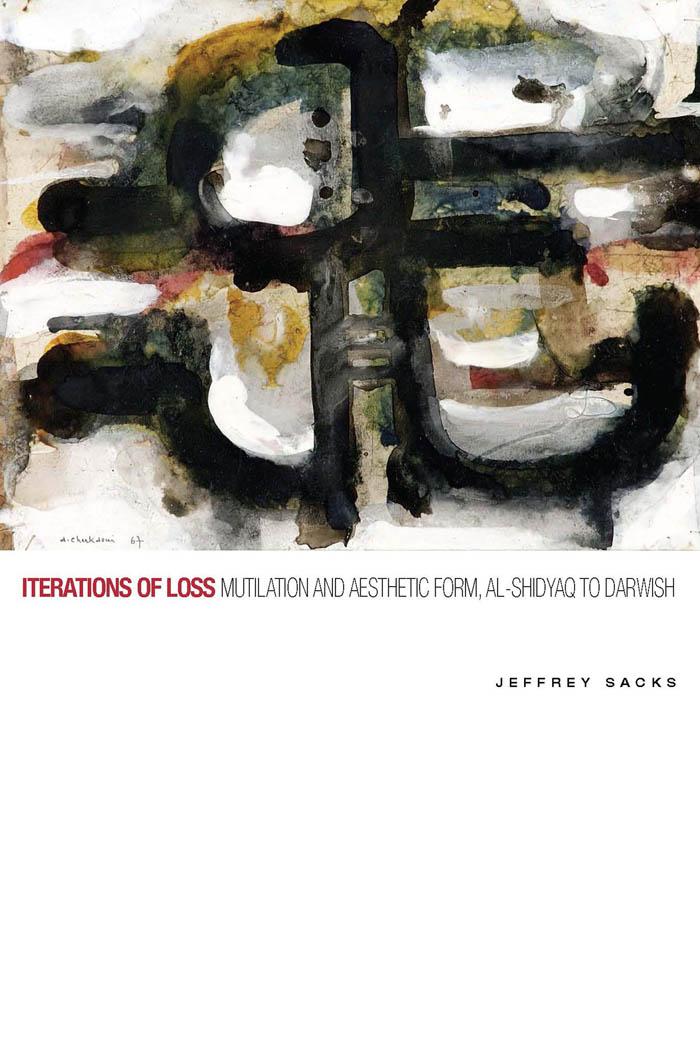
In a series of exquisite close readings of Arabic and Arab Jewish writing, Jeffrey Sacks considers the relation of poetic statement to individual and collective loss, the dispossession of peoples and languages, and singular events of destruction in the nineteenth, twentieth, and twenty-first centuries. Addressing the work of Mahmoud Darwish, Ahmad Faris al-Shidyaq, Elias Khoury, Edmond Amran El Maleh, Shimon Ballas, and Taha Husayn, Sacks demonstrates the reiterated incursion of loss into the time of life—losses that language declines to mourn. Language occurs as the iteration of loss, confounding its domestication in the form of the monolingual state in the Arabic nineteenth century’s fallout.
Reading the late lyric poetry of the Palestinian poet Mahmoud Darwish in relation to the destruction of Palestine in 1948, Sacks reconsiders the nineteenth century Arabic nahda and its relation to colonialism, philology, and the European Enlightenment. He argues that this event is one of catastrophic loss, wherein the past suddenly appears as if it belonged to another time. Reading al-Shidyaq’s al-Saq ‘ala al-saq (1855) and the legacies to which it points in post-1948 writing in Arabic, Hebrew, and French, Sacks underlines a displacement and relocation of the Arabic word adab and its practice, offering a novel contribution to Arabic and Middle East Studies, critical theory, poetics, aesthetics, and comparative literature.
Drawing on writings of Jacques Derrida, Walter Benjamin, Avital Ronell, Judith Butler, Theodor Adorno, and Edward W. Said, Iterations of Loss shows that language interrupts its pacification as an event of aesthetic coherency, to suggest that literary comparison does not privilege a renewed giving of sense but gives place to a new sense of relation.
Before Memmo my notes were scattered across PDFs. Now a workspace pulls everything into one place — I see exactly what's still left to study.
Memmo's summaries are gold before exams. I don't have to re-read 800 pages two weeks before — just the important parts.
The AI chat has saved me the night before an exam more than once. I just keep asking until I get it — no waiting on a study group to reply.
The quizzes hit exactly what I need to know. Memmo tracks what I get stuck on — so I only practice what's worth it.
Flashcards with spaced repetition are magic. Memmo knows when I'm about to forget something and brings it back.
The AI podcasts are my favorite. I listen on my way to school and get a recap without sitting at a computer.

Handbok i kvalitativa metoder
281 kr

Hållbar utveckling: en introduktion för ingenjörer och andra problemlösare
334 kr

Brymans Samhällsvetenskapliga metoder
390 kr

Projektledning
491 kr

Den orättvisa hälsan: om socioekonomiska skillnader i hälsa och livslängd
326 kr

Vetenskapsteori för nybörjare
196 kr

Organizational Leadership
429 kr

På väg mot läraryrket
172 kr

Det sociala livet i skolan: Socialpsykologiska perspektiv
253 kr

Betygsättningens didaktik
151 kr

Personality
402 kr

Studying Leadership
404 kr

Managing Innovation
477 kr

Introduktion till samhällsvetenskaplig metod
347 kr

The Psychology of Sex and Gender
698 kr

Evidens och kunskap för socialt arbete
207 kr

Introduction to Leadership
605 kr