
Before Memmo my notes were scattered across PDFs. Now a workspace pulls everything into one place — I see exactly what's still left to study.
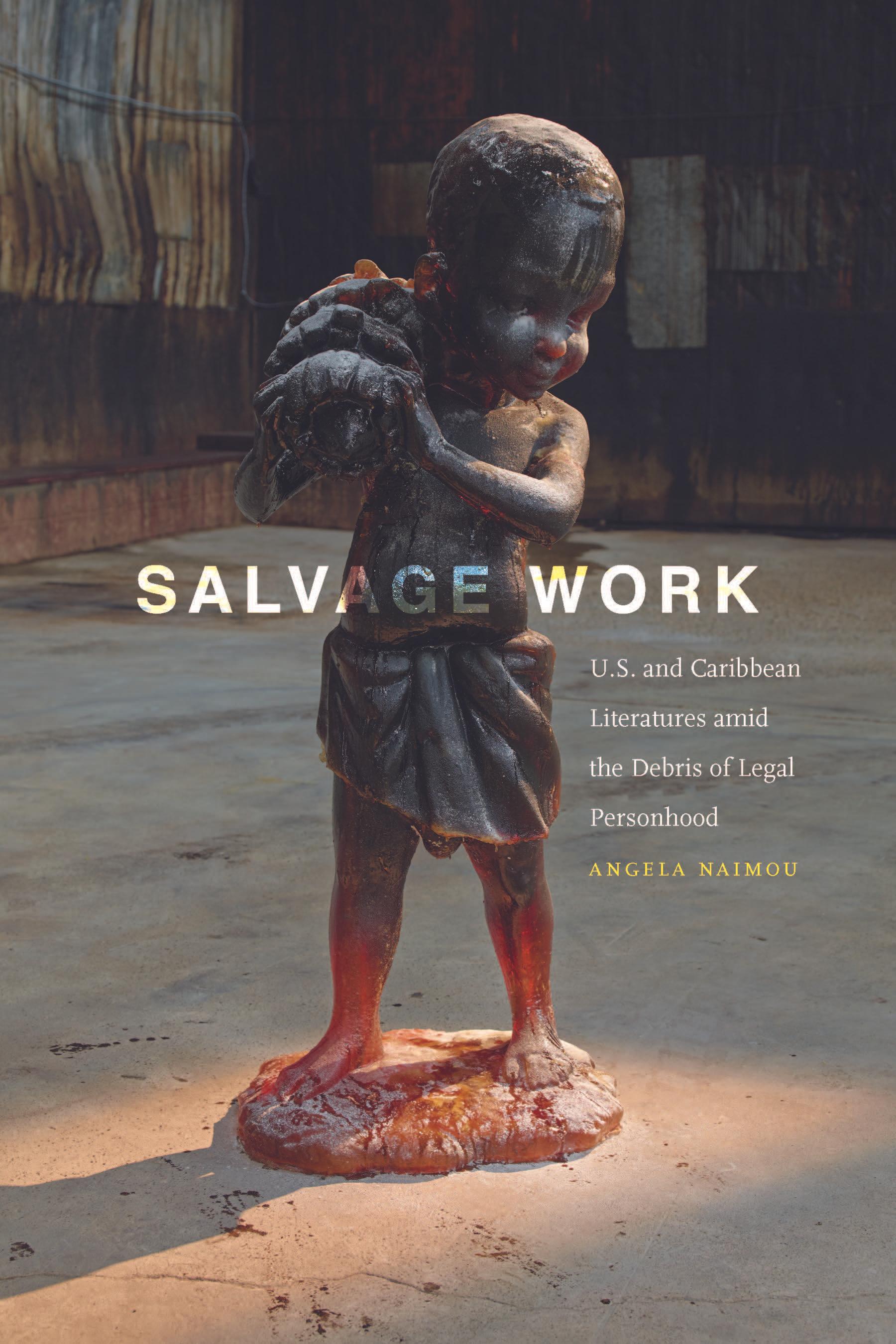
Salvage Work examines contemporary literary responses to the law’s construction of personhood in the Americas. Tracking the extraordinary afterlives of the legal slave personality from the nineteenth century into the twenty-first, Angela Naimou shows the legal slave to be a fractured but generative figure for contemporary legal personhood across categories of race, citizenship, gender, and labor. What emerges is a compelling and original study of how law invents categories of identification and how literature contends with the person as a legal fiction. Through readings of Francisco Goldman’s The Ordinary Seaman, Edwidge Danticat’s Krik?Krak!, Rosario Ferre’s Sweet Diamond Dust (Maldito Amor), Gayl Jones’s Song for Anninho and Mosquito, and John Edgar Wideman’s Fanon, Naimou shows how literary engagements with legal personhood reconfigure formal narrative conventions in Black Atlantic historiography, the immigrant novel, the anticolonial romance, the trope of the talking book, and the bildungsroman.
Revealing links between colonial, civic, slave, labor, immigration, and penal law, Salvage Work reframes debates over civil and human rights by revealing the shared hemispheric histories and effects of legal personhood across seemingly disparate identities—including the human and the corporate person, the political refugee and the economic migrant, and the stateless person and the citizen.
In depicting the material remains of the legal slave personality in the de-industrialized neoliberal era, these literary texts develop a salvage aesthetic that invites us to rethink our political and aesthetic imagination of personhood. Questioning liberal frameworks for civil and human rights as well as what Naimou calls death-bound theories of personhood—in which forms of human life are primarily described as wasted, disposable, bare, or dead in law—Salvage Work thus responds to critical discussions of biopolitics and neoliberal globalization by exploring the potential for contemporary literature to reclaim the individual from the legal regimes that have marked her.
Before Memmo my notes were scattered across PDFs. Now a workspace pulls everything into one place — I see exactly what's still left to study.
Memmo's summaries are gold before exams. I don't have to re-read 800 pages two weeks before — just the important parts.
The AI chat has saved me the night before an exam more than once. I just keep asking until I get it — no waiting on a study group to reply.
The quizzes hit exactly what I need to know. Memmo tracks what I get stuck on — so I only practice what's worth it.
Flashcards with spaced repetition are magic. Memmo knows when I'm about to forget something and brings it back.
The AI podcasts are my favorite. I listen on my way to school and get a recap without sitting at a computer.

Handbok i kvalitativa metoder
281 kr

Hållbar utveckling: en introduktion för ingenjörer och andra problemlösare
334 kr

Brymans Samhällsvetenskapliga metoder
390 kr

Projektledning
491 kr

Den orättvisa hälsan: om socioekonomiska skillnader i hälsa och livslängd
326 kr

Organizational Leadership
429 kr

Vetenskapsteori för nybörjare
196 kr

På väg mot läraryrket
172 kr

Det sociala livet i skolan: Socialpsykologiska perspektiv
253 kr

Betygsättningens didaktik
151 kr

Personality
402 kr

Studying Leadership
404 kr

Managing Innovation
477 kr

Introduktion till samhällsvetenskaplig metod
347 kr

The Psychology of Sex and Gender
698 kr

Evidens och kunskap för socialt arbete
207 kr

Introduction to Leadership
605 kr