
Before Memmo my notes were scattered across PDFs. Now a workspace pulls everything into one place — I see exactly what's still left to study.
THE NEW YORK OBSERVER: ONE OF THE TOP 10 BOOKS FOR FALL
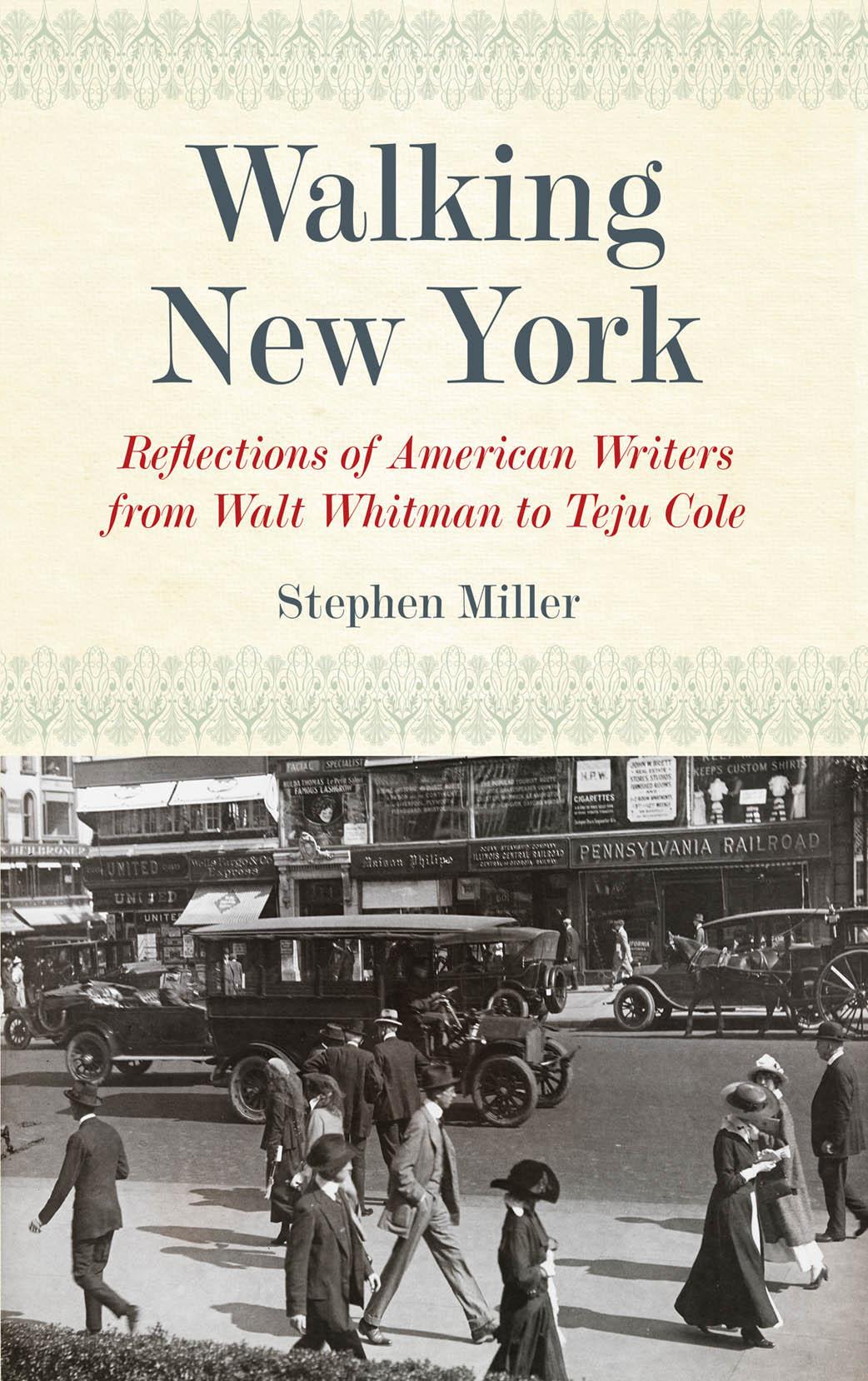
It’s no wonder that New York has always been a magnet city for writers. Manhattan is one of the most walkable cities in the world. While many novelists, poets, and essayists have enjoyed long walks in New York, not all of them have had favorable impressions. Addressing an endlessly appealing subject, Walking New York is a study of twelve American writers and several British writers who walked the streets of New York and wrote about their impressions of the city in fiction, nonfiction, and poetry.
Seen through the eyes of Walt Whitman, Herman Melville, William Dean Howells, Jacob Riis, Henry James, Stephen Crane, Theodore Dreiser, James Weldon Johnson, Alfred Kazin, Elizabeth Hardwick, Colson Whitehead, and Teju Cole, almost all the works in Walking New York are about Manhattan, with only Whitman and Kazin writing about Brooklyn. Though the writers were often irritated, disturbed, and occasionally shocked by what they saw on their walks, they were still fascinated by the city William Dean Howells called “splendidly and sordidly commercial” and Cynthia Ozick called “faithfully inconstant, magnetic, man-made, unnatural—the synthetic sublime.”
In this idiosyncratic guidebook to New York, celebrated writers ruminate on questions that are still hotly debated to this day: the pros and cons of capitalism and the impact of immigration. Many imply that New York is a bewildering text that is hard to make sense of. Returning to New York after an absence of two decades, Henry James loathed many things about “bristling” New York, while native New Yorker Walt Whitman both celebrated and criticized “Mannahatta” in his writings.
Combining literary scholarship with urban studies, Walking New York reveals how this crowded, dirty, noisy, and sometimes ugly city gave these “restless analysts” plenty of fodder for their craft.
Before Memmo my notes were scattered across PDFs. Now a workspace pulls everything into one place — I see exactly what's still left to study.
Memmo's summaries are gold before exams. I don't have to re-read 800 pages two weeks before — just the important parts.
The AI chat has saved me the night before an exam more than once. I just keep asking until I get it — no waiting on a study group to reply.
The quizzes hit exactly what I need to know. Memmo tracks what I get stuck on — so I only practice what's worth it.
Flashcards with spaced repetition are magic. Memmo knows when I'm about to forget something and brings it back.
The AI podcasts are my favorite. I listen on my way to school and get a recap without sitting at a computer.

Handbok i kvalitativa metoder
281 kr

Hållbar utveckling: en introduktion för ingenjörer och andra problemlösare
334 kr

Brymans Samhällsvetenskapliga metoder
390 kr

Projektledning
491 kr

Den orättvisa hälsan: om socioekonomiska skillnader i hälsa och livslängd
326 kr

Vetenskapsteori för nybörjare
196 kr

Organizational Leadership
429 kr

På väg mot läraryrket
172 kr

Det sociala livet i skolan: Socialpsykologiska perspektiv
253 kr

Betygsättningens didaktik
151 kr

Personality
402 kr

Studying Leadership
404 kr

Managing Innovation
477 kr

Introduktion till samhällsvetenskaplig metod
347 kr

The Psychology of Sex and Gender
698 kr

Evidens och kunskap för socialt arbete
207 kr

Introduction to Leadership
605 kr