
Before Memmo my notes were scattered across PDFs. Now a workspace pulls everything into one place — I see exactly what's still left to study.
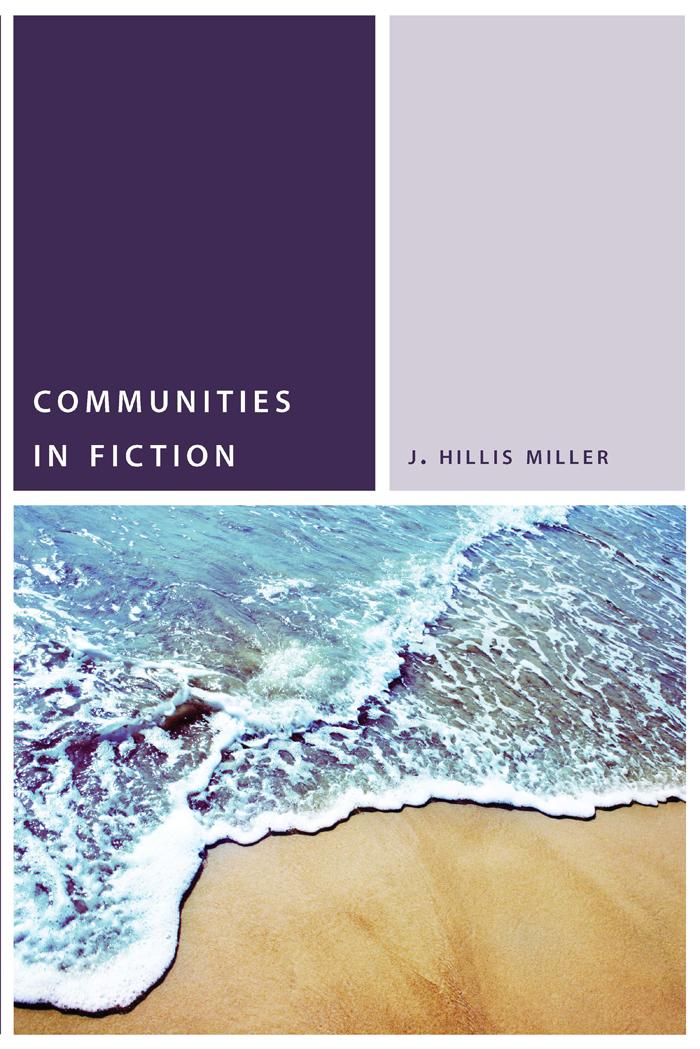
Communities in Fiction reads six novels or stories (one each by Trollope, Hardy, Conrad, Woolf, Pynchon, and Cervantes) in the light of theories of community worked out (contradictorily) by Raymond Williams, Martin Heidegger, and Jean- Luc Nancy.
The book’s topic is the question of how communities or noncommunities are represented in fictional works. Such fictional communities help the reader understand real communities, including those in which the reader lives. As against the presumption that the trajectory in literature from Victorian to modern to postmodern is the story of a gradual loss of belief in the possibility of community, this book demonstrates that communities have always been presented in fiction as precarious and fractured. Moreover, the juxtaposition of Pynchon and Cervantes in the last chapter demonstrates that period characterizations are never to be trusted. All the features both thematic and formal that recent critics and theorists such as Fredric Jameson and many others have found to characterize postmodern fiction are already present in Cervantes’s wonderful early-seventeenth-century “Exemplary Story,” “The Dogs’ Colloquy.” All the themes and narrative devices of Western fiction from the beginning of the print era to the present were there at the beginning, in Cervantes
Most of all, however, Communities in Fiction looks in detail at its six fictions, striving to see just what they say, what stories they tell, and what narratological and rhetorical devices they use to say what they do say and to tell the stories they do tell. The book attempts to communicate to its readers the joy of reading these works and to argue for the exemplary insight they provide into what Heidegger called Mitsein— being together in communities that are always problematic and unstable.
Before Memmo my notes were scattered across PDFs. Now a workspace pulls everything into one place — I see exactly what's still left to study.
Memmo's summaries are gold before exams. I don't have to re-read 800 pages two weeks before — just the important parts.
The AI chat has saved me the night before an exam more than once. I just keep asking until I get it — no waiting on a study group to reply.
The quizzes hit exactly what I need to know. Memmo tracks what I get stuck on — so I only practice what's worth it.
Flashcards with spaced repetition are magic. Memmo knows when I'm about to forget something and brings it back.
The AI podcasts are my favorite. I listen on my way to school and get a recap without sitting at a computer.

Handbok i kvalitativa metoder
281 kr

Hållbar utveckling: en introduktion för ingenjörer och andra problemlösare
334 kr

Brymans Samhällsvetenskapliga metoder
390 kr

Projektledning
491 kr

Den orättvisa hälsan: om socioekonomiska skillnader i hälsa och livslängd
326 kr

Vetenskapsteori för nybörjare
196 kr

Organizational Leadership
429 kr

På väg mot läraryrket
172 kr

Det sociala livet i skolan: Socialpsykologiska perspektiv
253 kr

Betygsättningens didaktik
151 kr

Personality
402 kr

Studying Leadership
404 kr

Managing Innovation
477 kr

Introduktion till samhällsvetenskaplig metod
347 kr

The Psychology of Sex and Gender
698 kr

Evidens och kunskap för socialt arbete
207 kr

Introduction to Leadership
605 kr