
Before Memmo my notes were scattered across PDFs. Now a workspace pulls everything into one place — I see exactly what's still left to study.
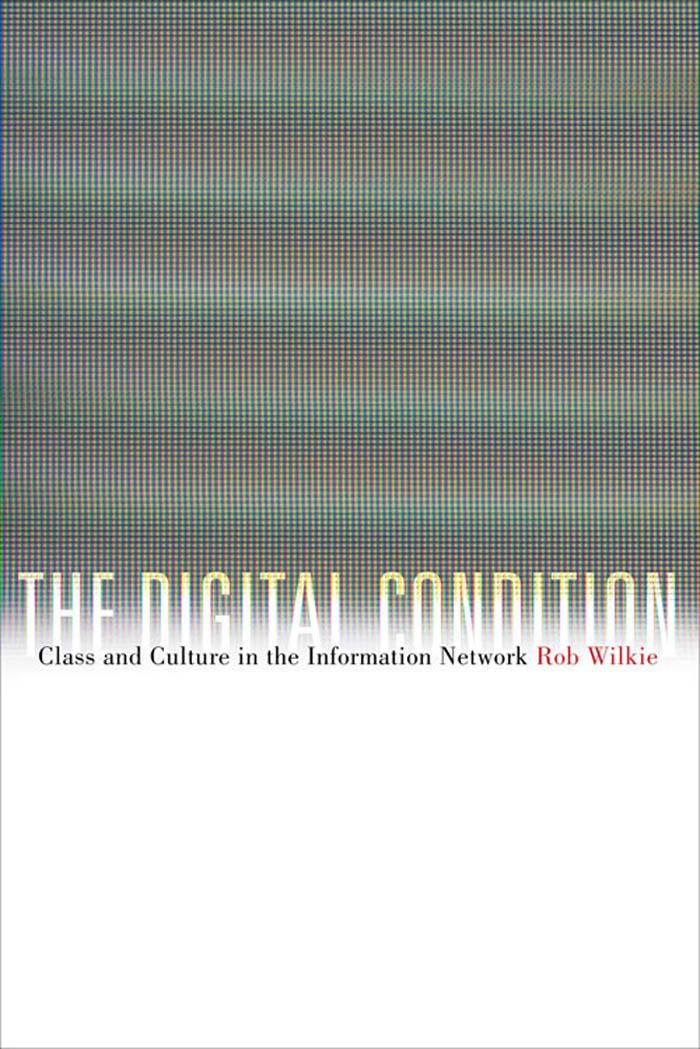
The acceleration in science, technology, communication, and production that began in the second half of the twentieth century— developments which make up the concept of the “digital”—has brought us to what might be the most contradictory moment in human history. The digital revolution has made it possible not only to imagine but to actually realize a world in which social inequality and poverty are vanquished. But instead these developments have led to an unprecedented level of accumulation of private profits. Rather than the end of social inequality we are witness to its global expansion.
Recent cultural theory tends to focus on the intricate surface effects of the emerging digital realities, proposing that technological advances effect greater cultural freedom for all, ignoring the underpinning social context. But beneath the surfaces of digital culture are complex social and historical relations that can be understood only from the perspective of a class analysis which explains why the new realities of the “digital condition" are conditioned by the actualities of global class inequalities. It is no longer the case that "technology" can take on the appearance of a simple or neutral aspect of human society. It is time for a critique of the digital times.
In The Digital Condition, Rob Wilkie advances a groundbreaking analysis of digital culture which argues that the digital geist—which has its genealogy in such concepts as the “body without organs,” “spectrality,” and “différance”—has obscured the implications of class difference with the phantom of a digital divide. Engaging the writings of Hardt and Negri, Poster, Deleuze and Guattari, Derrida, Haraway, Latour, and Castells, the literature and cinema of cyberpunk, and digital commodities like the iPod, Wilkie initiates a new direction within the field of digital cultural studies by foregrounding the continuing importance of class in shaping the contemporary.
Before Memmo my notes were scattered across PDFs. Now a workspace pulls everything into one place — I see exactly what's still left to study.
Memmo's summaries are gold before exams. I don't have to re-read 800 pages two weeks before — just the important parts.
The AI chat has saved me the night before an exam more than once. I just keep asking until I get it — no waiting on a study group to reply.
The quizzes hit exactly what I need to know. Memmo tracks what I get stuck on — so I only practice what's worth it.
Flashcards with spaced repetition are magic. Memmo knows when I'm about to forget something and brings it back.
The AI podcasts are my favorite. I listen on my way to school and get a recap without sitting at a computer.

Handbok i kvalitativa metoder
281 kr

Hållbar utveckling: en introduktion för ingenjörer och andra problemlösare
334 kr

Brymans Samhällsvetenskapliga metoder
390 kr

Projektledning
491 kr

Den orättvisa hälsan: om socioekonomiska skillnader i hälsa och livslängd
326 kr

Vetenskapsteori för nybörjare
196 kr

Organizational Leadership
429 kr

På väg mot läraryrket
172 kr

Det sociala livet i skolan: Socialpsykologiska perspektiv
253 kr

Betygsättningens didaktik
151 kr

Personality
402 kr

Studying Leadership
404 kr

Managing Innovation
477 kr

Introduktion till samhällsvetenskaplig metod
347 kr

The Psychology of Sex and Gender
698 kr

Evidens och kunskap för socialt arbete
207 kr

Introduction to Leadership
605 kr