
Before Memmo my notes were scattered across PDFs. Now a workspace pulls everything into one place — I see exactly what's still left to study.
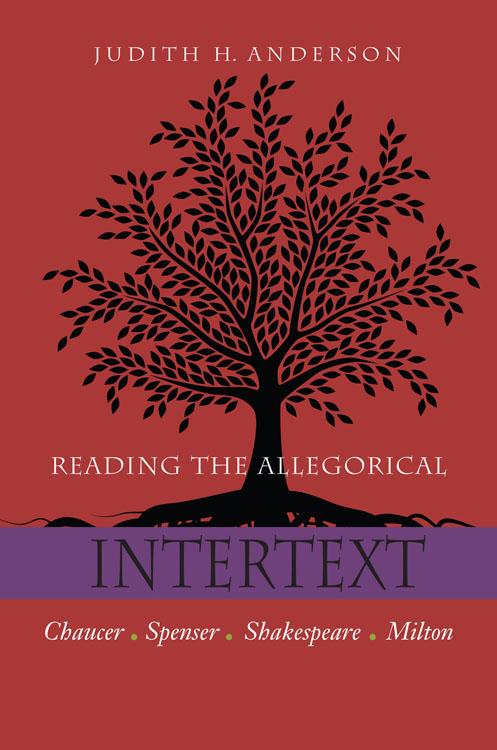
Judith H. Anderson conceives the intertext as a relation between or among texts that encompasses both Kristevan intertextuality and traditional relationships of influence, imitation, allusion, and citation. Like the Internet, the intertext is a state, or place, of potential expressed in ways ranging from deliberate emulation to linguistic free play. Relatedly, the intertext is also a convenient fiction that enables examination of individual agency and sociocultural determinism. Anderson’s intertext is allegorical because Spenser’s Faerie Queene is pivotal to her study and because allegory, understood as continued or moving metaphor, encapsulates, even as it magnifies, the process of signification. Her title signals the variousness of an intertext extending from Chaucer through Shakespeare to Milton and the breadth of allegory itself. Literary allegory, in Anderson’s view, is at once a mimetic form and a psychic one—a process thinking that combines mind with matter, emblem with narrative, abstraction with history.
Anderson’s first section focuses on relations between Chaucer’s Canterbury Tales and Spenser’s The Faerie Queene, including the role of the narrator, the nature of the textual source, the dynamics of influence, and the bearing of allegorical narrative on lyric vision. The second centers on agency and cultural influence in a variety of Spenserian and medieval texts. Allegorical form, a recurrent concern throughout, becomes the pressing issue of section three. This section treats plays and poems of Shakespeare and Milton and includes two intertextually relevant essays on Spenser.
How Paradise Lost or Shakespeare’s plays participate in allegorical form is controversial. Spenser’s experiments with allegory revise its form, and this intervention is largely what Shakespeare and Milton find in his poetry and develop. Anderson’s book, the result of decades of teaching and writing about allegory, especially Spenserian allegory, will reorient thinking about fundamental critical issues and the landmark texts in which they play themselves out.
Before Memmo my notes were scattered across PDFs. Now a workspace pulls everything into one place — I see exactly what's still left to study.
Memmo's summaries are gold before exams. I don't have to re-read 800 pages two weeks before — just the important parts.
The AI chat has saved me the night before an exam more than once. I just keep asking until I get it — no waiting on a study group to reply.
The quizzes hit exactly what I need to know. Memmo tracks what I get stuck on — so I only practice what's worth it.
Flashcards with spaced repetition are magic. Memmo knows when I'm about to forget something and brings it back.
The AI podcasts are my favorite. I listen on my way to school and get a recap without sitting at a computer.

Handbok i kvalitativa metoder
281 kr

Hållbar utveckling: en introduktion för ingenjörer och andra problemlösare
334 kr

Brymans Samhällsvetenskapliga metoder
390 kr

Projektledning
491 kr

Den orättvisa hälsan: om socioekonomiska skillnader i hälsa och livslängd
326 kr

Vetenskapsteori för nybörjare
196 kr

Organizational Leadership
429 kr

På väg mot läraryrket
172 kr

Det sociala livet i skolan: Socialpsykologiska perspektiv
253 kr

Betygsättningens didaktik
151 kr

Personality
402 kr

Studying Leadership
404 kr

Managing Innovation
477 kr

Introduktion till samhällsvetenskaplig metod
347 kr

The Psychology of Sex and Gender
698 kr

Evidens och kunskap för socialt arbete
207 kr

Introduction to Leadership
605 kr