
Before Memmo my notes were scattered across PDFs. Now a workspace pulls everything into one place — I see exactly what's still left to study.
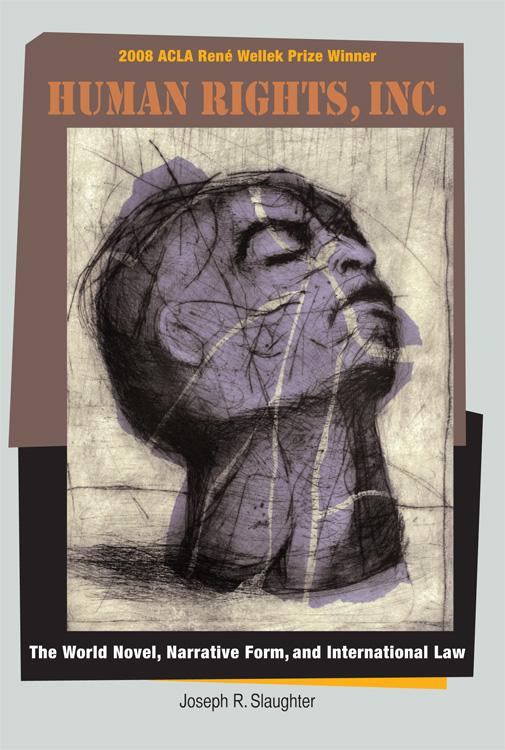
In this timely study of the historical, ideological, and formal interdependencies of the novel and human rights, Joseph Slaughter demonstrates that the twentieth-century rise of “world literature” and international human rights law are related phenomena.
Slaughter argues that international law shares with the modern novel a particular conception of the human individual. The Bildungsroman, the novel of coming of age, fills out this image, offering a conceptual vocabulary, a humanist social vision, and a narrative grammar for what the Universal Declaration of Human Rights and early literary theorists both call “the free and full development of the human personality.”
Revising our received understanding of the relationship between law and literature, Slaughter suggests that this narrative form has acted as a cultural surrogate for the weak executive authority of international law, naturalizing the assumptions and conditions that make human rights appear commonsensical. As a kind of novelistic correlative to human rights law, the Bildungsroman has thus been doing some of the sociocultural work of enforcement that the law cannot do for itself.
This analysis of the cultural work of law and of the social work of literature challenges traditional Eurocentric histories of both international law and the dissemination of the novel. Taking his point of departure in Goethe’s Wilhelm Meister, Slaughter focuses on recent postcolonial versions of the coming-of-age story to show how the promise of human rights becomes legible in narrative and how the novel and the law are complicit in contemporary projects of globalization: in colonialism, neoimperalism, humanitarianism, and the spread of multinational consumer capitalism.
Slaughter raises important practical and ethical questions that we must confront in advocating for human rights and reading world literature—imperatives that, today more than ever, are intertwined.
Before Memmo my notes were scattered across PDFs. Now a workspace pulls everything into one place — I see exactly what's still left to study.
Memmo's summaries are gold before exams. I don't have to re-read 800 pages two weeks before — just the important parts.
The AI chat has saved me the night before an exam more than once. I just keep asking until I get it — no waiting on a study group to reply.
The quizzes hit exactly what I need to know. Memmo tracks what I get stuck on — so I only practice what's worth it.
Flashcards with spaced repetition are magic. Memmo knows when I'm about to forget something and brings it back.
The AI podcasts are my favorite. I listen on my way to school and get a recap without sitting at a computer.

Handbok i kvalitativa metoder
281 kr

Hållbar utveckling: en introduktion för ingenjörer och andra problemlösare
334 kr

Brymans Samhällsvetenskapliga metoder
390 kr

Projektledning
491 kr

Den orättvisa hälsan: om socioekonomiska skillnader i hälsa och livslängd
326 kr

Organizational Leadership
429 kr

Vetenskapsteori för nybörjare
196 kr

På väg mot läraryrket
172 kr

Det sociala livet i skolan: Socialpsykologiska perspektiv
253 kr

Betygsättningens didaktik
151 kr

Personality
402 kr

Studying Leadership
404 kr

Managing Innovation
477 kr

Introduktion till samhällsvetenskaplig metod
347 kr

The Psychology of Sex and Gender
698 kr

Evidens och kunskap för socialt arbete
207 kr

Introduction to Leadership
605 kr