
Before Memmo my notes were scattered across PDFs. Now a workspace pulls everything into one place — I see exactly what's still left to study.
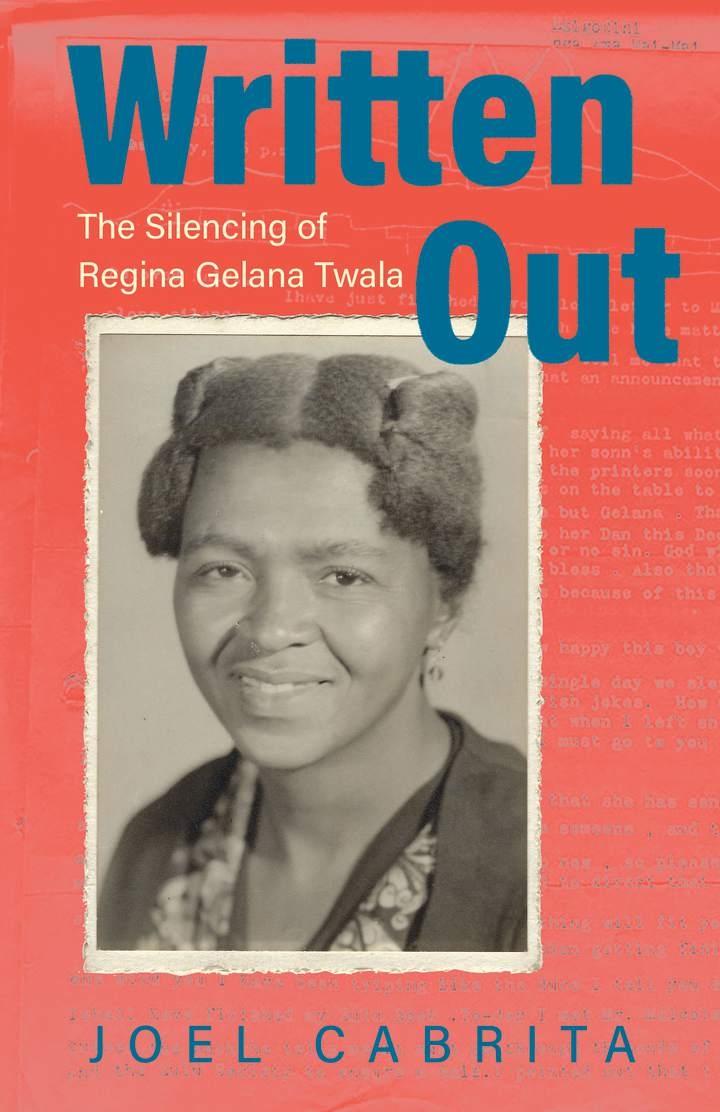
Systemic racism and sexism caused one of South Africa’s most important writers to disappear from public consciousness. Is it possible to justly restore her historical presence?
Regina Gelana Twala, a Black South African woman who died in 1968 in Swaziland (now Eswatini), was an extraordinarily prolific writer of books, columns, articles, and letters. Yet today Twala’s name is largely unknown. Her literary achievements are forgotten. Her books are unpublished. Her letters languish in the dusty study of a deceased South African academic. Her articles are buried in discontinued publications.
Joel Cabrita argues that Twala’s posthumous obscurity has not developed accidentally as she exposes the ways prejudices around race and gender blocked Black African women like Twala from establishing themselves as successful writers. Drawing upon Twala’s family papers, interviews, newspapers, and archival records from Pretoria, Uppsala, and Los Angeles, Cabrita argues that an entire cast of characters—censorious editors, territorial White academics, apartheid officials, and male African politicians whose politics were at odds with her own—conspired to erase Twala’s legacy. Through her unique documentary output, Twala marked herself as a radical voice on issues of gender, race, and class. The literary gatekeepers of the racist and sexist society of twentieth-century southern Africa clamped down by literally writing her out of the region’s history.
Written Out also scrutinizes the troubled racial politics of African history as a discipline that has been historically dominated by White academics, a situation that many people within the field are now examining critically. Inspired by this recent movement, Cabrita interrogates what it means for her—a White historian based in the Northern Hemisphere—to tell the story of a Black African woman. Far from a laudable “recovery” of an important lost figure, Cabrita acknowledges that her biography inevitably reproduces old dynamics of White scholarly privilege and dominance. Cabrita’s narration of Twala’s career resurrects it but also reminds us that Twala, tragically, is still not the author of her own life story.
Before Memmo my notes were scattered across PDFs. Now a workspace pulls everything into one place — I see exactly what's still left to study.
Memmo's summaries are gold before exams. I don't have to re-read 800 pages two weeks before — just the important parts.
The AI chat has saved me the night before an exam more than once. I just keep asking until I get it — no waiting on a study group to reply.
The quizzes hit exactly what I need to know. Memmo tracks what I get stuck on — so I only practice what's worth it.
Flashcards with spaced repetition are magic. Memmo knows when I'm about to forget something and brings it back.
The AI podcasts are my favorite. I listen on my way to school and get a recap without sitting at a computer.

Handbok i kvalitativa metoder
281 kr

Hållbar utveckling: en introduktion för ingenjörer och andra problemlösare
334 kr

Brymans Samhällsvetenskapliga metoder
390 kr

Projektledning
491 kr

Den orättvisa hälsan: om socioekonomiska skillnader i hälsa och livslängd
326 kr

Vetenskapsteori för nybörjare
196 kr

Organizational Leadership
429 kr

På väg mot läraryrket
172 kr

Det sociala livet i skolan: Socialpsykologiska perspektiv
253 kr

Betygsättningens didaktik
151 kr

Personality
402 kr

Studying Leadership
404 kr

Managing Innovation
477 kr

Introduktion till samhällsvetenskaplig metod
347 kr

The Psychology of Sex and Gender
698 kr

Evidens och kunskap för socialt arbete
207 kr

Introduction to Leadership
605 kr