
Before Memmo my notes were scattered across PDFs. Now a workspace pulls everything into one place — I see exactly what's still left to study.
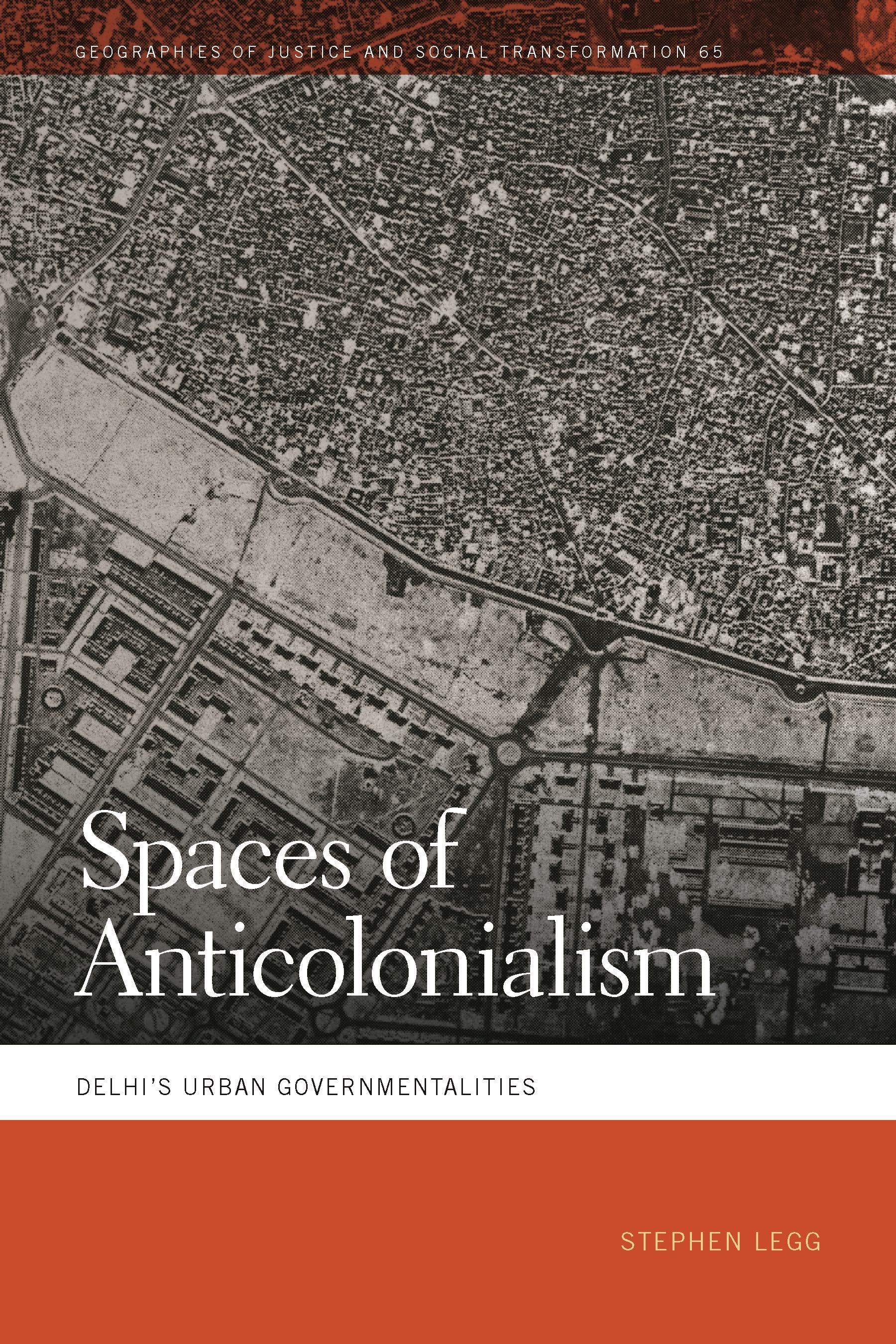
Spaces of Anticolonialism is the first book-length account of anticolonialism in Delhi, as the capital of Britain’s empire in India. It pioneers a spatial governmentality analysis of the networks, mobilizations, and hidden spaces of anticolonial parrhesia, or courageous speech and actions, in the two decades before independence in 1947. Reading across imperial and nationalist archives, newspapers, memoirs, oral histories, and interviews, Stephen Legg exposes subaltern geographies and struggles across both the new and old cities, which have traditionally been neglected in favor of the elite spaces of New Delhi.
Presenting the dual cities as one interconnected political landscape, Legg studies Indian National Congress efforts to mobilize and marshal support between the mass movements of Civil Disobedience (1930–34) and Quit India (1942–43). The book’s six chapters compare the two movements in terms of their public spaces of nonviolent anticolonialism, their problematization by violence, and their legacies.
This bottom-up analysis, focused on the streets, bazaars, neighborhoods, homes, and undergrounds of the two cities, foregrounds the significance of physical and political space; it highlights the pioneering role of women in crafting these spaces; and it exposes the microtechniques that Congress used to encourage Gandhi’s nonviolence and to tolerate its testing in the face of the rising popularity of the radical left.
Legg’s rereading of Michel Foucault’s final lectures on parrhesia produces a bold new approach to questions of postcolonialism, resistance, and South Asian governmentalities. This allows anticolonialism to be read not as an outside but as a coherent and bottom-up project of self-transformation and space-making that was elite coordinated but whose sovereignty lay with a disobedient and not always nonviolent public. This book provides an innovative and restive historical geography of spaces of anticolonialism in the capital of contemporary India’s 1.4 billion people.
Before Memmo my notes were scattered across PDFs. Now a workspace pulls everything into one place — I see exactly what's still left to study.
Memmo's summaries are gold before exams. I don't have to re-read 800 pages two weeks before — just the important parts.
The AI chat has saved me the night before an exam more than once. I just keep asking until I get it — no waiting on a study group to reply.
The quizzes hit exactly what I need to know. Memmo tracks what I get stuck on — so I only practice what's worth it.
Flashcards with spaced repetition are magic. Memmo knows when I'm about to forget something and brings it back.
The AI podcasts are my favorite. I listen on my way to school and get a recap without sitting at a computer.

Handbok i kvalitativa metoder
281 kr

Hållbar utveckling: en introduktion för ingenjörer och andra problemlösare
334 kr

Brymans Samhällsvetenskapliga metoder
390 kr

Projektledning
491 kr

Den orättvisa hälsan: om socioekonomiska skillnader i hälsa och livslängd
326 kr

Vetenskapsteori för nybörjare
196 kr

Organizational Leadership
429 kr

På väg mot läraryrket
172 kr

Det sociala livet i skolan: Socialpsykologiska perspektiv
253 kr

Betygsättningens didaktik
151 kr

Personality
402 kr

Studying Leadership
404 kr

Managing Innovation
477 kr

Introduktion till samhällsvetenskaplig metod
347 kr

The Psychology of Sex and Gender
698 kr

Evidens och kunskap för socialt arbete
207 kr

Introduction to Leadership
605 kr