
Before Memmo my notes were scattered across PDFs. Now a workspace pulls everything into one place — I see exactly what's still left to study.
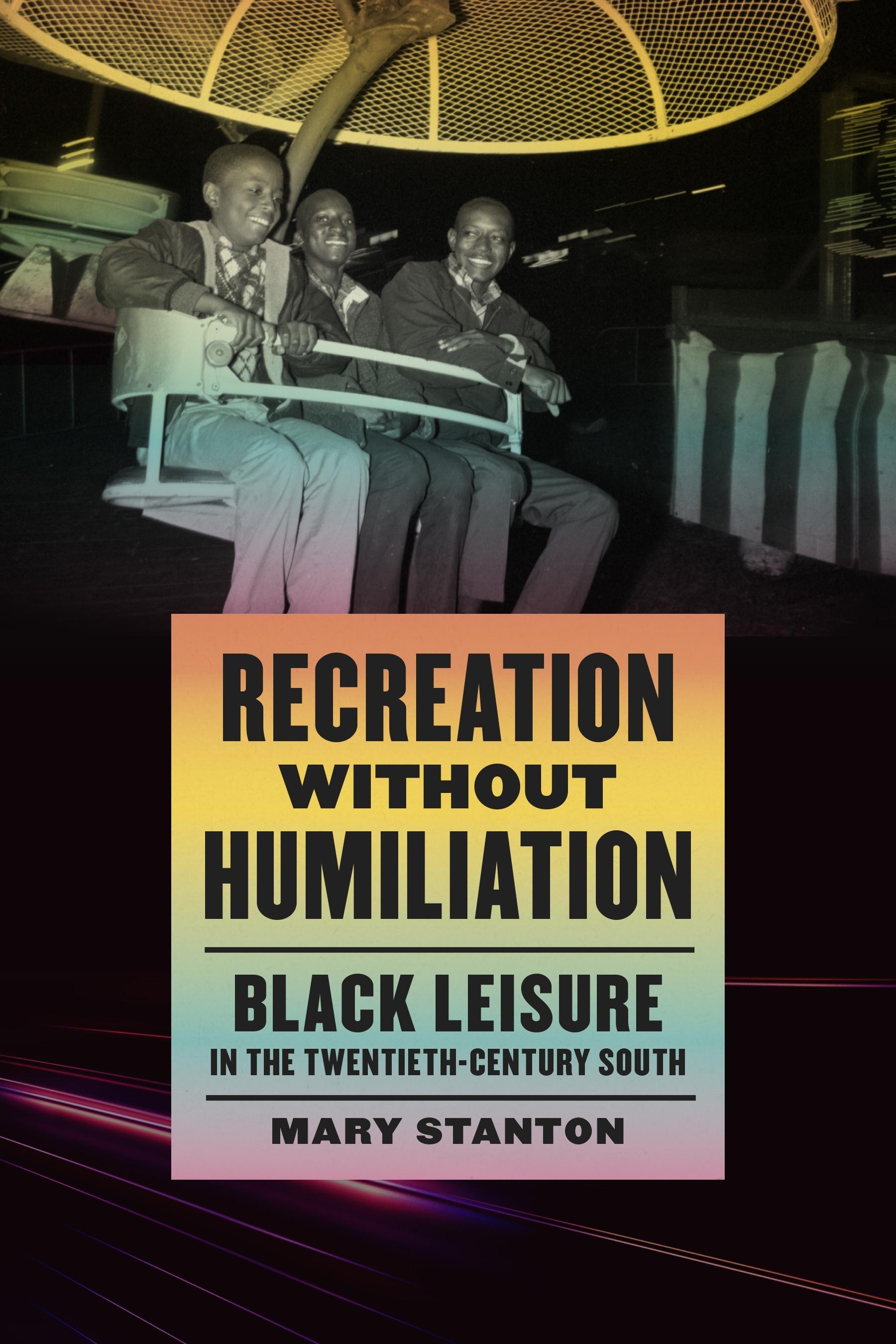
Recreation without Humiliation is the first comprehensive study of Black amusement venues established by Black Americans for Black Americans. Mary Stanton’s extensive research on African American amusement parks in America explores not only segregation, class, and social barriers but also the notion of the ‘pursuit of happiness’ as an inalienable right for all races and classes of people.
Inspired by summers spent on Coney Island, where Stanton became curious about the existence of African American amusement parks in America, Stanton’s research uncovered more than fifty such venues, most of which operated during the late nineteenth and early twentieth centuries. These were parks, theaters, juke joints, country clubs, summer colonies, baseball diamonds, and arenas. Although these venues provided much needed recreational services to an underserved Black population, many were threatened by whites, and some destroyed by them. Through her study of these sites of recreation, Stanton illuminates the history of African Americans who strove to create and maintain safe and satisfying entertainment despite segregation.
In her research, Stanton also found class divisions among Black American entertainment venues. At the pinnacle of Black society in this era were the upper class, who could afford exclusive Black summer cottages and country clubs. General entertainment for Black working-class families consisted of dancing and drinking in juke joints or patronizing small amusement parks, playgrounds, movie theaters, church-sponsored functions, and Black county fairs. African Americans in the twentieth century, especially in the South, transformed segregation into what historian Earl Lewis calls “congregation.” Congregation implies choice, and this congregation “provided space and support for establishing new amusements, entertainments, music, and dance” without interference or oppression.
Before Memmo my notes were scattered across PDFs. Now a workspace pulls everything into one place — I see exactly what's still left to study.
Memmo's summaries are gold before exams. I don't have to re-read 800 pages two weeks before — just the important parts.
The AI chat has saved me the night before an exam more than once. I just keep asking until I get it — no waiting on a study group to reply.
The quizzes hit exactly what I need to know. Memmo tracks what I get stuck on — so I only practice what's worth it.
Flashcards with spaced repetition are magic. Memmo knows when I'm about to forget something and brings it back.
The AI podcasts are my favorite. I listen on my way to school and get a recap without sitting at a computer.

Handbok i kvalitativa metoder
281 kr

Hållbar utveckling: en introduktion för ingenjörer och andra problemlösare
334 kr

Brymans Samhällsvetenskapliga metoder
390 kr

Projektledning
491 kr

Den orättvisa hälsan: om socioekonomiska skillnader i hälsa och livslängd
326 kr

Vetenskapsteori för nybörjare
196 kr

Organizational Leadership
429 kr

På väg mot läraryrket
172 kr

Det sociala livet i skolan: Socialpsykologiska perspektiv
253 kr

Betygsättningens didaktik
151 kr

Personality
402 kr

Studying Leadership
404 kr

Managing Innovation
477 kr

Introduktion till samhällsvetenskaplig metod
347 kr

The Psychology of Sex and Gender
698 kr

Evidens och kunskap för socialt arbete
207 kr

Introduction to Leadership
605 kr