
Before Memmo my notes were scattered across PDFs. Now a workspace pulls everything into one place — I see exactly what's still left to study.
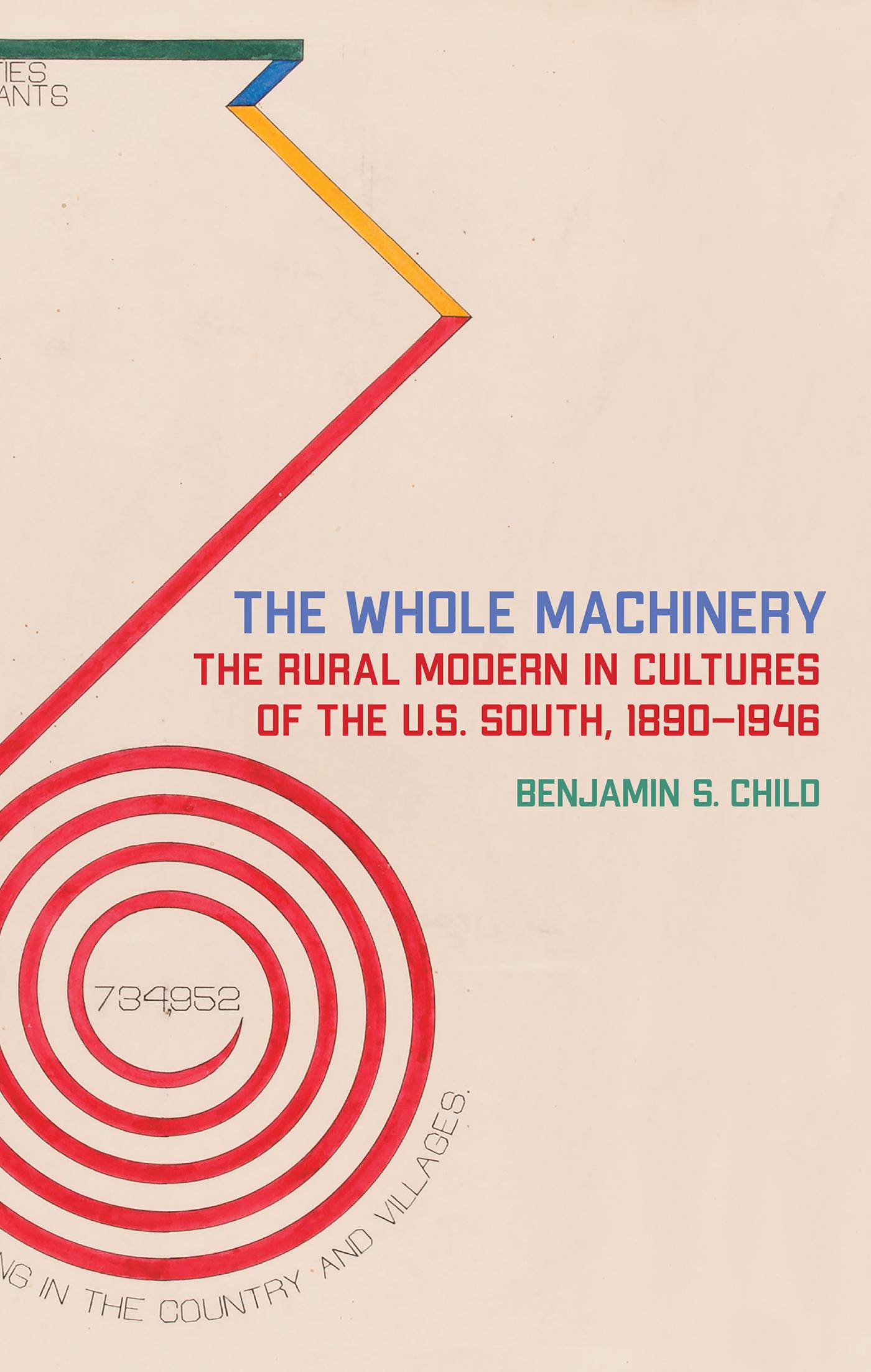
A familiar story holds that modernization radiates outward from metropolitan origins. Expanding on Walter Benjamin’s notion of die Moderne, The Whole Machinery explores representations of people and places, objects and occasions, that reverse that trajectory, demonstrating how modernizing agents move in a contrary direction as well—from the country to the city. In a crucial reconsideration, these figures aren’t pulled by or into urban modernity so much as they bring alternate—and transformative—iterations of the modern to the urban world.
Upending the U.S. South’s reputation as either retrograde or unresponsive to modernity, Benjamin S. Child shows how the effects of national and transnational exchange, emergent technologies, and industrialization animate environments and bodies associated with, or performing, versions of the rural. To this end, he also exposes the shadow side of the cosmopolitan modern by investigating the rural sources—the laboring bodies and raw materials—that made such urban spaces possible, thus taking a broader survey of landscapes created by the Atlantic world’s histories of uneven development.
In this investigation of the rural modern that considers multiple media and forms of technology, Child’s sources range widely, encompassing a spectrum of texts and their networks of transmission, reception, and signification. These include novels, poems, and short stories but also radio broadcasts, sound recordings, political pamphlets, photographs, magazine articles, newspaper reports, and agricultural bulletins. Folding such expressive artifacts into his larger arguments, Child considers how they both reflect and form modern(ist) culture. The result is a geography of southern modernism that includes an unexpected combination of landmarks, both actual and imagined: Twisted Oak, Arkansas, and Tukabahchee County, Alabama; Manhattan, Manchester, and Moscow; Tuskegee and Gobbler’s Knob, North Carolina.
Before Memmo my notes were scattered across PDFs. Now a workspace pulls everything into one place — I see exactly what's still left to study.
Memmo's summaries are gold before exams. I don't have to re-read 800 pages two weeks before — just the important parts.
The AI chat has saved me the night before an exam more than once. I just keep asking until I get it — no waiting on a study group to reply.
The quizzes hit exactly what I need to know. Memmo tracks what I get stuck on — so I only practice what's worth it.
Flashcards with spaced repetition are magic. Memmo knows when I'm about to forget something and brings it back.
The AI podcasts are my favorite. I listen on my way to school and get a recap without sitting at a computer.

Handbok i kvalitativa metoder
281 kr

Hållbar utveckling: en introduktion för ingenjörer och andra problemlösare
334 kr

Brymans Samhällsvetenskapliga metoder
390 kr

Projektledning
491 kr

Den orättvisa hälsan: om socioekonomiska skillnader i hälsa och livslängd
326 kr

Vetenskapsteori för nybörjare
196 kr

Organizational Leadership
429 kr

På väg mot läraryrket
172 kr

Det sociala livet i skolan: Socialpsykologiska perspektiv
253 kr

Betygsättningens didaktik
151 kr

Personality
402 kr

Studying Leadership
404 kr

Managing Innovation
477 kr

Introduktion till samhällsvetenskaplig metod
347 kr

The Psychology of Sex and Gender
698 kr

Evidens och kunskap för socialt arbete
207 kr

Introduction to Leadership
605 kr