
Before Memmo my notes were scattered across PDFs. Now a workspace pulls everything into one place — I see exactly what's still left to study.
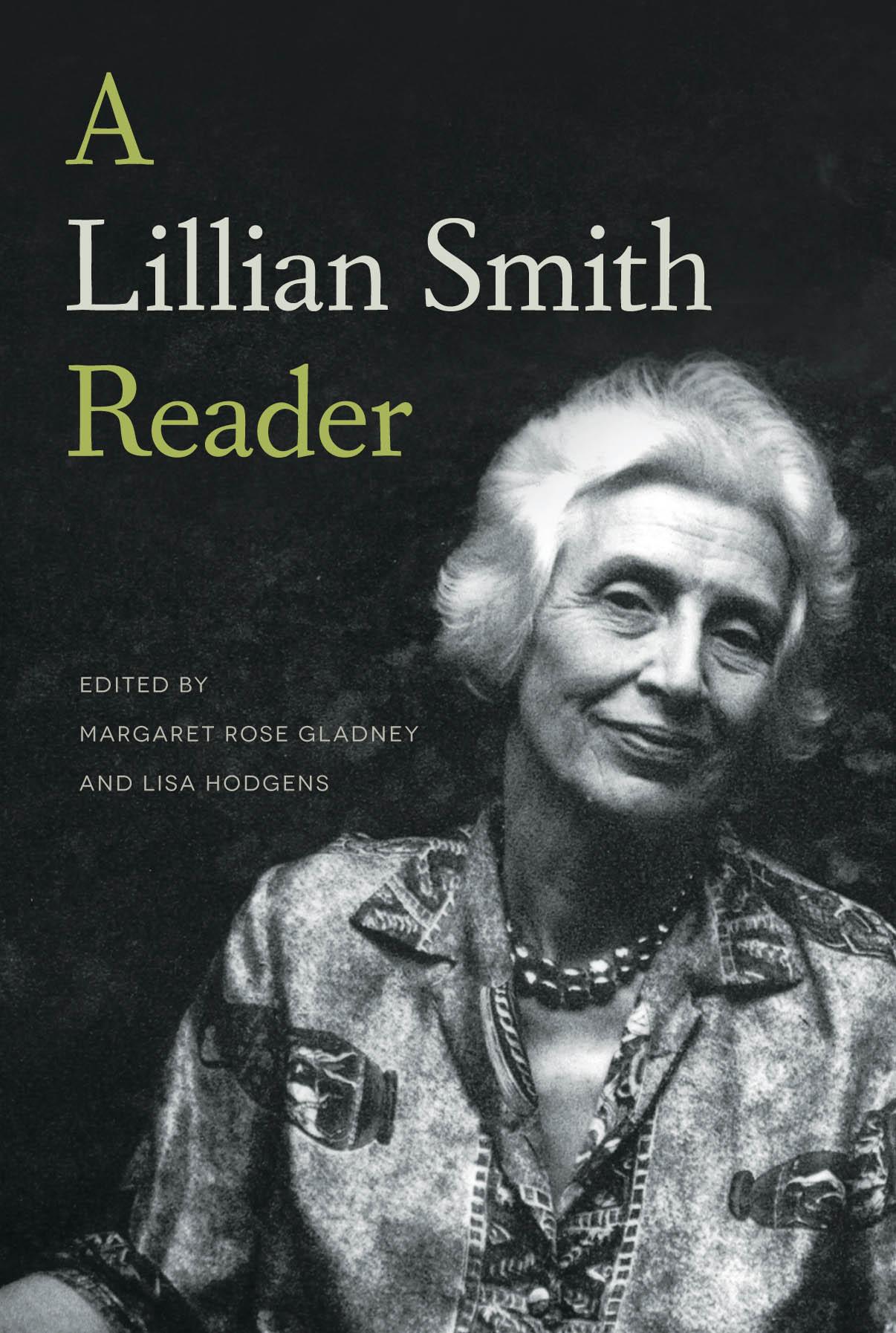
As a writer and forward-thinking social critic, Lillian Smith (1897–1966) was an astute chronicler of the twentieth-century American South and an early proponent of the civil rights movement. From her home on Old Screamer Mountain overlooking Clayton, Georgia, Smith wrote and spoke openly against racism, segregation, and Jim Crow laws long before the civil rights era.
Bringing together short stories, lectures, essays, op-ed pieces, interviews, and excerpts from her longer fiction and nonfiction, A Lillian Smith Reader offers the first comprehensive collection of her work and a compelling introduction to one of the South’s most important writers.
A conservatory-trained music teacher who left the profession to assume charge of her family’s girls’ camp in Rabun County, Georgia, Smith began her literary careerwriting for a journal that she coedited with her lifelong companion, Paula Snelling, successively titled Pseudopodia (1936), the North Georgia Review (1937–41), and South Today (1942–45). Known today for her controversial, best-selling novel, Strange Fruit (1944); her collection of autobiographical essays, Killers of the Dream (1949); and her lyrical documentary, Now Is the Time (1955), Smith was acclaimed and derided in equal measures as a southern white liberal who critiqued her culture’s economic, political, and religious institutions as dehumanizing for all: white and black, male and female, rich and poor. She was also a frequent and eloquent contributor to periodicals such as the Saturday Review, LIFE, the New Republic, the Nation, and the New York Times.
The influence of Smith’s oeuvre extends far beyond these publications. Her legacy rests on her sense of social justice, her articulation of racial and social inequities, and her challenges to the status quo. In their totality, her works propose a vision of justice and human understanding that we have yet to achieve.
Before Memmo my notes were scattered across PDFs. Now a workspace pulls everything into one place — I see exactly what's still left to study.
Memmo's summaries are gold before exams. I don't have to re-read 800 pages two weeks before — just the important parts.
The AI chat has saved me the night before an exam more than once. I just keep asking until I get it — no waiting on a study group to reply.
The quizzes hit exactly what I need to know. Memmo tracks what I get stuck on — so I only practice what's worth it.
Flashcards with spaced repetition are magic. Memmo knows when I'm about to forget something and brings it back.
The AI podcasts are my favorite. I listen on my way to school and get a recap without sitting at a computer.

Handbok i kvalitativa metoder
281 kr

Hållbar utveckling: en introduktion för ingenjörer och andra problemlösare
334 kr

Brymans Samhällsvetenskapliga metoder
390 kr

Projektledning
491 kr

Den orättvisa hälsan: om socioekonomiska skillnader i hälsa och livslängd
326 kr

Vetenskapsteori för nybörjare
196 kr

Organizational Leadership
429 kr

På väg mot läraryrket
172 kr

Det sociala livet i skolan: Socialpsykologiska perspektiv
253 kr

Betygsättningens didaktik
151 kr

Personality
402 kr

Studying Leadership
404 kr

Managing Innovation
477 kr

Introduktion till samhällsvetenskaplig metod
347 kr

The Psychology of Sex and Gender
698 kr

Evidens och kunskap för socialt arbete
207 kr

Introduction to Leadership
605 kr