
Before Memmo my notes were scattered across PDFs. Now a workspace pulls everything into one place — I see exactly what's still left to study.
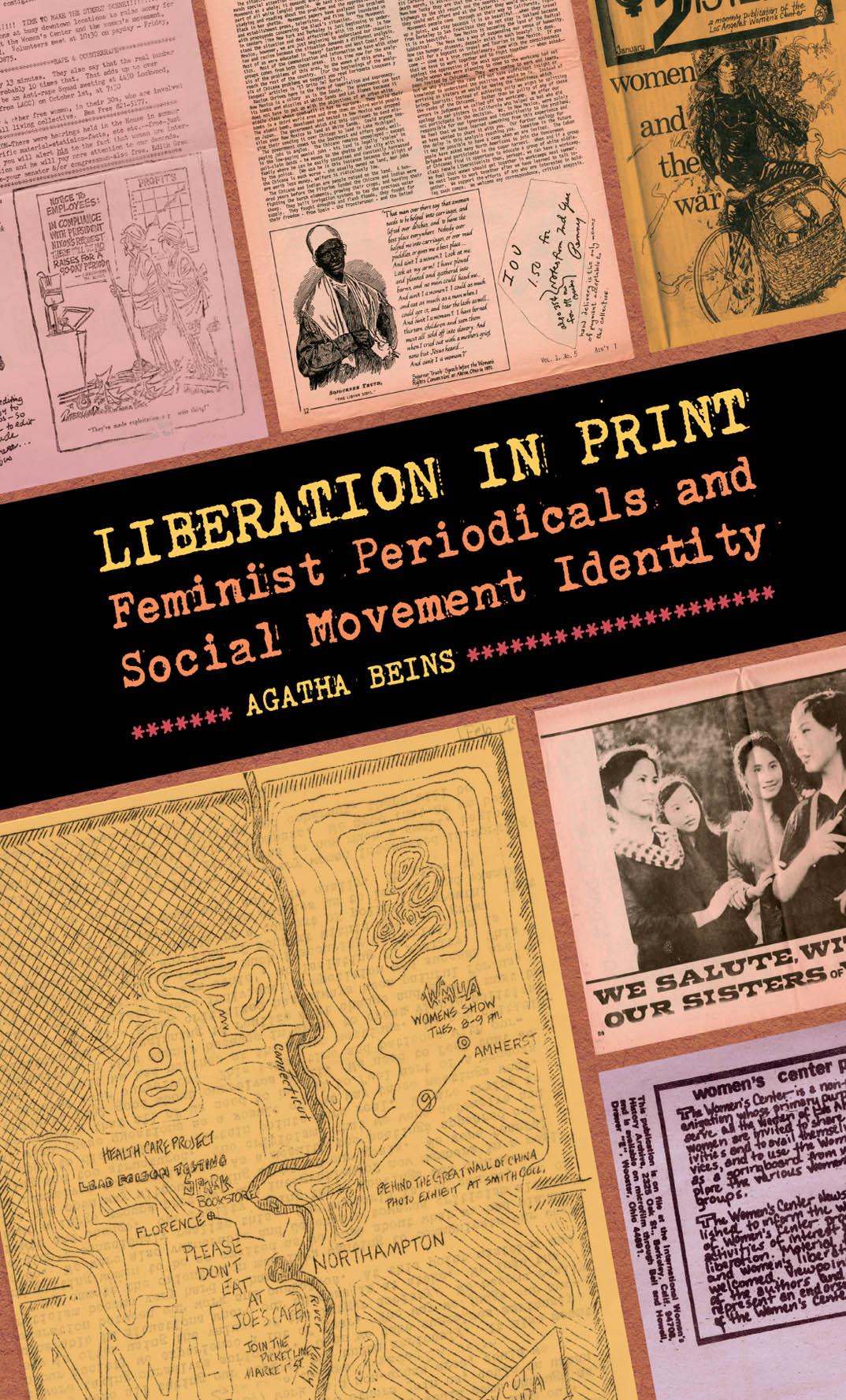
This is the first analysis of periodicals’ key role in U.S. feminism’s formation as a collective identity and set of political practices in the 1970s. Between 1968 and 1973, more than five hundred different feminist newsletters and newspapers were published in the United States. Agatha Beins shows that the repetition of certain ideas in these periodicals—ideas about gender, race, solidarity, and politics—solidified their centrality to feminism.
Beins focuses on five periodicals of that era, comprising almost three hundred different issues: Distaff (New Orleans, Louisiana); Valley Women’s Center Newsletter (Northampton, Massachusetts); Female Liberation Newsletter (Cambridge, Massachusetts); Ain’t I a Woman? (Iowa City, Iowa); and L.A. Women’s Liberation Newsletter, later published as Sister (Los Angeles, California). Together they represent a wide geographic range, including some understudied sites of feminism. Beins examines the discourse of sisterhood, images of women of color, feminist publishing practices, and the production of feminist spaces to demonstrate how repetition shaped dominant themes of feminism’s collective identity. Beins also illustrates how local context affected the manifestation of ideas or political values, revealing the complexity and diversity within feminism.
With much to say about the study of social movements in general, Liberation in Print shows feminism to be a dynamic and constantly emerging identity that has grown, in part, out of a tension between ideological coherence and diversity. Beins’s investigation of repetition offers an innovative approach to analyzing collective identity formation, and her book points to the significance of print culture in activist organizing.
Before Memmo my notes were scattered across PDFs. Now a workspace pulls everything into one place — I see exactly what's still left to study.
Memmo's summaries are gold before exams. I don't have to re-read 800 pages two weeks before — just the important parts.
The AI chat has saved me the night before an exam more than once. I just keep asking until I get it — no waiting on a study group to reply.
The quizzes hit exactly what I need to know. Memmo tracks what I get stuck on — so I only practice what's worth it.
Flashcards with spaced repetition are magic. Memmo knows when I'm about to forget something and brings it back.
The AI podcasts are my favorite. I listen on my way to school and get a recap without sitting at a computer.

Handbok i kvalitativa metoder
281 kr

Hållbar utveckling: en introduktion för ingenjörer och andra problemlösare
334 kr

Brymans Samhällsvetenskapliga metoder
390 kr

Projektledning
491 kr

Den orättvisa hälsan: om socioekonomiska skillnader i hälsa och livslängd
326 kr

Organizational Leadership
429 kr

Vetenskapsteori för nybörjare
196 kr

På väg mot läraryrket
172 kr

Det sociala livet i skolan: Socialpsykologiska perspektiv
253 kr

Betygsättningens didaktik
151 kr

Personality
402 kr

Studying Leadership
404 kr

Managing Innovation
477 kr

Introduktion till samhällsvetenskaplig metod
347 kr

The Psychology of Sex and Gender
698 kr

Evidens och kunskap för socialt arbete
207 kr

Introduction to Leadership
605 kr