
Before Memmo my notes were scattered across PDFs. Now a workspace pulls everything into one place — I see exactly what's still left to study.
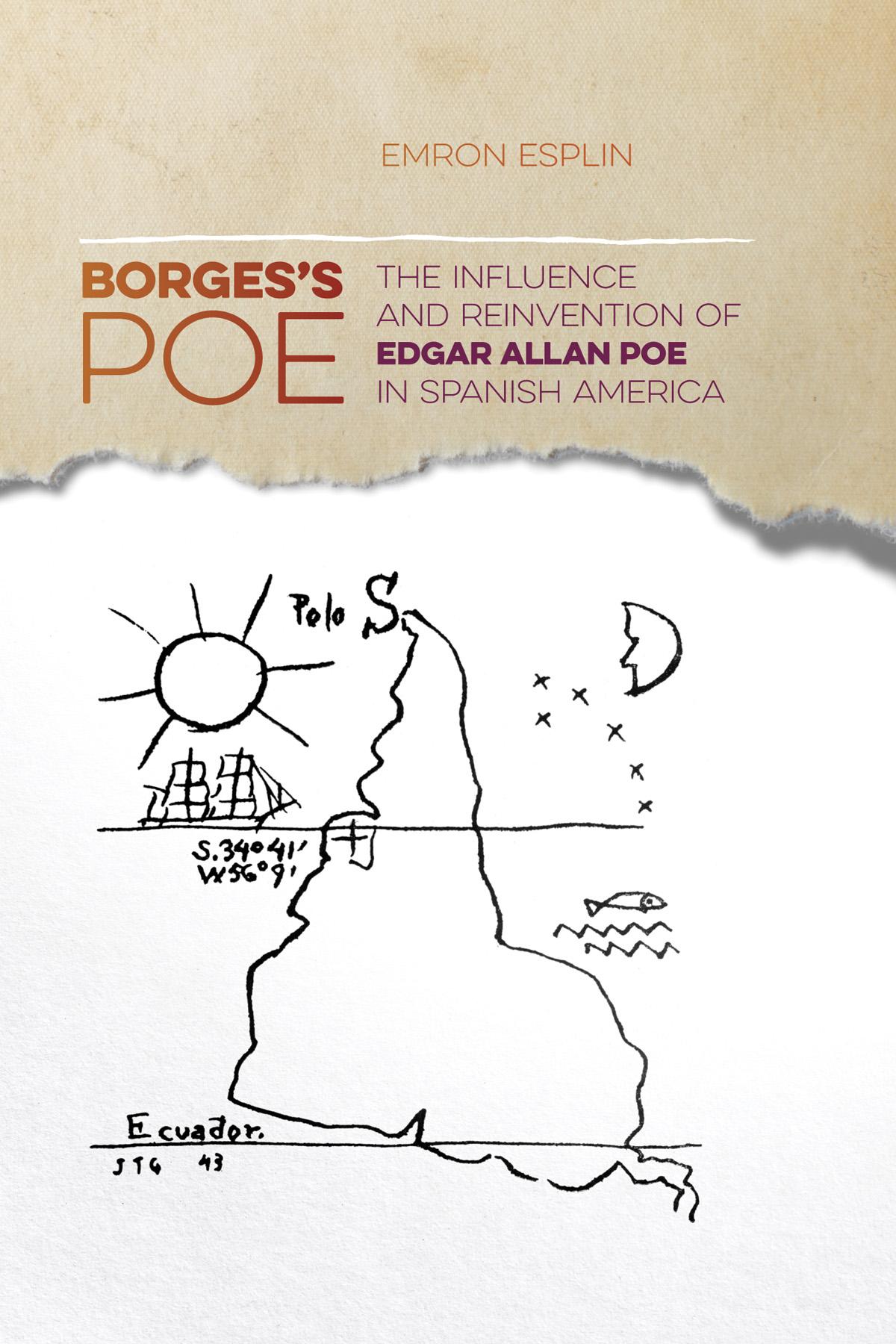
Edgar Allan Poe’s image and import shifted during the twentieth century, and this shift is clearly connected to the work of three writers from the Río de la Plata region of South America—Uruguayan Horacio Quiroga and Argentines Jorge Luis Borges and Julio Cortázar. In Borges’s Poe, Emron Esplin focuses on the second author in this trio and argues that Borges, through a sustained and complex literary relationship with Poe’s works, served as the primary catalyst that changed Poe’s image throughout Spanish America from a poet-prophet to a timeless fiction writer.
Most scholarship that couples Poe and Borges focuses primarily on each writer’s detective stories, refers only occasionally to their critical writings and the remainder of their fiction, and deemphasizes the cultural context in which Borges interprets Poe. In this book, Esplin explores Borges’s and Poe’s published works and several previously untapped archival resources to reveal an even more complex literary relationship between the two writers. Emphasizing the spatial and temporal context in which Borges interprets Poe—the Río de la Plata region from the 1920s through the 1980s—Borges’s Poe underlines Poe’s continual presence in Borges’s literary corpus. More important, it demonstrates how Borges’s literary criticism, his Poe translations, and his own fiction create a disparate Poe who serves as a precursor to Borges’s own detective and fantastic stories and as an inspiration to the so-called Latin American Boom.
Seen through this more expansive context, Borges’s Poe shows that literary influence runs both ways since Poe’s writings visibly affect Borges the poet, story writer, essayist, and thinker while Borges’s analyses and translations of Poe’s work and his responses to Poe’s texts in his own fiction forever change how readers of Poe return to his literary corpus.
Before Memmo my notes were scattered across PDFs. Now a workspace pulls everything into one place — I see exactly what's still left to study.
Memmo's summaries are gold before exams. I don't have to re-read 800 pages two weeks before — just the important parts.
The AI chat has saved me the night before an exam more than once. I just keep asking until I get it — no waiting on a study group to reply.
The quizzes hit exactly what I need to know. Memmo tracks what I get stuck on — so I only practice what's worth it.
Flashcards with spaced repetition are magic. Memmo knows when I'm about to forget something and brings it back.
The AI podcasts are my favorite. I listen on my way to school and get a recap without sitting at a computer.

Handbok i kvalitativa metoder
281 kr

Hållbar utveckling: en introduktion för ingenjörer och andra problemlösare
334 kr

Brymans Samhällsvetenskapliga metoder
390 kr

Projektledning
491 kr

Den orättvisa hälsan: om socioekonomiska skillnader i hälsa och livslängd
326 kr

Vetenskapsteori för nybörjare
196 kr

Organizational Leadership
429 kr

På väg mot läraryrket
172 kr

Det sociala livet i skolan: Socialpsykologiska perspektiv
253 kr

Betygsättningens didaktik
151 kr

Personality
402 kr

Studying Leadership
404 kr

Managing Innovation
477 kr

Introduktion till samhällsvetenskaplig metod
347 kr

The Psychology of Sex and Gender
698 kr

Evidens och kunskap för socialt arbete
207 kr

Introduction to Leadership
605 kr