
Before Memmo my notes were scattered across PDFs. Now a workspace pulls everything into one place — I see exactly what's still left to study.
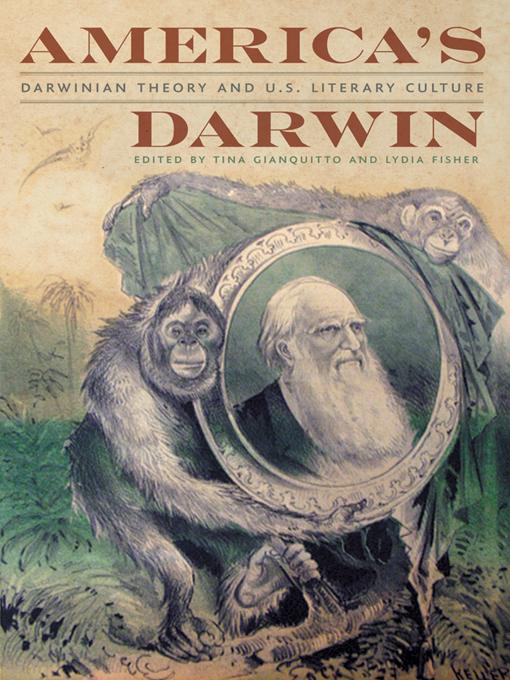
While much has been written about the impact of Darwin’s theories on U.S. culture, and countless scholarly collections have been devoted to the science of evolution, few have addressed the specific details of Darwin’s theories as a cultural force affecting U.S. writers. America’s Darwin fills this gap and features a range of critical approaches that examine U.S. textual responses to Darwin’s works.
The scholars in this collection represent a range of disciplines—literature, history of science, women’s studies, geology, biology, entomology, and anthropology. All pay close attention to the specific forms that Darwinian evolution took in the United States, engaging not only with Darwin’s most famous works, such as On the Origin of Species, but also with less familiar works, such as The Expression of the Emotions in Man and Animals.
Each contributor considers distinctive social, cultural, and intellectual conditions that affected the reception and dissemination of evolutionary thought, from before the publication of On the Origin of Species to the early years of the twenty-first century. These essays engage with the specific details and language of a wide selection of Darwin’s texts, treating his writings as primary sources essential to comprehending the impact of Darwinian language on American writers and thinkers. This careful engagement with the texts of evolution enables us to see the broad points of its acceptance and adoption in the American scene; this approach also highlights the ways in which writers, reformers, and others reconfigured Darwinian language to suit their individual purposes.
America’s Darwin demonstrates the many ways in which writers and others fit themselves to a narrative of evolution whose dominant motifs are contingency and uncertainty. Collectively, the authors make the compelling case that the interpretation of evolutionary theory in the U.S. has always shifted in relation to prevailing cultural anxieties.
Before Memmo my notes were scattered across PDFs. Now a workspace pulls everything into one place — I see exactly what's still left to study.
Memmo's summaries are gold before exams. I don't have to re-read 800 pages two weeks before — just the important parts.
The AI chat has saved me the night before an exam more than once. I just keep asking until I get it — no waiting on a study group to reply.
The quizzes hit exactly what I need to know. Memmo tracks what I get stuck on — so I only practice what's worth it.
Flashcards with spaced repetition are magic. Memmo knows when I'm about to forget something and brings it back.
The AI podcasts are my favorite. I listen on my way to school and get a recap without sitting at a computer.

Handbok i kvalitativa metoder
281 kr

Hållbar utveckling: en introduktion för ingenjörer och andra problemlösare
334 kr

Brymans Samhällsvetenskapliga metoder
390 kr

Projektledning
491 kr

Den orättvisa hälsan: om socioekonomiska skillnader i hälsa och livslängd
326 kr

Vetenskapsteori för nybörjare
196 kr

Organizational Leadership
429 kr

På väg mot läraryrket
172 kr

Det sociala livet i skolan: Socialpsykologiska perspektiv
253 kr

Betygsättningens didaktik
151 kr

Personality
402 kr

Studying Leadership
404 kr

Managing Innovation
477 kr

Introduktion till samhällsvetenskaplig metod
347 kr

The Psychology of Sex and Gender
698 kr

Evidens och kunskap för socialt arbete
207 kr

Introduction to Leadership
605 kr