
Before Memmo my notes were scattered across PDFs. Now a workspace pulls everything into one place — I see exactly what's still left to study.
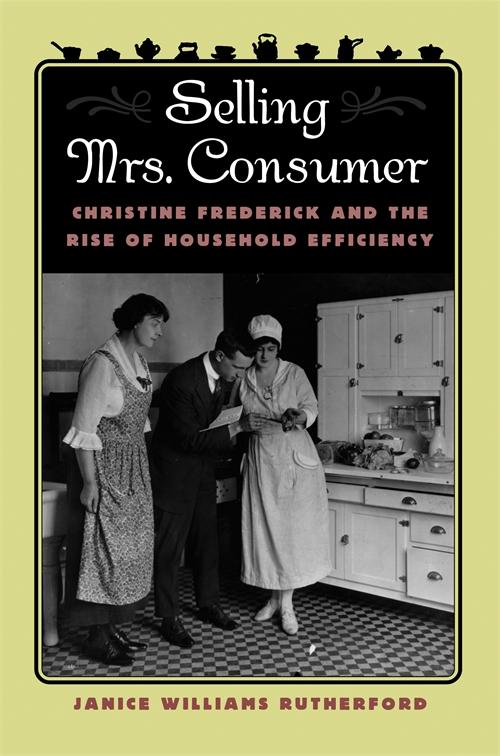
This first book-length treatment of the life and work of Christine Frederick (1883-1970) reveals an important dilemma that faced educated women of the early twentieth century. Contrary to her professional role as home efficiency expert, advertising consultant, and consumer advocate, Christine Frederick espoused the nineteenth-century ideal of preserving the virtuous home—and a woman's place in it. In an effort to reconcile her desire to succeed in the public sphere of modernization and consumerism with the knowledge that most middle-class Americans still held traditional beliefs about gender roles, Frederick fashioned a career for herself that encouraged other women to remain at home.
With the rise of home economics and scientific management, Frederick—college-educated but confined to the drudgery of housework—devised a plan for bringing the public sphere into the domestic. Her home would become her factory. She learned how to standardize tasks by observing labor-saving devices in industry and then applied this knowledge to housework. She standardized dishwashing, for example, by breaking the job into three separate operations: scraping and stacking, washing, and drying and putting away. Determined to train women to become proficient homemakers and efficient managers, Frederick secured a job writing articles for the Ladies' Home Journal. A professional career as home efficiency expert later expanded to include advertising consultant and consumer advocate. Frederick assured male advertisers that she knew women well and promised to help them sell to "Mrs. Consumer."
While Frederick sought the power and influence available only to men, she promoted a division of labor by gender and therefore served the fall of the early-twentieth-century wave of feminism. Rutherford's engaging account of Christine Frederick's life reflects a dilemma that continues to affect women today—whether to seek professional gratification or adhere to traditional family values.
Before Memmo my notes were scattered across PDFs. Now a workspace pulls everything into one place — I see exactly what's still left to study.
Memmo's summaries are gold before exams. I don't have to re-read 800 pages two weeks before — just the important parts.
The AI chat has saved me the night before an exam more than once. I just keep asking until I get it — no waiting on a study group to reply.
The quizzes hit exactly what I need to know. Memmo tracks what I get stuck on — so I only practice what's worth it.
Flashcards with spaced repetition are magic. Memmo knows when I'm about to forget something and brings it back.
The AI podcasts are my favorite. I listen on my way to school and get a recap without sitting at a computer.

Handbok i kvalitativa metoder
281 kr

Hållbar utveckling: en introduktion för ingenjörer och andra problemlösare
334 kr

Brymans Samhällsvetenskapliga metoder
390 kr

Projektledning
491 kr

Den orättvisa hälsan: om socioekonomiska skillnader i hälsa och livslängd
326 kr

Vetenskapsteori för nybörjare
196 kr

Organizational Leadership
429 kr

På väg mot läraryrket
172 kr

Det sociala livet i skolan: Socialpsykologiska perspektiv
253 kr

Betygsättningens didaktik
151 kr

Personality
402 kr

Studying Leadership
404 kr

Managing Innovation
477 kr

Introduktion till samhällsvetenskaplig metod
347 kr

The Psychology of Sex and Gender
698 kr

Evidens och kunskap för socialt arbete
207 kr

Introduction to Leadership
605 kr