
Before Memmo my notes were scattered across PDFs. Now a workspace pulls everything into one place — I see exactly what's still left to study.
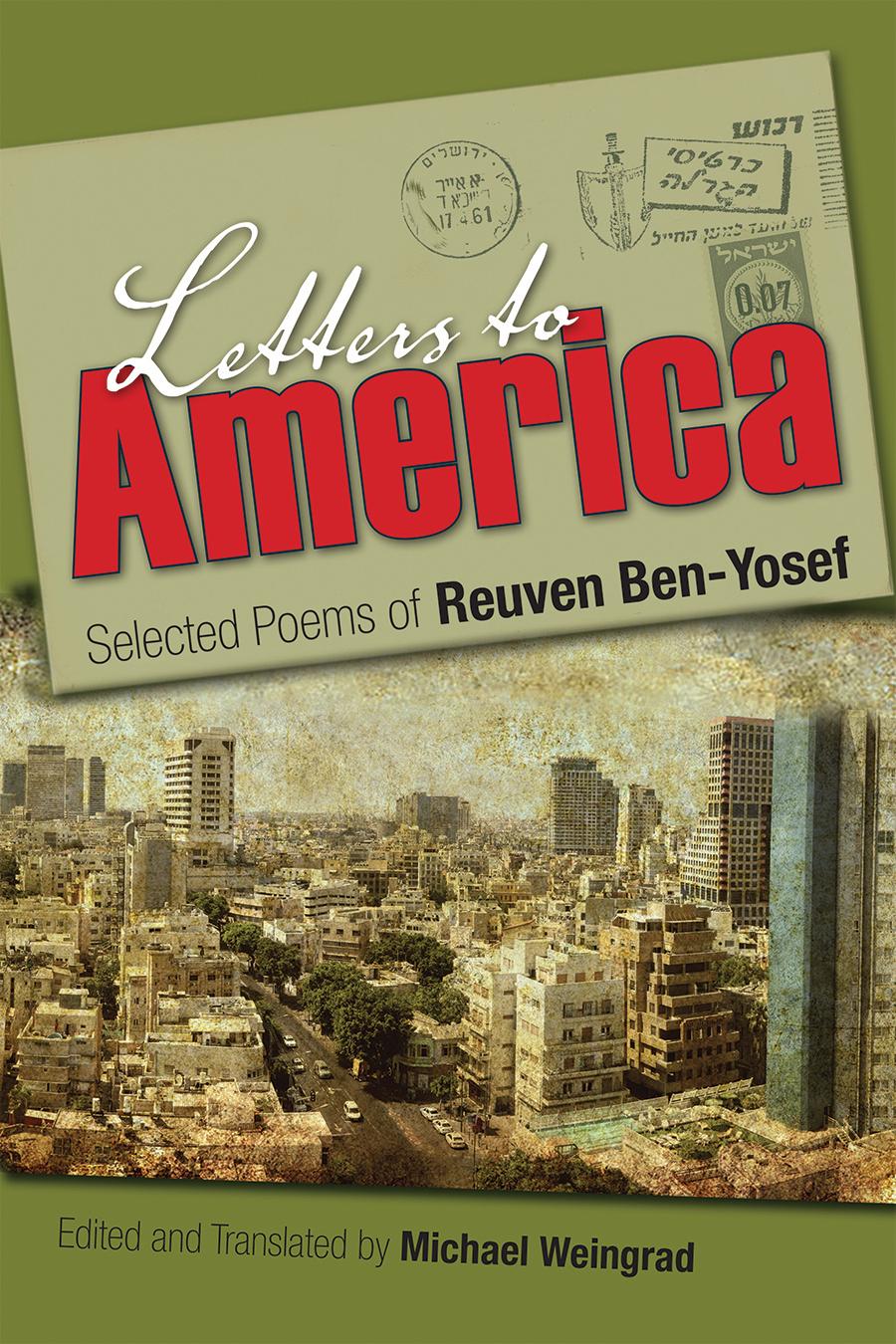
Reuven Ben-Yosef (1937–2001) was born Robert Eliot Reiss to an assimilated Jewish family in New York. He switched from writing English poetry to Hebrew poetry after his immigration to Israel in 1959. He is the author of more than a dozen volumes of superb Hebrew poetry, as well as two collections of essays and two novels, and he won literary honors such as the Levi Eshkol Prize, the Bar-Ilan University Prize, and the Neuman and Kovner prizes for Hebrew literature. At the center of his oeuvre is the sequence of poems he wrote in the 1970s called "Mikhtavim la’Amerikah" (Letters to America), a searing and confessional set of addresses in the form of "letters" to his family members (none of whom, however, could read Hebrew) and to American Jewry as a whole.
In this edited volume, Weingrad includes not only these expertly translated poems but also an extensive, fascinating introduction that helps us see Ben-Yosef’s personal poetry as part of a larger family story. While Ben-Yosef was writing about his American family members, they were writing about him. Ben- Yosef’s younger brother, poet James Reiss, began publishing highly praised collections of poems in the 1970s and addressed conflicts with his brother in a number of poems. Ben-Yosef’s brother-in-law, novelist William Luvaas, published a first novel that was clearly based upon the Reiss family. Ben-Yosef’s letters to America are therefore joined by his family members’ "letters" to Israel, through which the Reiss family collectively created its own literature of the American–Israeli relationship in miniature, the conflicts and rifts, rivalries and loyalties of family members and competing homelands.
This essential introduction, which also describes Ben-Yosef’s early life as an American and the challenges of becoming an Israeli poet writing in Hebrew, enriches our understanding of the deeply personal poems collected in the rest of the volume. Weingrad compellingly argues that Ben-Yosef’s poems, though seemingly local in their explicit Israeli audience and address, implicitly speak to Jews in America about assimilation, heritage, and the struggle between competing identities.
Before Memmo my notes were scattered across PDFs. Now a workspace pulls everything into one place — I see exactly what's still left to study.
Memmo's summaries are gold before exams. I don't have to re-read 800 pages two weeks before — just the important parts.
The AI chat has saved me the night before an exam more than once. I just keep asking until I get it — no waiting on a study group to reply.
The quizzes hit exactly what I need to know. Memmo tracks what I get stuck on — so I only practice what's worth it.
Flashcards with spaced repetition are magic. Memmo knows when I'm about to forget something and brings it back.
The AI podcasts are my favorite. I listen on my way to school and get a recap without sitting at a computer.

Handbok i kvalitativa metoder
281 kr

Hållbar utveckling: en introduktion för ingenjörer och andra problemlösare
334 kr

Brymans Samhällsvetenskapliga metoder
390 kr

Projektledning
491 kr

Den orättvisa hälsan: om socioekonomiska skillnader i hälsa och livslängd
326 kr

Vetenskapsteori för nybörjare
196 kr

Organizational Leadership
429 kr

På väg mot läraryrket
172 kr

Det sociala livet i skolan: Socialpsykologiska perspektiv
253 kr

Betygsättningens didaktik
151 kr

Personality
402 kr

Studying Leadership
404 kr

Managing Innovation
477 kr

Introduktion till samhällsvetenskaplig metod
347 kr

The Psychology of Sex and Gender
698 kr

Evidens och kunskap för socialt arbete
207 kr

Introduction to Leadership
605 kr