
Before Memmo my notes were scattered across PDFs. Now a workspace pulls everything into one place — I see exactly what's still left to study.
2013 Book Award Winner from the International Research Society in Children's Literature
2012 Outstanding Book Award Winner from the Association for Theatre in Higher Education
2012 Winner of the Lois P. Rudnick Book Prize presented by the New England American Studies Association
2012 Runner-Up, John Hope Franklin Publication Prize presented by the American Studies Association
2012 Honorable Mention, Distinguished Book Award presented by the Society for the Study of American Women Writers
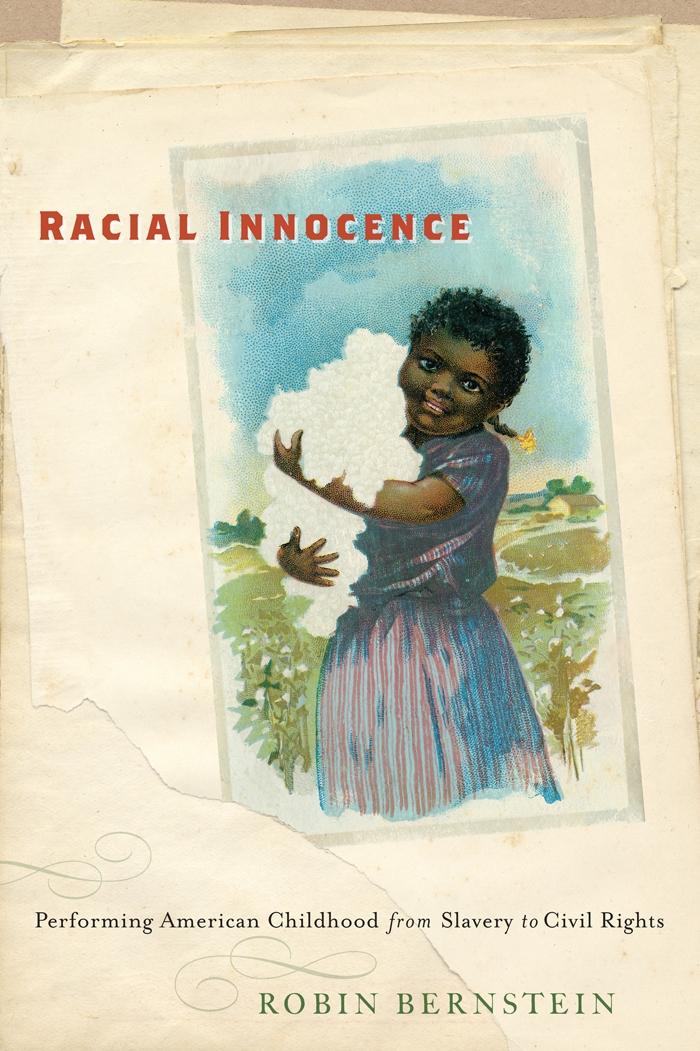
Dissects how "innocence" became the exclusive province of white children, covering slavery to the Civil Rights era
Beginning in the mid nineteenth century in America, childhood became synonymous with innocence—a reversal of the previously-dominant Calvinist belief that children were depraved, sinful creatures. As the idea of childhood innocence took hold, it became racialized: popular culture constructed white children as innocent and vulnerable while excluding black youth from these qualities. Actors, writers, and visual artists then began pairing white children with African American adults and children, thus transferring the quality of innocence to a variety of racial-political projects—a dynamic that Robin Bernstein calls “racial innocence.” This phenomenon informed racial formation from the mid nineteenth century through the early twentieth.
Racial Innocence takes up a rich archive including books, toys, theatrical props, and domestic knickknacks which Bernstein analyzes as “scriptive things” that invite or prompt historically-located practices while allowing for resistance and social improvisation. Integrating performance studies with literary and visual analysis, Bernstein offers singular readings of theatrical productions from blackface minstrelsy to Uncle Tom’s Cabin to The Wonderful Wizard of Oz; literary works by Joel Chandler Harris, Harriet Wilson, and Frances Hodgson Burnett; material culture including Topsy pincushions, Uncle Tom and Little Eva handkerchiefs, and Raggedy Ann dolls; and visual texts ranging from fine portraiture to advertisements for lard substitute. Throughout, Bernstein shows how “innocence” gradually became the exclusive province of white children—until the Civil Rights Movement succeeded not only in legally desegregating public spaces, but in culturally desegregating the concept of childhood itself.
Before Memmo my notes were scattered across PDFs. Now a workspace pulls everything into one place — I see exactly what's still left to study.
Memmo's summaries are gold before exams. I don't have to re-read 800 pages two weeks before — just the important parts.
The AI chat has saved me the night before an exam more than once. I just keep asking until I get it — no waiting on a study group to reply.
The quizzes hit exactly what I need to know. Memmo tracks what I get stuck on — so I only practice what's worth it.
Flashcards with spaced repetition are magic. Memmo knows when I'm about to forget something and brings it back.
The AI podcasts are my favorite. I listen on my way to school and get a recap without sitting at a computer.

Handbok i kvalitativa metoder
281 kr

Hållbar utveckling: en introduktion för ingenjörer och andra problemlösare
334 kr

Brymans Samhällsvetenskapliga metoder
390 kr

Projektledning
491 kr

Den orättvisa hälsan: om socioekonomiska skillnader i hälsa och livslängd
326 kr

Organizational Leadership
429 kr

Vetenskapsteori för nybörjare
196 kr

På väg mot läraryrket
172 kr

Det sociala livet i skolan: Socialpsykologiska perspektiv
253 kr

Betygsättningens didaktik
151 kr

Personality
402 kr

Studying Leadership
404 kr

Managing Innovation
477 kr

Introduktion till samhällsvetenskaplig metod
347 kr

The Psychology of Sex and Gender
698 kr

Evidens och kunskap för socialt arbete
207 kr

Introduction to Leadership
605 kr