
Before Memmo my notes were scattered across PDFs. Now a workspace pulls everything into one place — I see exactly what's still left to study.
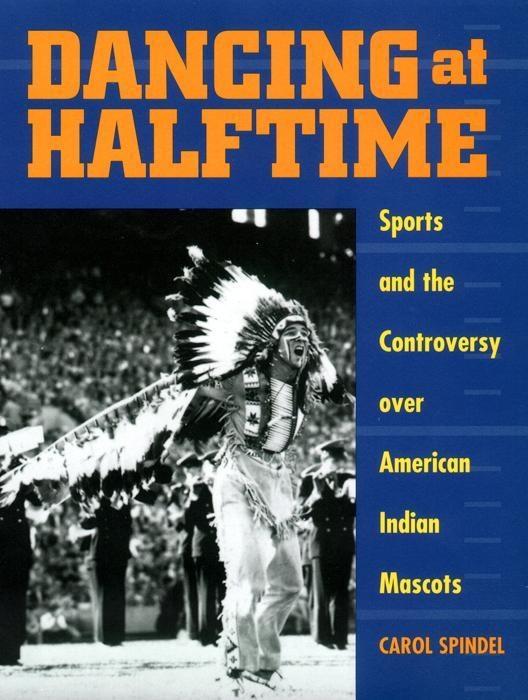
A persuasive and compassionate analysis of the appropriation of Native American culture in sports
Sports fans love to don paint and feathers to cheer on the Washington Redskins and the Cleveland Indians, the Atlanta Braves, the Florida State Seminoles, and the Warriors and Chiefs of their hometown high schools. But outside the stadiums, American Indians aren't cheering—they're yelling racism.
School boards and colleges are bombarded with emotional demands from both sides, while professional teams find themselves in court defending the right to trademark their Indian names and logos. In the face of opposition by a national anti-mascot movement, why are fans so determined to retain the fictional chiefs who plant flaming spears and dance on the fifty-yard line?
To answer this question, Dancing at Halftime takes the reader on a journey through the American imagination where our thinking about American Indians has been, and is still being, shaped. Dancing at Halftime is the story of Carol Spindel's determination to understand why her adopted town is so passionately attached to Chief Illiniwek, the American Indian mascot of the University of Illinois. She rummages through our national attic, holding dusty souvenirs from world's fairs and wild west shows, Edward Curtis photographs, Boy Scout handbooks, and faded football programs up to the light. Outside stadiums, while American Indian Movement protestors burn effigies, she listens to both activists and the fans who resent their attacks. Inside hearing rooms and high schools, she poses questions to linguists, lawyers, and university alumni.
A work of both persuasion and compassion, Dancing at Halftime reminds us that in America, where Pontiac is a car and Tecumseh a summer camp, Indians are often our symbolic servants, functioning as mascots and metaphors that express our longings to become "native" Americans, and to feel at home in our own land.
Before Memmo my notes were scattered across PDFs. Now a workspace pulls everything into one place — I see exactly what's still left to study.
Memmo's summaries are gold before exams. I don't have to re-read 800 pages two weeks before — just the important parts.
The AI chat has saved me the night before an exam more than once. I just keep asking until I get it — no waiting on a study group to reply.
The quizzes hit exactly what I need to know. Memmo tracks what I get stuck on — so I only practice what's worth it.
Flashcards with spaced repetition are magic. Memmo knows when I'm about to forget something and brings it back.
The AI podcasts are my favorite. I listen on my way to school and get a recap without sitting at a computer.

Handbok i kvalitativa metoder
281 kr

Hållbar utveckling: en introduktion för ingenjörer och andra problemlösare
334 kr

Brymans Samhällsvetenskapliga metoder
390 kr

Projektledning
491 kr

Den orättvisa hälsan: om socioekonomiska skillnader i hälsa och livslängd
326 kr

Organizational Leadership
429 kr

Vetenskapsteori för nybörjare
196 kr

På väg mot läraryrket
172 kr

Det sociala livet i skolan: Socialpsykologiska perspektiv
253 kr

Betygsättningens didaktik
151 kr

Personality
402 kr

Studying Leadership
404 kr

Managing Innovation
477 kr

Introduktion till samhällsvetenskaplig metod
347 kr

The Psychology of Sex and Gender
698 kr

Evidens och kunskap för socialt arbete
207 kr

Introduction to Leadership
605 kr