
Before Memmo my notes were scattered across PDFs. Now a workspace pulls everything into one place — I see exactly what's still left to study.
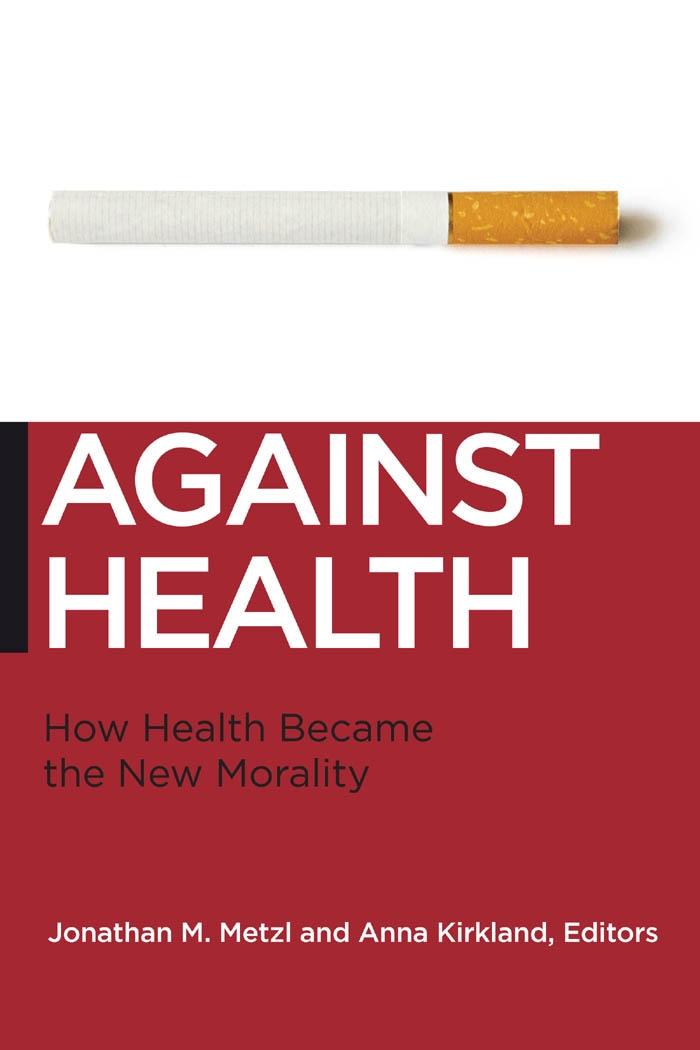
Navigates the divergent cultural meanings of health, and its entanglement with morality in current political discourse
You see someone smoking a cigarette and say,“Smoking is bad for your health,” when what you mean is, “You are a bad person because you smoke.” You encounter someone whose body size you deem excessive, and say, “Obesity is bad for your health,” when what you mean is, “You are lazy, unsightly, or weak of will.” You see a woman bottle-feeding an infant and say,“Breastfeeding is better for that child’s health,” when what you mean is that the woman must be a bad parent. You see the smokers, the overeaters, the bottle-feeders, and affirm your own health in the process. In these and countless other instances, the perception of your own health depends in part on your value judgments about others, and appealing to health allows for a set of moral assumptions to fly stealthily under the radar.
Against Health argues that health is a concept, a norm, and a set of bodily practices whose ideological work is often rendered invisible by the assumption that it is a monolithic, universal good. And, that disparities in the incidence and prevalence of disease are closely linked to disparities in income and social support. To be clear, the book's stand against health is not a stand against the authenticity of people's attempts to ward off suffering. Against Health instead claims that individual strivings for health are, in some instances, rendered more difficult by the ways in which health is culturally configured and socially sustained.
The book intervenes into current political debates about health in two ways. First, Against Health compellingly unpacks the divergent cultural meanings of health and explores the ideologies involved in its construction. Second, the authors present strategies for moving forward. They ask, what new possibilities and alliances arise? What new forms of activism or coalition can we create? What are our prospects for well-being? In short, what have we got if we ain't got health? Against Health ultimately argues that the conversations doctors, patients, politicians, activists, consumers, and policymakers have about health are enriched by recognizing that, when talking about health, they are not all talking about the same thing. And, that articulating the disparate valences of “health” can lead to deeper, more productive, and indeed more healthy interactions about our bodies.
Before Memmo my notes were scattered across PDFs. Now a workspace pulls everything into one place — I see exactly what's still left to study.
Memmo's summaries are gold before exams. I don't have to re-read 800 pages two weeks before — just the important parts.
The AI chat has saved me the night before an exam more than once. I just keep asking until I get it — no waiting on a study group to reply.
The quizzes hit exactly what I need to know. Memmo tracks what I get stuck on — so I only practice what's worth it.
Flashcards with spaced repetition are magic. Memmo knows when I'm about to forget something and brings it back.
The AI podcasts are my favorite. I listen on my way to school and get a recap without sitting at a computer.

Handbok i kvalitativa metoder
281 kr

Hållbar utveckling: en introduktion för ingenjörer och andra problemlösare
334 kr

Brymans Samhällsvetenskapliga metoder
390 kr

Projektledning
491 kr

Den orättvisa hälsan: om socioekonomiska skillnader i hälsa och livslängd
326 kr

Organizational Leadership
429 kr

Vetenskapsteori för nybörjare
196 kr

På väg mot läraryrket
172 kr

Det sociala livet i skolan: Socialpsykologiska perspektiv
253 kr

Betygsättningens didaktik
151 kr

Personality
402 kr

Studying Leadership
404 kr

Managing Innovation
477 kr

Introduktion till samhällsvetenskaplig metod
347 kr

The Psychology of Sex and Gender
698 kr

Evidens och kunskap för socialt arbete
207 kr

Introduction to Leadership
605 kr