
Before Memmo my notes were scattered across PDFs. Now a workspace pulls everything into one place — I see exactly what's still left to study.
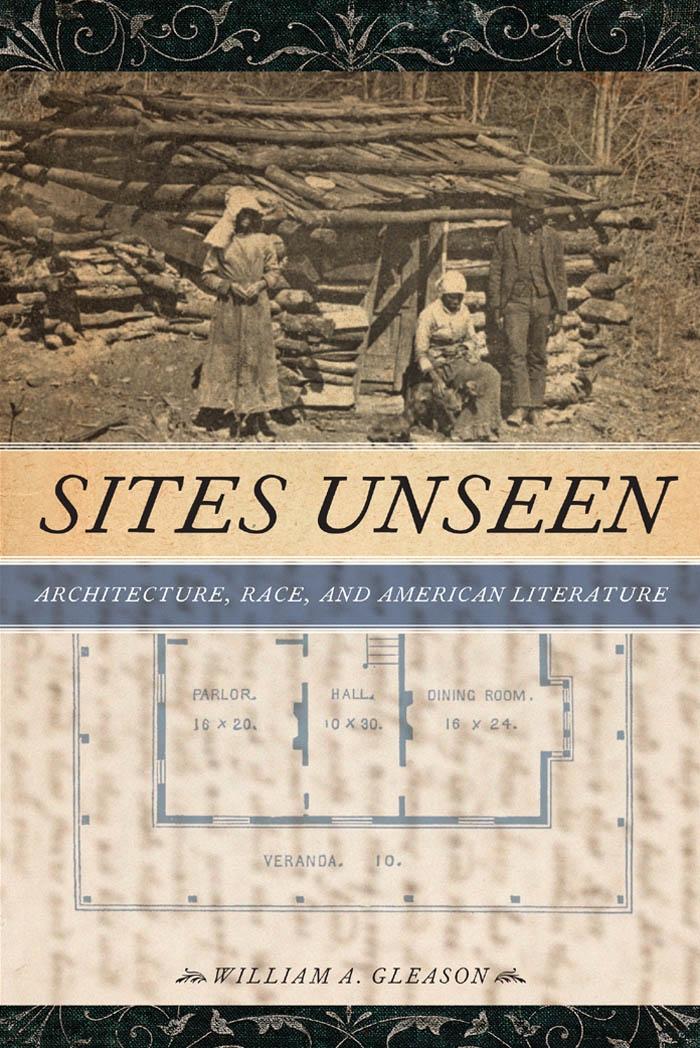
Sites Unseen examines the complex intertwining of race and architecture in nineteenth and early-twentieth century American culture, the period not only in which American architecture came of age professionally in the U.S. but also in which ideas about architecture became a prominent part of broader conversations about American culture, history, politics, and—although we have not yet understood this clearly—race relations. This rich and copiously illustrated interdisciplinary study explores the ways that American writing between roughly 1850 and 1930 concerned itself, often intensely, with the racial implications of architectural space primarily, but not exclusively, through domestic architecture.
In addition to identifying an archive of provocative primary materials, Sites Unseen draws significantly on important recent scholarship in multiple fields ranging from literature, history, and material culture to architecture, cultural geography, and urban planning. Together the chapters interrogate a variety of expressive American vernacular forms, including the dialect tale, the novel of empire, letters, and pulp stories, along with the plantation cabin, the West Indian cottage, the Latin American plaza, and the “Oriental” parlor. These are some of the overlooked plots and structures that can and should inform a more comprehensive consideration of the literary and cultural meanings of American architecture. Making sense of the relations between architecture, race, and American writing of the long nineteenth century—in their regional, national, and hemispheric contexts—Sites Unseen provides a clearer view not only of this catalytic era but also more broadly of what architectural historian Dell Upton has aptly termed the social experience of the built environment.
Before Memmo my notes were scattered across PDFs. Now a workspace pulls everything into one place — I see exactly what's still left to study.
Memmo's summaries are gold before exams. I don't have to re-read 800 pages two weeks before — just the important parts.
The AI chat has saved me the night before an exam more than once. I just keep asking until I get it — no waiting on a study group to reply.
The quizzes hit exactly what I need to know. Memmo tracks what I get stuck on — so I only practice what's worth it.
Flashcards with spaced repetition are magic. Memmo knows when I'm about to forget something and brings it back.
The AI podcasts are my favorite. I listen on my way to school and get a recap without sitting at a computer.

Handbok i kvalitativa metoder
281 kr

Hållbar utveckling: en introduktion för ingenjörer och andra problemlösare
334 kr

Brymans Samhällsvetenskapliga metoder
390 kr

Projektledning
491 kr

Den orättvisa hälsan: om socioekonomiska skillnader i hälsa och livslängd
326 kr

Organizational Leadership
429 kr

Vetenskapsteori för nybörjare
196 kr

På väg mot läraryrket
172 kr

Det sociala livet i skolan: Socialpsykologiska perspektiv
253 kr

Betygsättningens didaktik
151 kr

Personality
402 kr

Studying Leadership
404 kr

Managing Innovation
477 kr

Introduktion till samhällsvetenskaplig metod
347 kr

The Psychology of Sex and Gender
698 kr

Evidens och kunskap för socialt arbete
207 kr

Introduction to Leadership
605 kr