
Before Memmo my notes were scattered across PDFs. Now a workspace pulls everything into one place — I see exactly what's still left to study.
Winner of the 2010 Distinguished Book Award in Latino Studies from the Latin American Studies Association
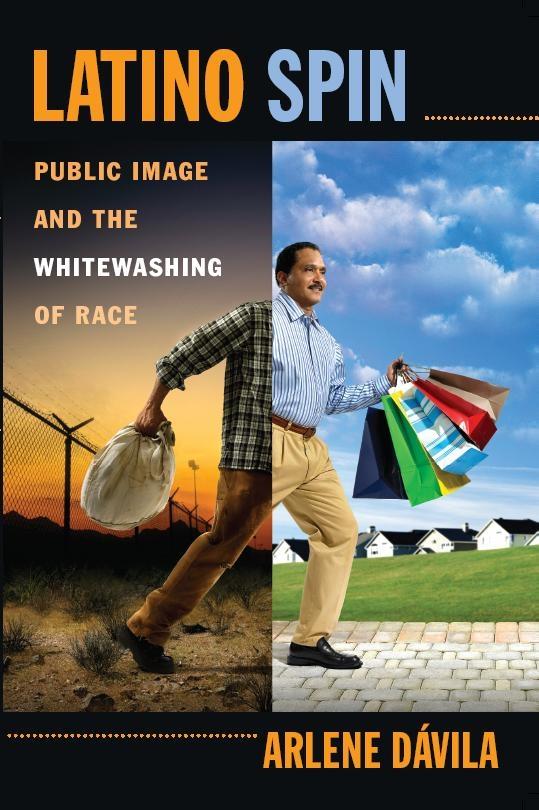
Follows the Latino public image and its impact on U.S. national identity
Illegal immigrant, tax burden, job stealer. Patriot, family oriented, hard worker, model consumer. Ever since Latinos became the largest minority in the U.S. they have been caught between these wildly contrasting characterizations leaving us to wonder: Are Latinos friend or foe?
Latino Spin cuts through the spin about Latinos’ supposed values, political attitudes, and impact on U.S. national identity to ask what these caricatures suggest about Latinos’ shifting place in the popular and political imaginary. Noted scholar Arlene Dávila illustrates the growing consensus among pundits, advocates, and scholars that Latinos are not a social liability, that they are moving up and contributing, and that, in fact, they are more American than “the Americans.” But what is at stake in such a sanitized and marketable representation of Latinidad? Dávila follows the spin through the realm of politics, think tanks, Latino museums, and urban planning to uncover whether they effectively challenge the growing fear over Latinos’ supposedly dreadful effect on the “integrity” of U.S. national identity. What may be some of the intended or unintended consequences of these more marketable representations in regard to current debates over immigration?
With particular attention to what these representations reveal about the place and role of Latinos in the contemporary politics of race, Latino Spin highlights the realities they skew and the polarization they effect between Latinos and other minorities, and among Latinos themselves along the lines of citizenship and class. Finally, by considering Latinos in all their diversity, including their increasing financial and geographic disparities, Dávila can present alternative and more empowering representations of Latinidad to help attain true political equity and intraracial coalitions.
Before Memmo my notes were scattered across PDFs. Now a workspace pulls everything into one place — I see exactly what's still left to study.
Memmo's summaries are gold before exams. I don't have to re-read 800 pages two weeks before — just the important parts.
The AI chat has saved me the night before an exam more than once. I just keep asking until I get it — no waiting on a study group to reply.
The quizzes hit exactly what I need to know. Memmo tracks what I get stuck on — so I only practice what's worth it.
Flashcards with spaced repetition are magic. Memmo knows when I'm about to forget something and brings it back.
The AI podcasts are my favorite. I listen on my way to school and get a recap without sitting at a computer.

Handbok i kvalitativa metoder
281 kr

Hållbar utveckling: en introduktion för ingenjörer och andra problemlösare
334 kr

Brymans Samhällsvetenskapliga metoder
390 kr

Projektledning
491 kr

Den orättvisa hälsan: om socioekonomiska skillnader i hälsa och livslängd
326 kr

Vetenskapsteori för nybörjare
196 kr

Organizational Leadership
429 kr

På väg mot läraryrket
172 kr

Det sociala livet i skolan: Socialpsykologiska perspektiv
253 kr

Betygsättningens didaktik
151 kr

Personality
402 kr

Studying Leadership
404 kr

Managing Innovation
477 kr

Introduktion till samhällsvetenskaplig metod
347 kr

The Psychology of Sex and Gender
698 kr

Evidens och kunskap för socialt arbete
207 kr

Introduction to Leadership
605 kr